Invicta S-Type: The British Sports Car Built on Sugar
A Monte Carlo Rally winner and Brooklands record holder with a remarkable connection to Tate & Lyle, the Invicta S-Type is one of Britain’s great pre-war sports cars.
Without the fortune amassed by the family behind Tate & Lyle and its ubiquitous Golden Syrup, this extraordinary car might never have been built.
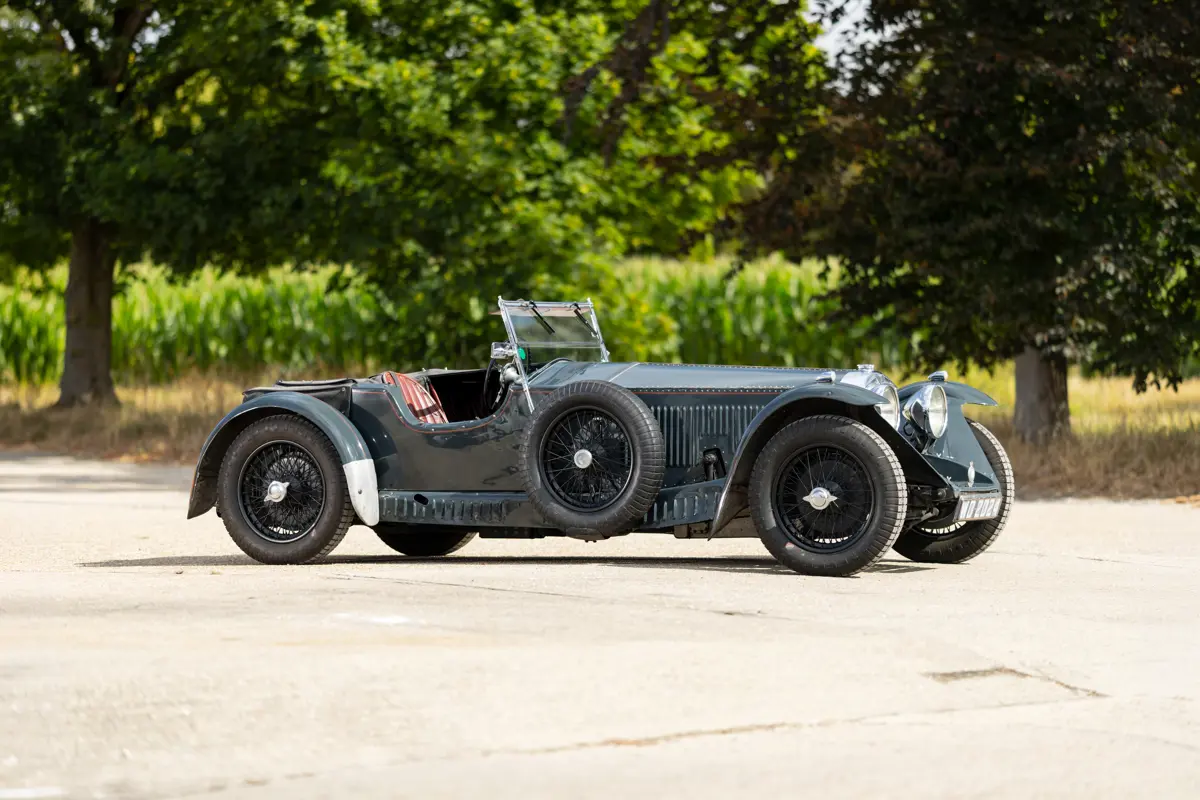
Invicta was founded in 1924 by engineer Noel Macklin and businessman Oliver Lyle, whose family had made its fortune in the sugar trade. Macklin had an ambitious idea: to create a car with the effortless flexibility of a steam engine but powered by a conventional internal-combustion motor.
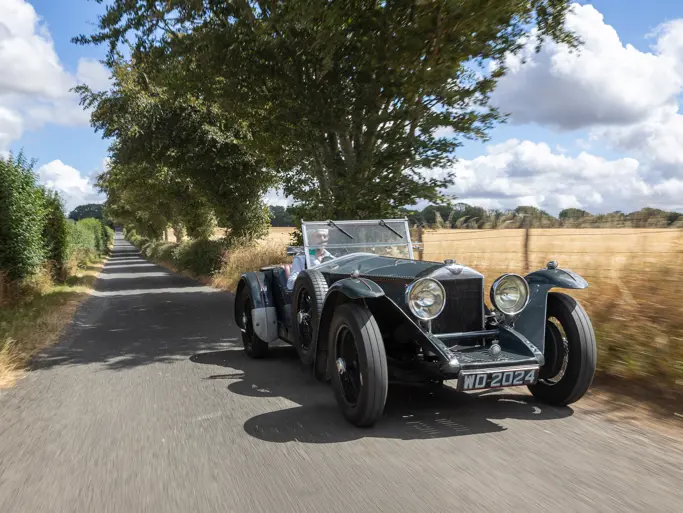
The most famous result of this oft-forgotten company was the S-Type, a car that combined remarkable performance with elegant proportions. The low-chassis variant, like the one we have here, is widely regarded as one of the finest-looking British sports cars of the pre-war era. And it was no mere exercise in style, either. In 1931, Donald Healey drove an S-Type to victory in the Monte Carlo Rally, securing Invicta a place in British motoring history.
The company disappeared in 1950 before being briefly revived between 2002 and 2012. But those later efforts are little more than a footnote. For all its ups and downs, Invicta’s legacy rests on one car: the S-Type. And it remains the model by which the marque is remembered—and revered.
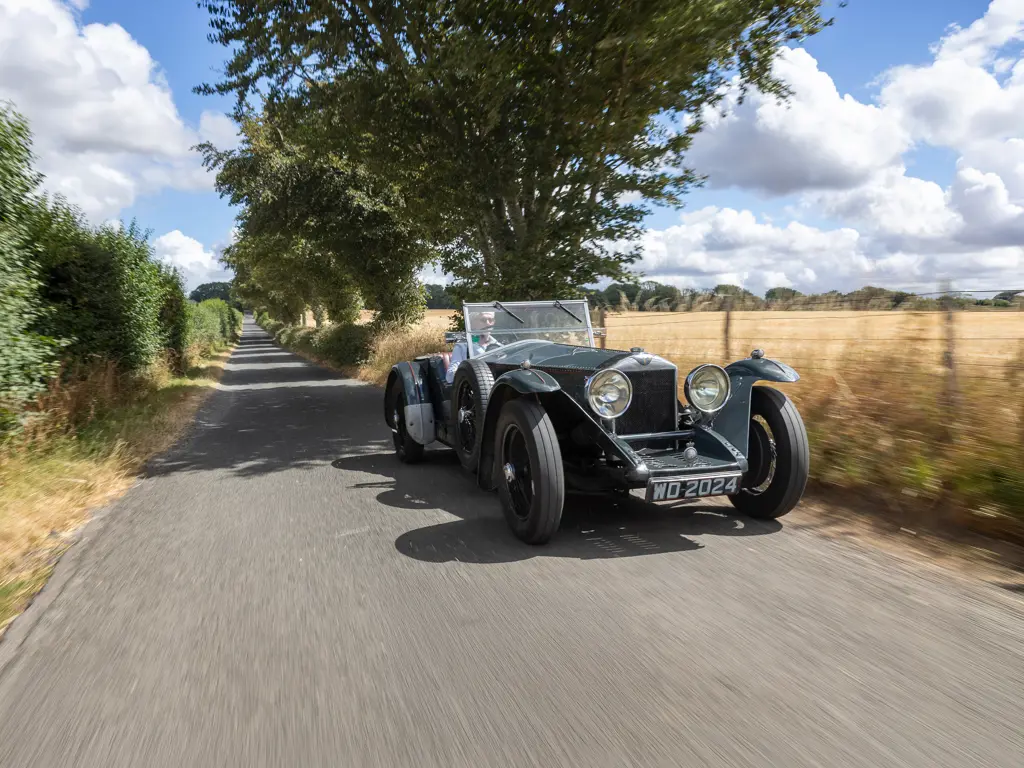
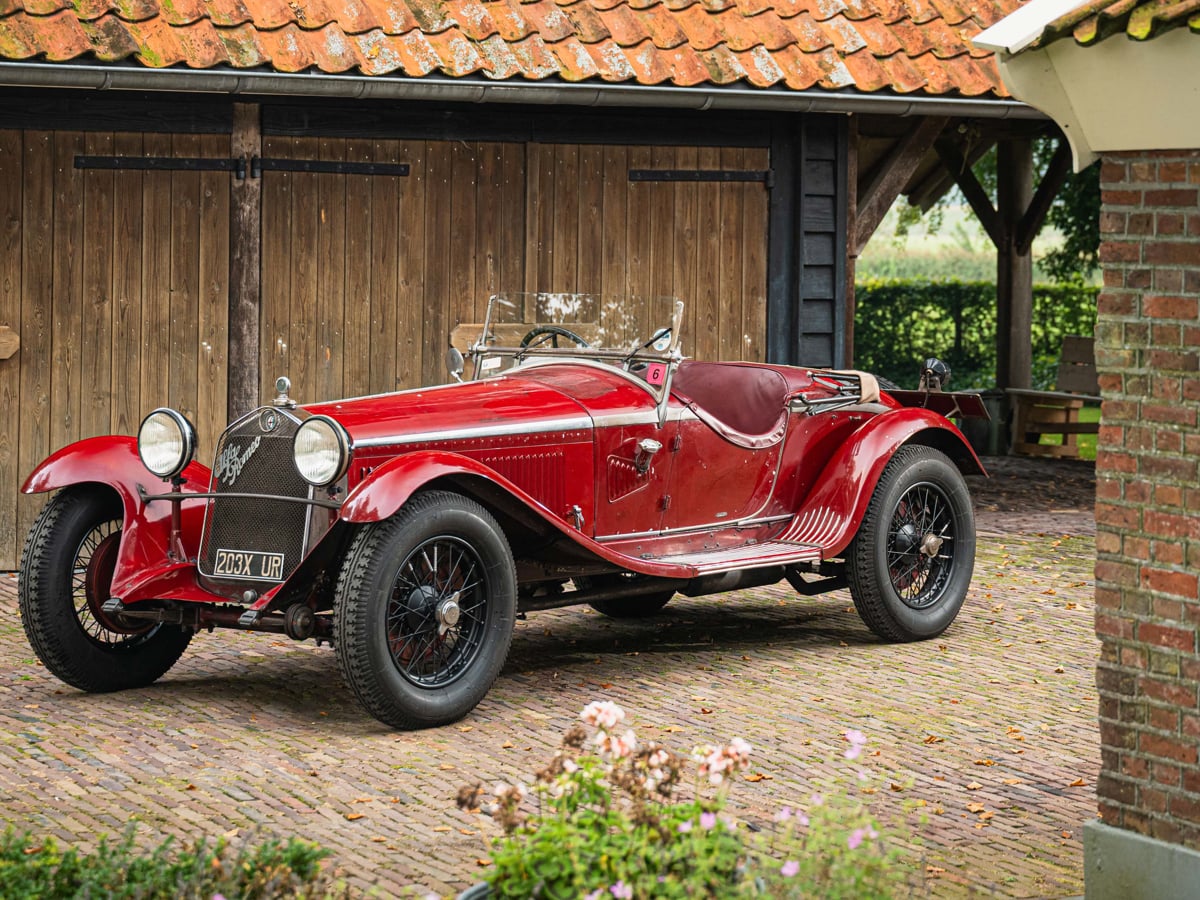
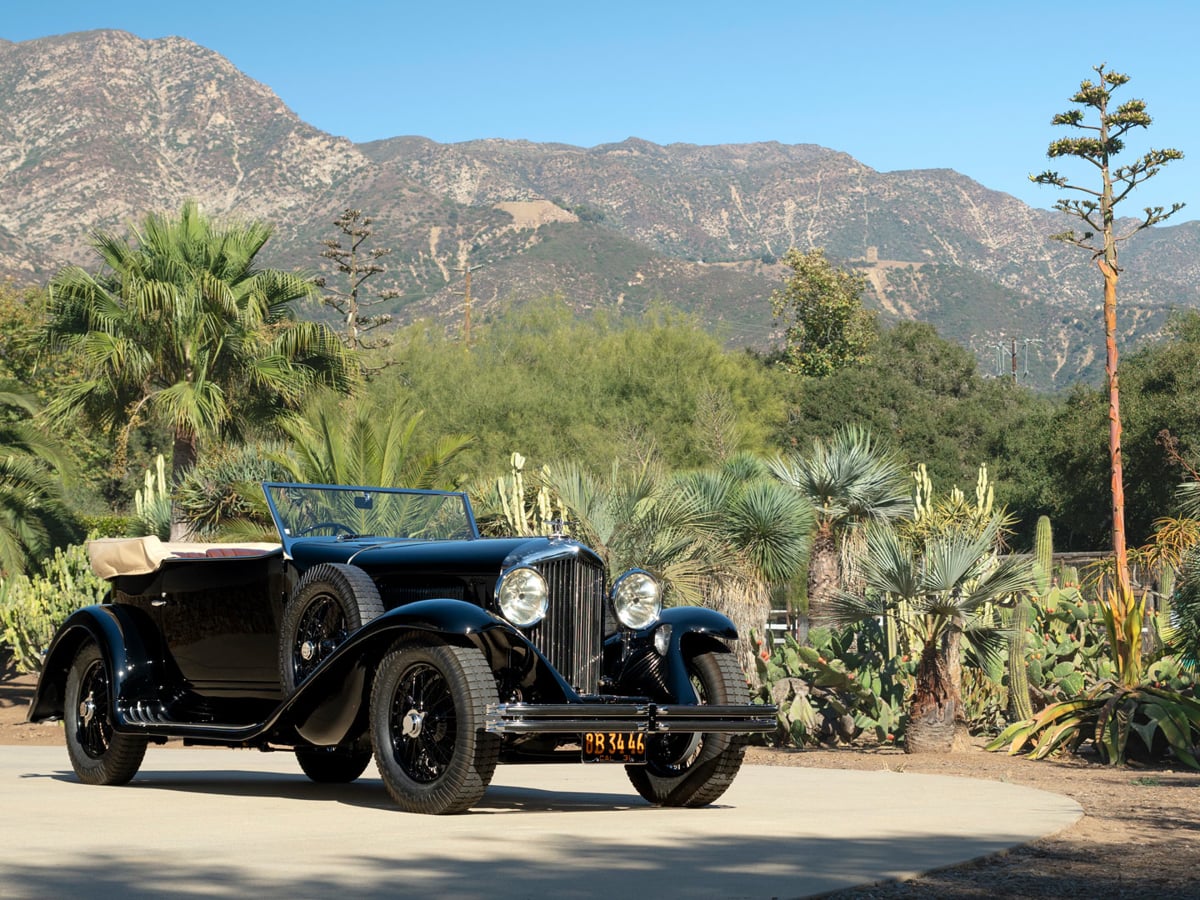
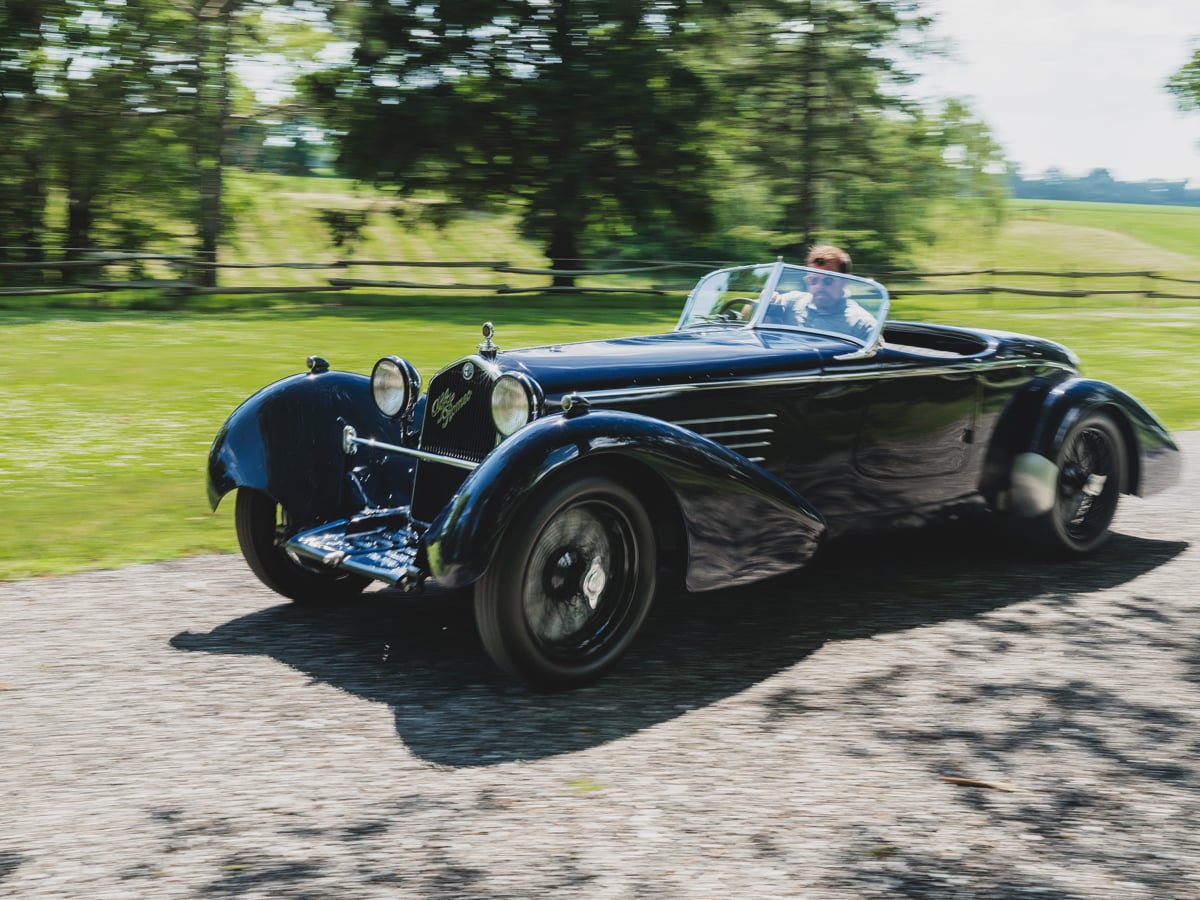
What we’re driving here is the ultimate pre-war Invicta: the S-Type low chassis. Only around 75 were made and, in some respects, it was similar to the A-Type that preceded it. One of the most important differences between the S- and A-Type was that the S-Type had a chassis frame underslung beneath the rear axle. As a result, it sits very, very low to the ground, and the proportions are absolutely beautiful. The silhouette is almost like a child’s pencil drawing of what a pre-war car ought to look like: low to the ground, big-diameter wheels, a very, very long bonnet and a relatively short, stubby rear.
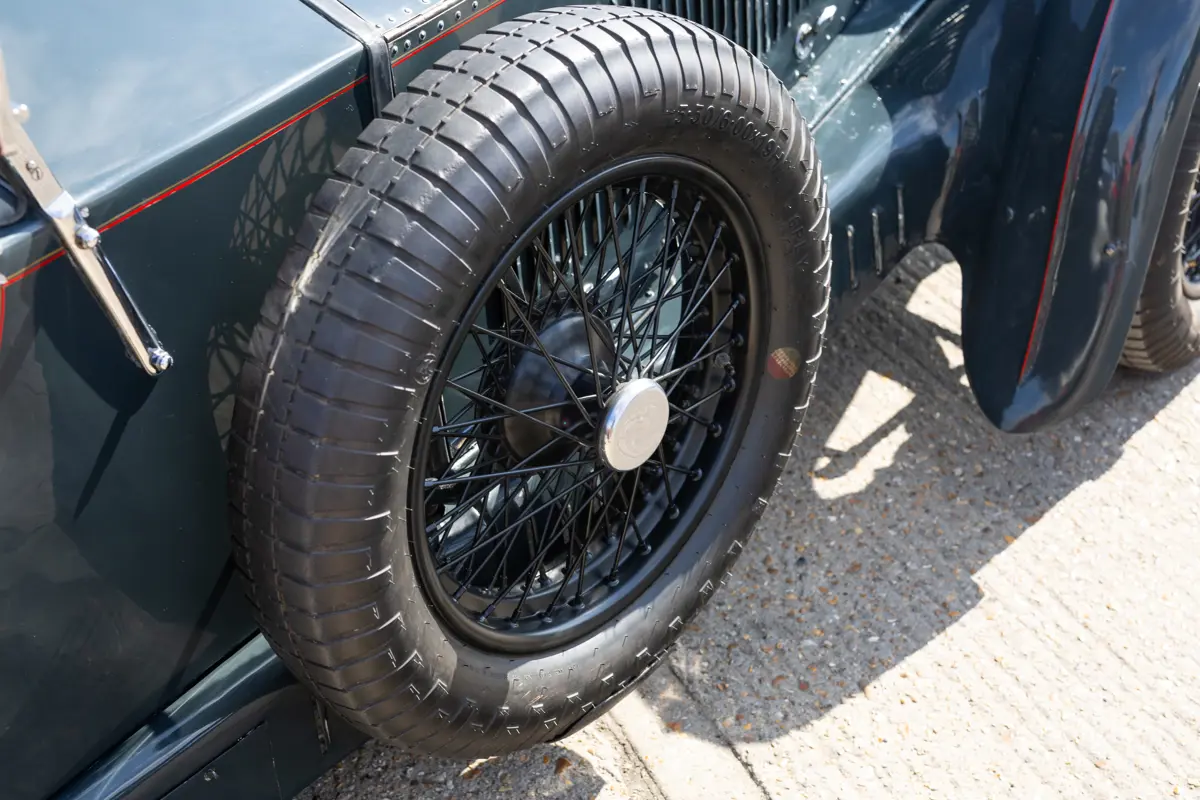
What we’re driving here is the ultimate pre-war Invicta: the S-Type low chassis. Only around 75 were made and, in some respects, it was similar to the A-Type that preceded it. One of the most important differences between the S- and A-Type was that the S-Type had a chassis frame underslung beneath the rear axle. As a result, it sits very, very low to the ground, and the proportions are absolutely beautiful. The silhouette is almost like a child’s pencil drawing of what a pre-war car ought to look like: low to the ground, big-diameter wheels, a very, very long bonnet and a relatively short, stubby rear.
What I particularly like about chassis no. S40 is that it has been used. It has wonderful patina. I personally think that, with pre-war cars, you want a bit of that—you don’t really want it to look as though it rolled out of the factory yesterday. This particular car has been prepared with long-distance European driving events in mind and has provided the current owner with reliable and effortless motoring over many thousands of miles. These are cars to be driven and enjoyed.
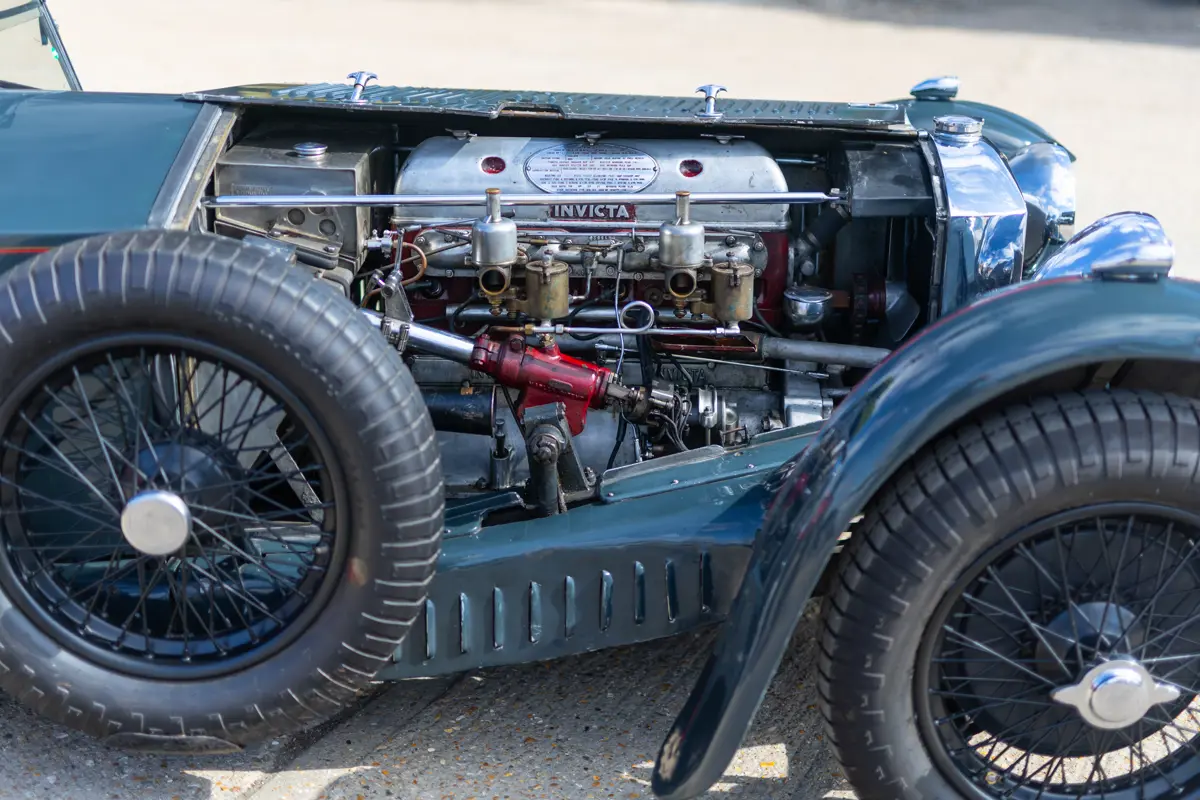
In the pre-war era, you didn’t necessarily have to make your own engine. There were certain engine manufacturers who would essentially provide an off-the-shelf solution. Meadows was an engine manufacturer whose units found their way into a number of pre-war cars, most notably Frazer Nash and Lea Francis, both of which used the very capable 1,500cc four-cylinder engine. For the Invicta S-Type, it was the superb 4½-litre, six-cylinder unit that graced the car, providing effortless performance. From new, it made around 110 brake horsepower, which is pretty strong. But it also had 173 pound-feet of torque available from 2,000 rpm. It delivers all of that twisting force in an effortless manner. It was, frankly, perfect for what Noel Macklin wanted to achieve.
The current owner of this car has driven it all over Europe and, by playing with the gearing slightly, it’s a car capable of doing well in excess of 100 miles an hour. And I can tell you, when you’re sitting in the driver’s seat and you’re moving at speed, you really do feel like you’re moving.
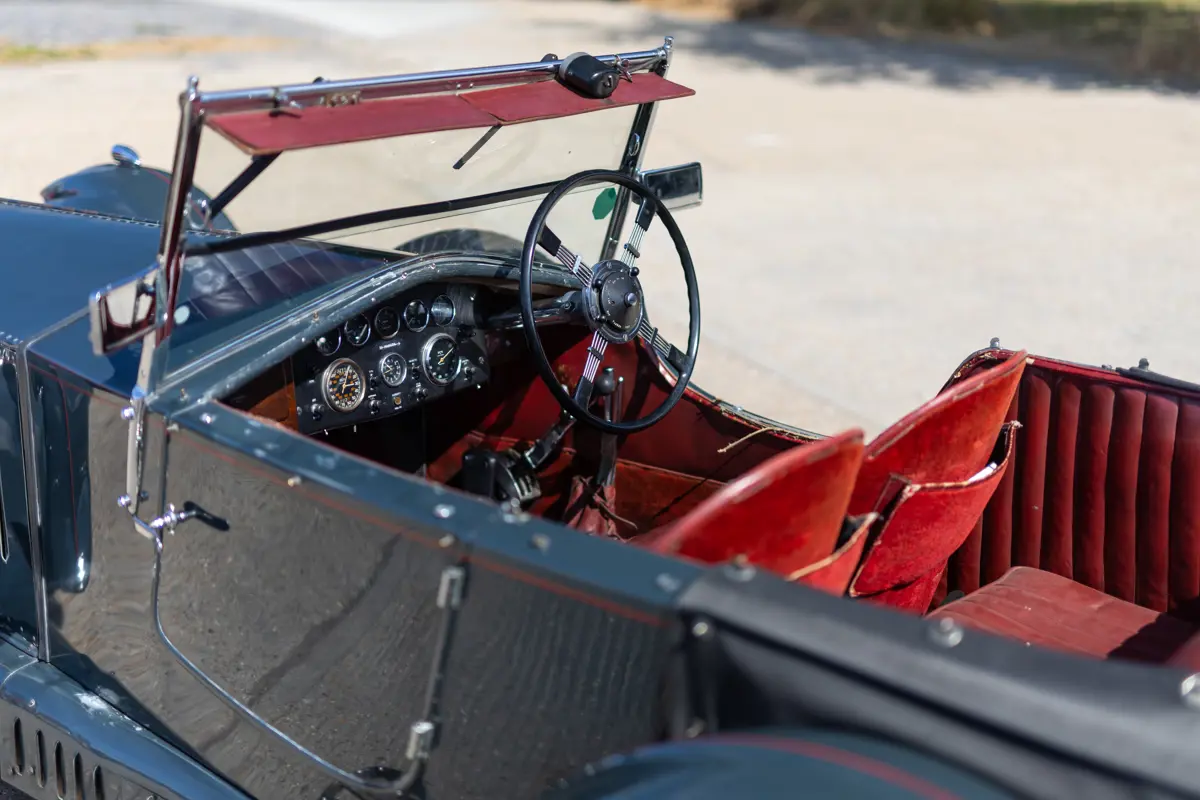
The eagle-eyed reader might already have noticed that it has just one door. There’s not one on the driver’s side, which is quite common on pre-war cars. Step inside—passenger first—and you’re greeted with a typical enormous pre-war steering wheel, beside which you’ll find the hand throttle.
Dotted throughout the cabin is an array of gauges and dials giving you all the information you need: speed, revs, oil pressure, and water temperature. You’ve also got controls on the dashboard.
The gearbox is positioned just down to the right-hand side of your knee, à la Formula 1 car. It’s a four-speed unit, and it works beautifully, especially considering it doesn’t have synchromesh. Just to the right of the gear lever, you also have the handbrake. So, for those perhaps more used to changing gear with their left hand, you’ve just got to recalibrate your brain slightly to change gear with your right.
There has never been a better time to buy a pre-war car. Values have softened slightly over the last few years, and that presents a great opportunity. There is a new generation of buyers that really needs to rediscover the joy of a pre-war car, because they are so far removed from what most people drive every day, and a car such as the Invicta is an exhilarating and thoroughly reliable antidote to the more sterile driving experience of many post-war cars.
Everything about driving a pre-war car is completely different: the way it smells, the way it sounds, the way you change gear, the steering, the brakes.
Yet this Invicta is also so effortless and flexible, and still feels refreshingly different from many typical pre-war cars. Tate & Lyle, then, may be the more famous name. But Macklin and Lyle are the names worth remembering.