Once everyday sights in company car parks, the BMW M5, Honda Integra Type R, and Volkswagen Golf R32 are finding a new audience among collectors who appreciate their analogue charms.
What are a Volkswagen Golf, a Honda Integra, and a BMW 5 Series doing in an RM Sotheby’s auction? Quite a lot, as it turns out. Three modern classics heading to our London auction on 31 October demonstrate that automotive greatness isn’t always measured by a manufacturer’s prestige.
There was a time when finding a Volkswagen Golf in an RM Sotheby’s catalogue would have been rather like discovering a Vauxhall Vectra parked outside Loews Hotel in Monaco. Perfectly capable, of course, but hardly what you’d expect to see among the Ferraris, Bentleys, and other machinery requiring a particularly accommodating financial adviser.
Yet here it is, alongside a Honda Integra and a BMW 5 Series. Three cars that were once familiar sights in company car parks, magazine road tests, and enthusiastic conversations down the pub, now sharing space with some of the world’s most desirable automobiles.
Each represents something significant in motoring history. Better still, these modern classics have earned their place for an entirely different reason, not least for how they sound.
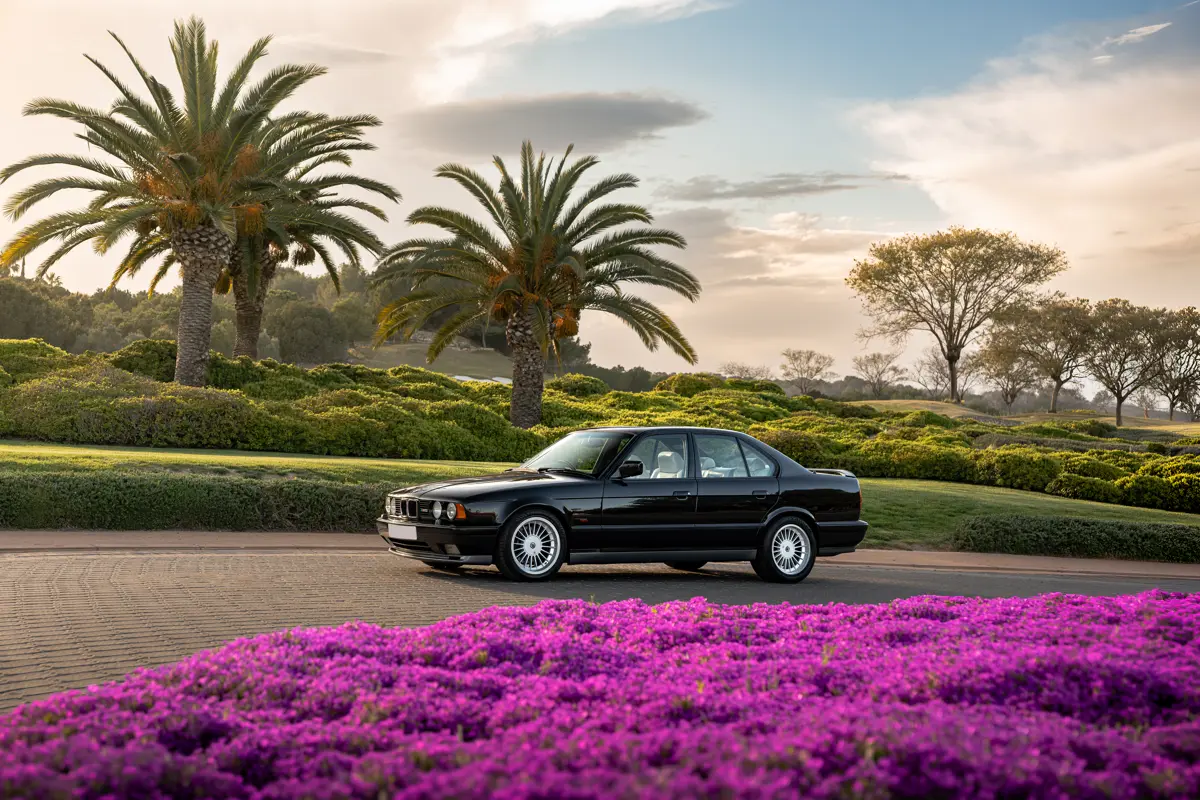
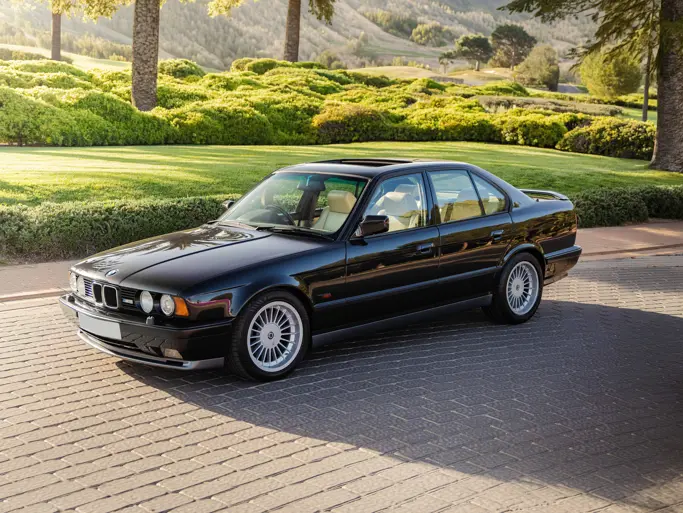
1989 BMW M5
Before performance saloons became an exercise in visual one-upmanship, there was the BMW M5. In elegant Ercole Spada-styled E34 form, it looked sufficiently like an ordinary 5 Series to pass unnoticed in the executive car park, despite being capable of embarrassing considerably more exotic machinery.
Underneath the bonnet was a 3.6-litre straight-six developing 311 bhp, driving the rear wheels through a five-speed manual gearbox—and packing a multi-throttle-body, rev-happy soundtrack that has yet to be beaten by subsequent M5s. It’s understated, balanced, and was assembled by hand at BMW M’s Garching facility, the last M5 built this way—and you could argue that it represents the end of an era.
The example offered in London has an even better story—its chassis number ends in 003, making it one of the earliest right-hand-drive E34 M5s, while factory option code 904 identifies it as a test car. Delivered to BMW’s British headquarters at Bracknell, it may also have been a pre-production example.
Finished in Black with Champagne Nappa leather, it has covered 93,979 miles and even spent time in the ownership of a personal bodyguard to Steven Spielberg. For collectors, though, the real attraction is its connection to the earliest days of one of BMW M’s defining models. This is more than a very good old 5 Series—it’s a little piece of M history.
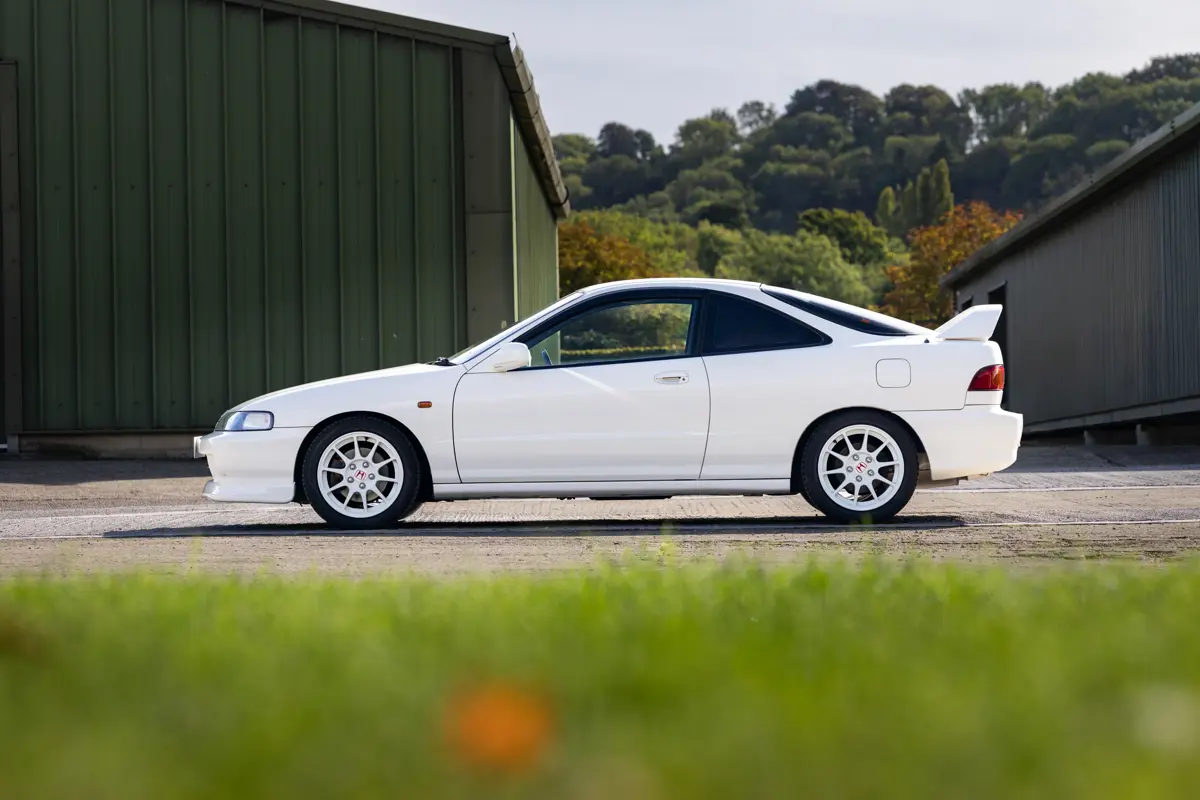
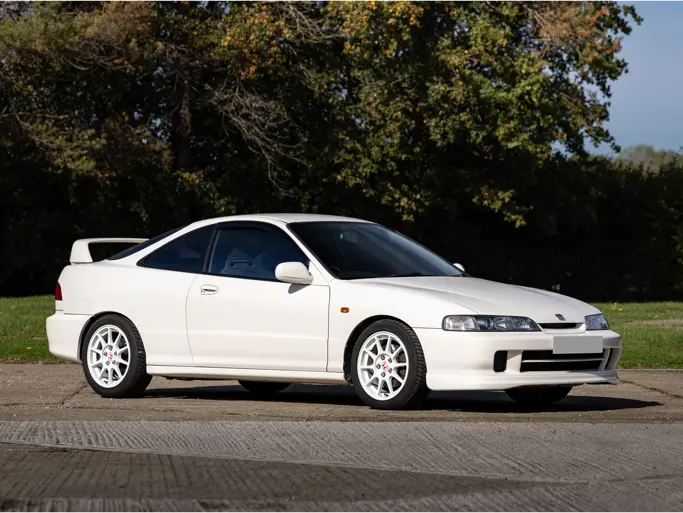
1998 Honda Integra Type R
The Integra Type R is proof that the best modern classics aren’t necessarily the fastest. Honda took a relatively ordinary front-wheel-drive coupé and subjected it to the sort of obsessive attention usually reserved for racing cars.
Its 1.8-litre VTEC engine featured hand-finished cylinder-head ports and produced 197 bhp, without the assistance of a turbocharger—just revs. The body was stiffened, unnecessary weight removed and the suspension developed with extraordinary care.
The result was a car that made anything this side of a Lotus Elise a clumsy heavyweight. Its steering, balance, and willingness to rev to 8,400 rpm turned even an unremarkable stretch of road into an excuse to chase serious BTCC sound effects by aiming for the VTEC zone as often as possible.
It also challenged the assumption that front-wheel drive was fundamentally inferior for serious performance driving. Anyone fortunate enough to experience a properly driven Integra Type R will know how comprehensively Honda demolished that argument—I still vividly remember my first drive back in 1999. Corners were treated as an excuse to see how hard you could push it.
The Championship White example heading to London is a Japanese-market DC2, which spent more than two decades in its homeland before arriving in Britain in 2024. It has covered 70,755 kilometres and retains much of its original character, although a Nardi steering wheel and other accessories have been fitted.
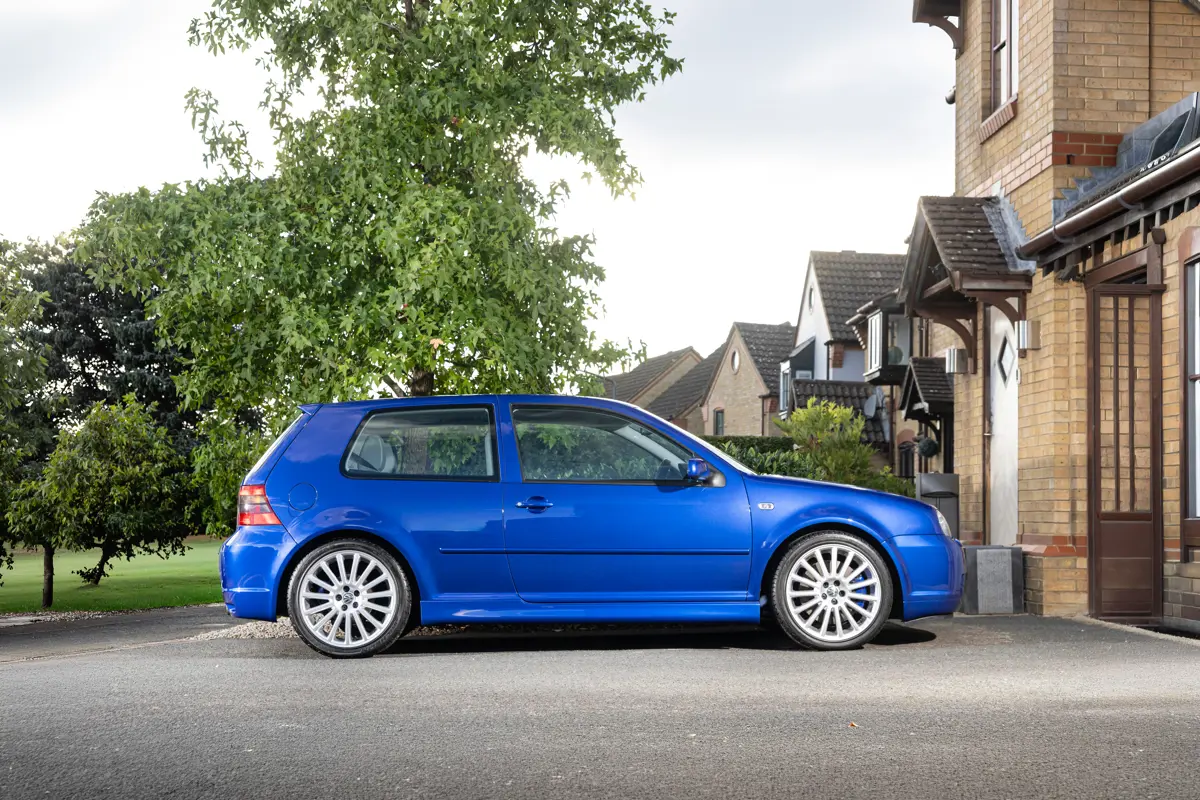
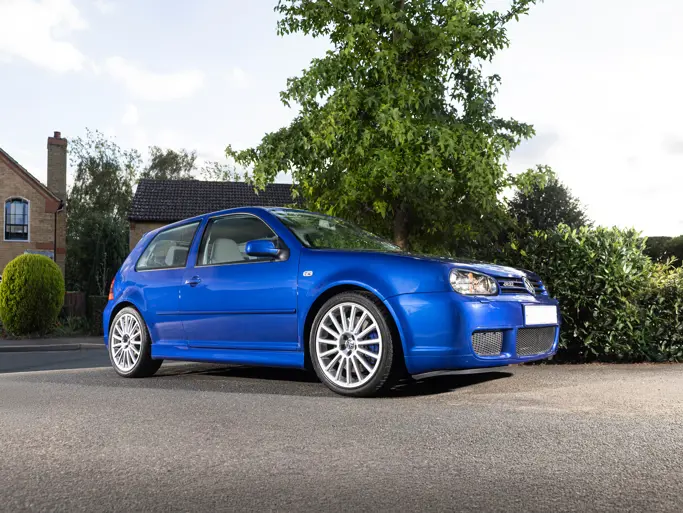
2003 Volkswagen Golf R32
The fourth-generation Volkswagen Golf was a fine car, but its growing emphasis on refinement and perceived quality had rather diluted the cheeky character of the original GTI. The R32 was Volkswagen’s answer, and it was magnificently excessive—it was also brilliant, although it took us all a while to realise.
Into its relatively compact engine bay went a 3.2-litre VR6 producing 237 bhp, accompanied by four-wheel drive and a six-speed manual gearbox. It wasn’t as playful as a GTI, but it was faster, more secure, more comfortable over long distances and was blessed with one of the most soulful six-cylinder wails this side of a Porsche 911.
But the original R32 also represents a wonderful evolutionary dead end. The six-cylinder hot hatch was a glorious idea while it lasted, combining a compact body with the smoothness, character and soundtrack of a much bigger engine. Efficiency, emissions, and economics eventually brought the experiment to a close, leaving us with increasingly capable turbocharged four-cylinder successors.
The example offered in London is extraordinary. Finished in Deep Blue Pearlescent, it has had one owner from new and covered just 390 miles since 2003. Its only recorded MoT was in 2006, at 375 miles. Long-term storage means it will need recommissioning before returning to the road, assuming its next owner can bring themselves to use it.