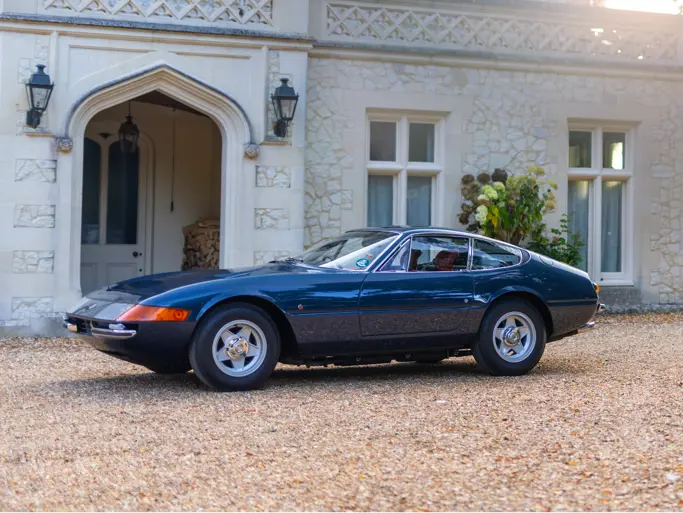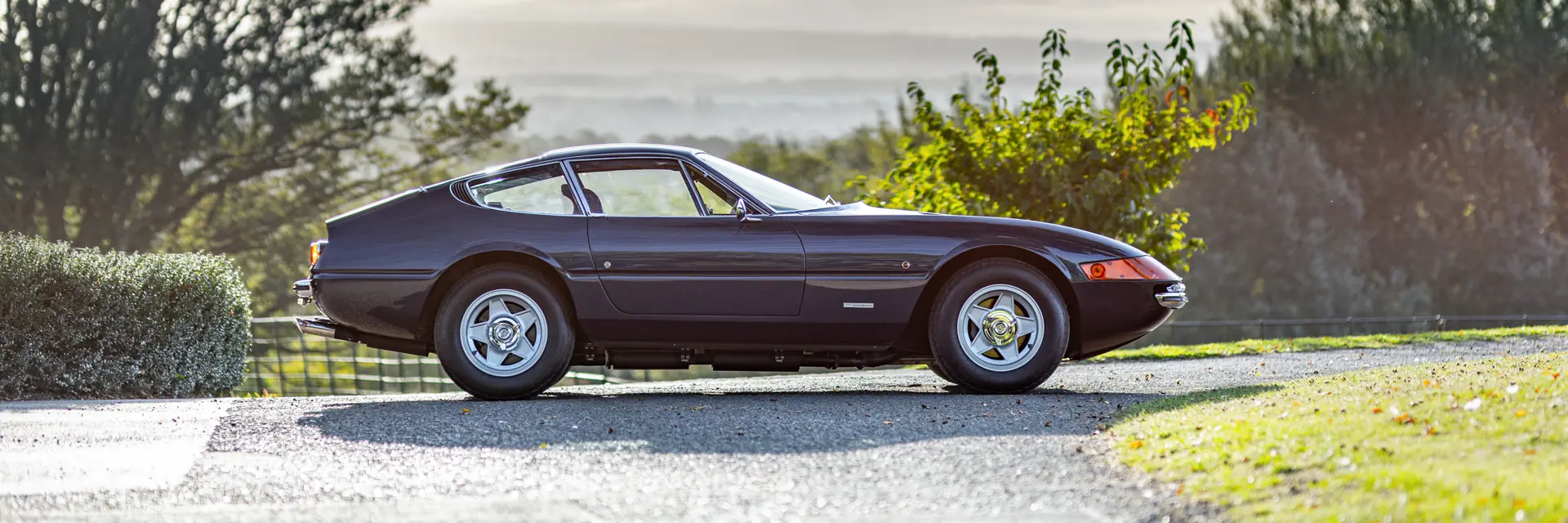
A rare late-production, right-hand-drive Plexiglass Daytona that combines exceptional originality in a compelling specification.
There is a strong argument that the best Ferrari Daytona is neither the earliest nor the rarest, but one that brings together the most desirable elements of the model’s earliest iteration with features found on the later cars. This 1971 365 GTB/4 does precisely that.
It retains the Plexiglas-covered headlights of Pininfarina’s original design, adds the distinctive details of the final right-hand-drive examples, and survives in a condition that owes more to careful preservation than comprehensive restoration.
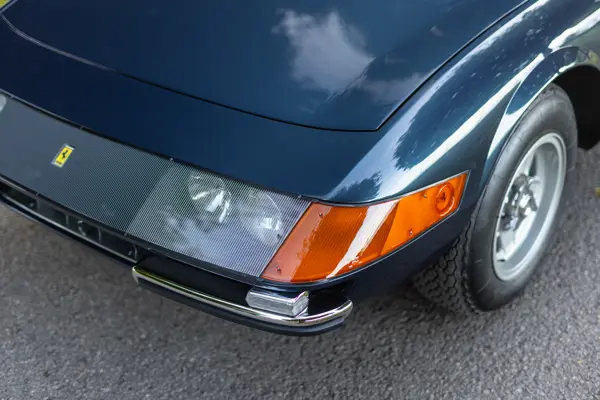
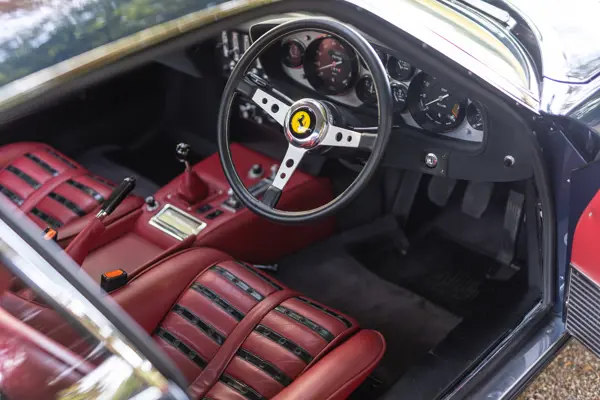
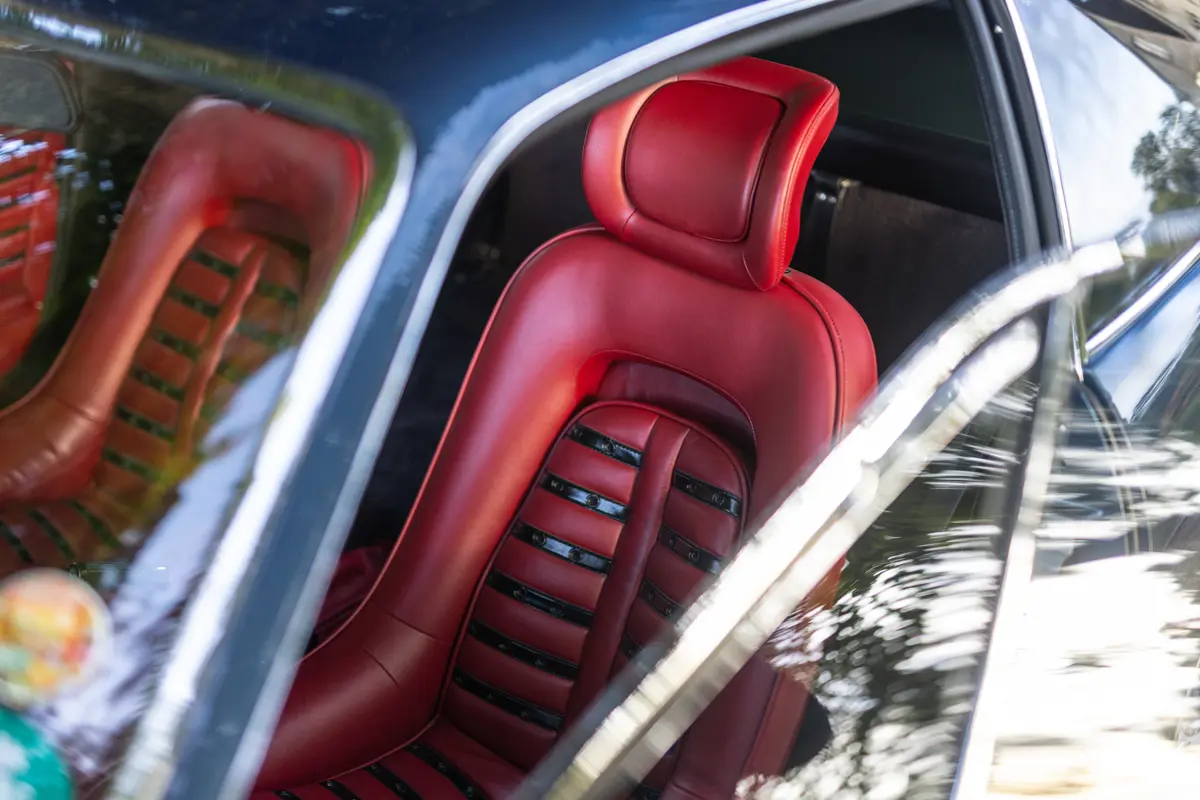
Its specification is exceptional. In deep metallic blue over red leather, it is a particularly persuasive contender for the title of ultimate Daytona. Alongside the Plexiglas front, just as Pininfarina originally intended, this example benefits from the leather-rimmed steering wheel and headrests, neither of which was standard on the early cars. It is a subtle but significant distinction that sets it apart from the majority of Daytonas. Even aficionados can forget that this specification exists as original factory output.
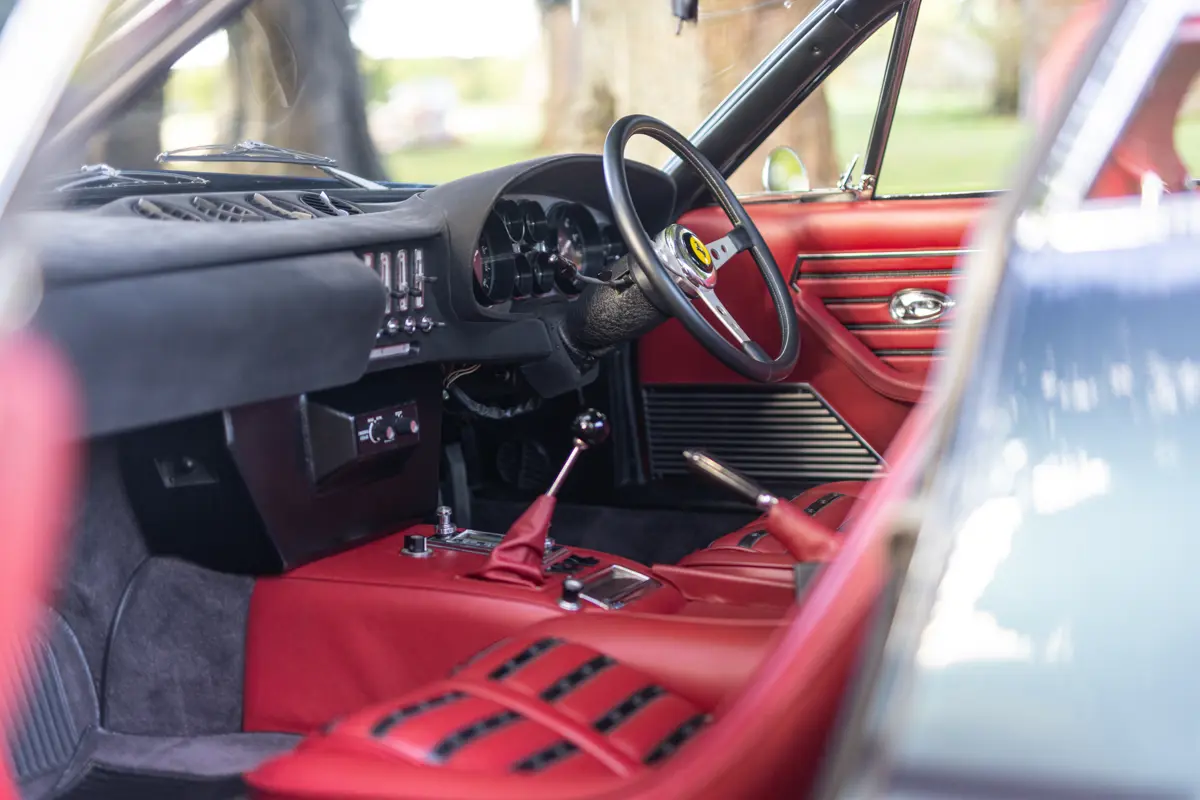
Then there is the colour combination. While red is an understandable favourite for Ferraris of this era, the deep Blue Sera Metallizzato finish is particularly beautiful, complemented by a rich red leather interior. The cabin has been retrimmed in the UK by O’Rourke, the respected Ferrari trim specialist based in Sussex, using leather of the correct grain. The mouse-hair dashboard completes an interior that feels entirely appropriate to the period and correct in every detail.
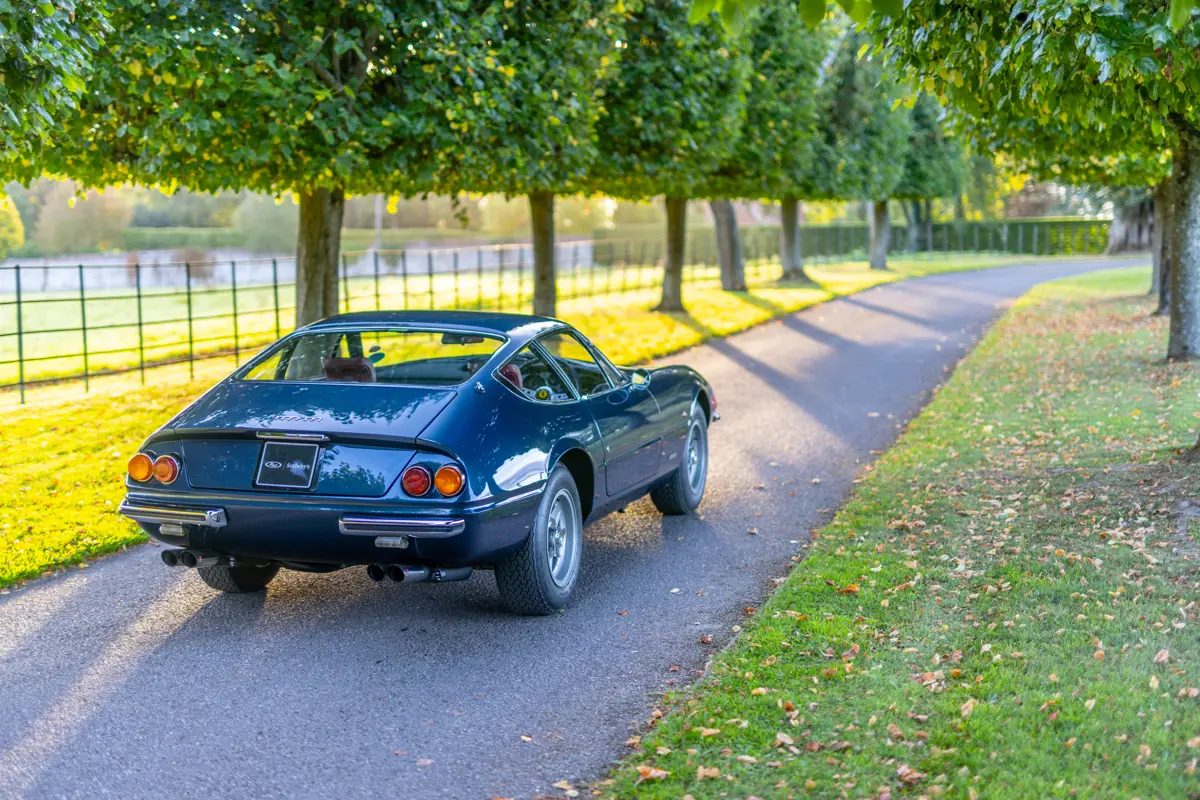
The car was delivered new to Melbourne, Australia, a detail that has proved important to its preservation. It has spent its life in a climate particularly favourable to the survival of a car of this age, and the results are evident throughout.
Look beneath the surface and the extent of its originality becomes even more apparent. Raised on a hydraulic lift, the Daytona reveals details that are increasingly difficult to find on examples of the model. The original engine undertray remains in place, as do the exhaust heat shields. These are the kinds of components that are often lost during decades of use and restoration, yet here they survive as tangible evidence of the car’s history.
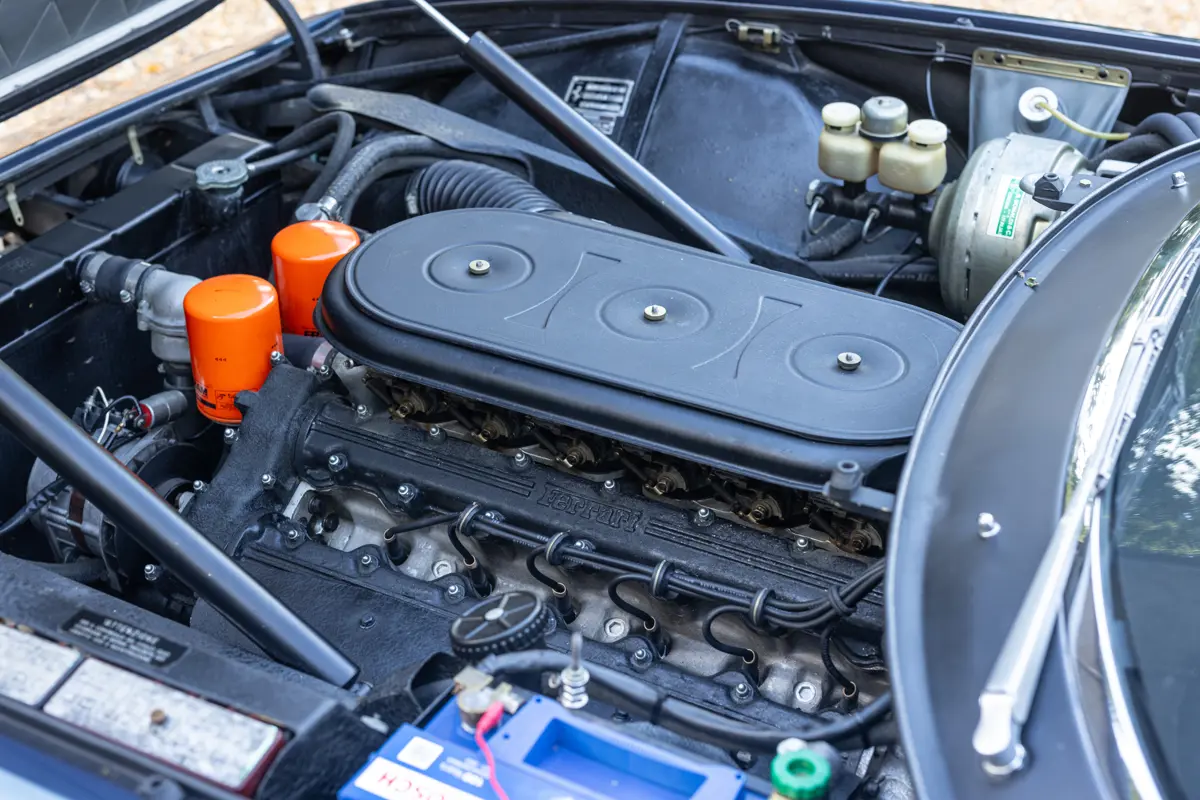
That is what makes this Daytona so special: it has never required a complete restoration. It ranks among the best-preserved examples of the model, retaining a level of originality that is becoming ever rarer.
This is not to suggest that the car has been neglected. Far from it. Considerable care and investment have gone into its upkeep, including the retrimmed interior and a comprehensive refurbishment in 2017. The paintwork was renewed at the same time, and the chrome was also attended to. However, the car has never undergone a full, nut-and-bolt restoration, nor has it been completely dismantled. Its preservation is the result of careful ownership rather than a wholesale reconstruction.
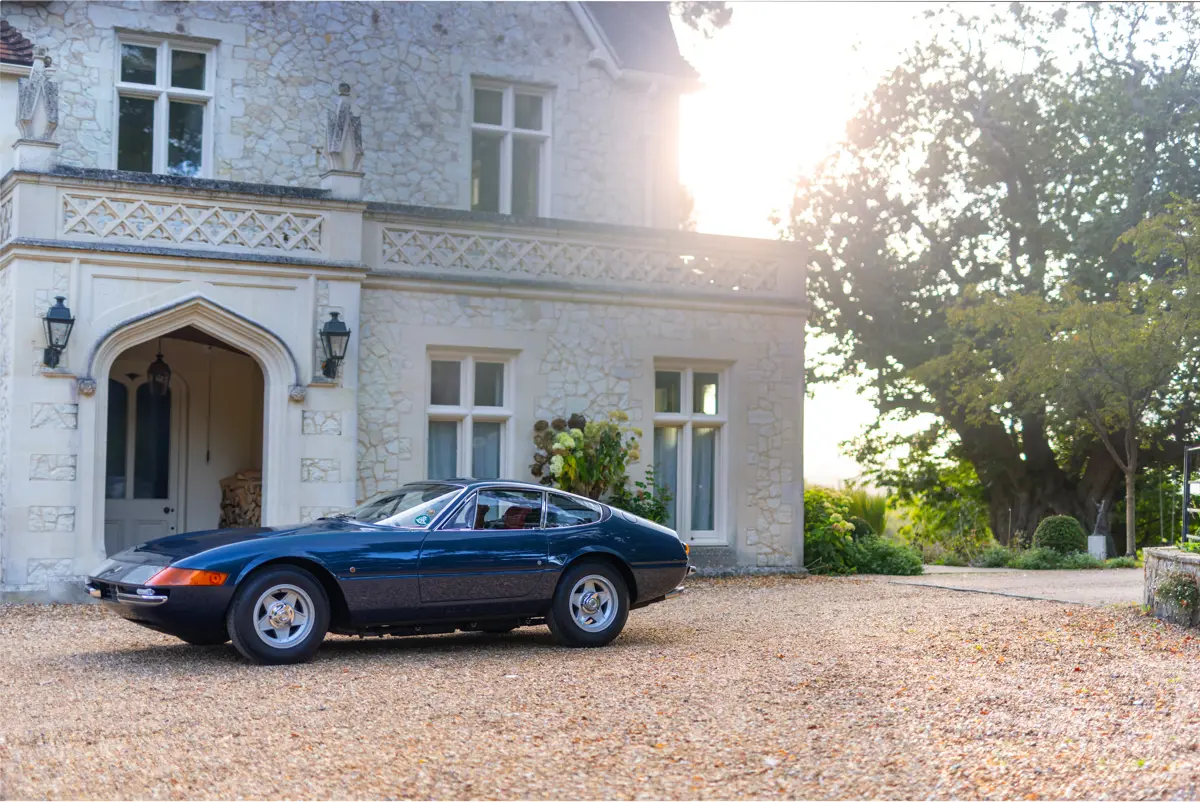
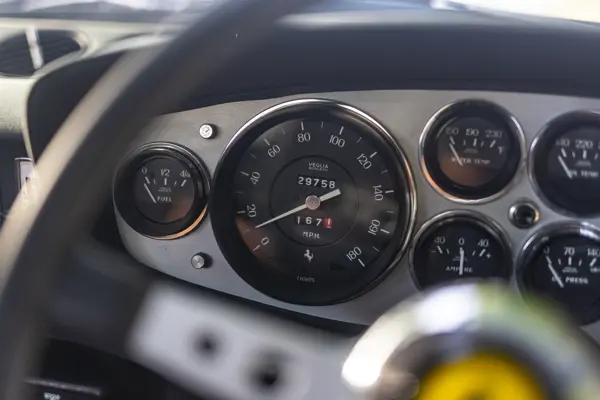
The mileage is equally remarkable. The odometer reads just shy of 30,000 miles, a modest figure for a car now more than half a century old. Every detail reinforces the impression of an exceptionally well-preserved Daytona.
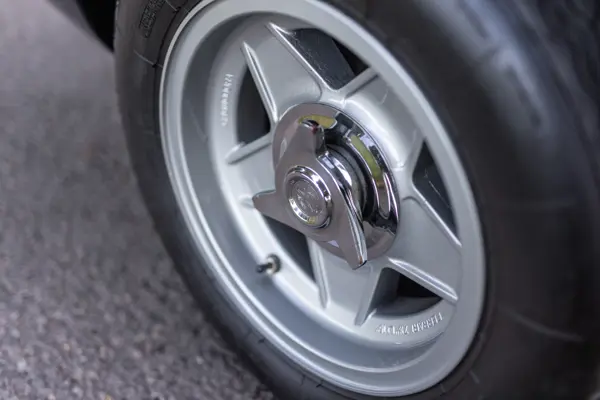
Even the wheels warrant closer inspection. The seven-inch, knock-off Chromodora alloys are correct for the car, and their condition is particularly telling. Run a finger along the small channel at the outer edge of the rim and the original profile remains evident, something that cannot always be said of other examples.
There is air conditioning, too, making the cabin a more comfortable place for longer journeys and adding another practical advantage to an already compelling specification.
For those who appreciate the finer details, the evidence continues beneath the front of the chassis. The wiring loom is secured by small white cable ties that are original to the car. Such seemingly insignificant items are precisely the details that tend to disappear over time, and replacements of the same type are no longer available.
For anyone seeking an early-1970s Ferrari, and a Daytona in particular, the combination of right-hand drive, rare Plexiglas headlights, carefully preserved original components, and modest mileage is difficult to match. Add the elegant colour scheme and the car’s sympathetic history, and the argument becomes stronger still.
If the brief is to find the ultimate right-hand-drive Daytona, this 1971 example is a very persuasive answer.