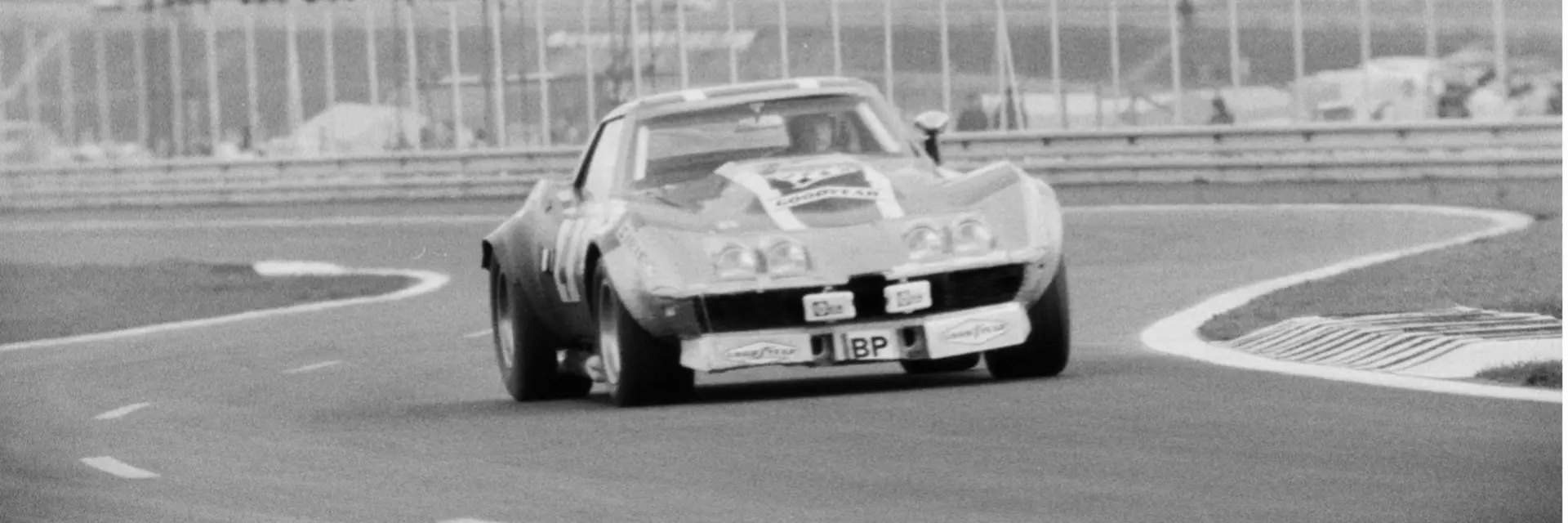
Rejected as a Corvette and accepted as a Ferrari, the remarkable L88 that became America's first class-winning Corvette at Le Mans is one of endurance racing's most improbable stories.
Corvettes first ran at Le Mans in 1960, when one of Briggs Cunningham’s cars finished eighth. But six further Corvette challenges had all ended in failure. So, in 1972, US amateurs Dave Heinz and Bob Johnson decided they should make their own attack on the legendary French classic.
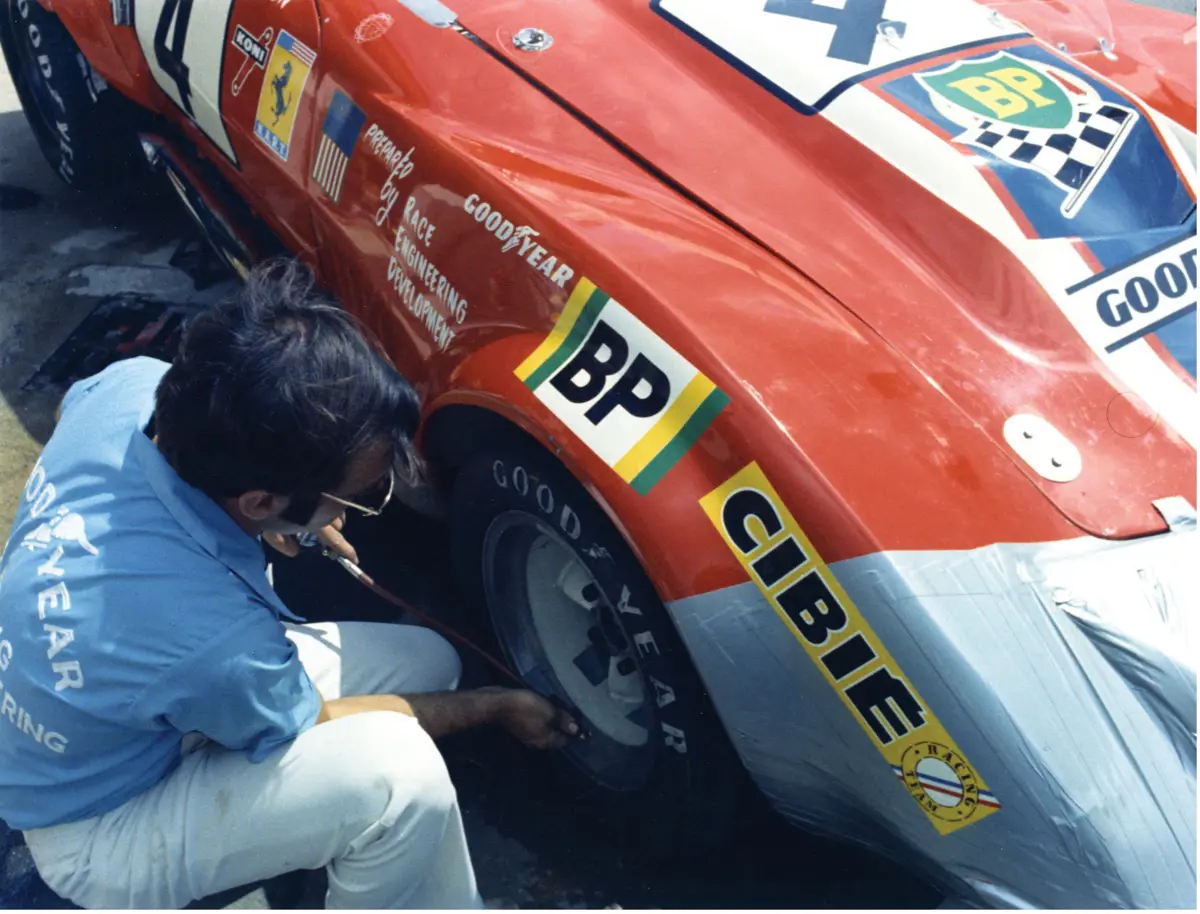
They were already seasoned Corvette racers with the ex-Orlando Costanzo factory-built lightweight L88. The car was run out of Race Engineering and Development (RED), Toye English’s little shop in Wauchula, Florida, and netted class wins at Daytona and Sebring and a class victory in the 1971 IMSA Championship. Le Mans beckoned, and Heinz applied for an entry: Only to realise that their stripped, lightweight L88 would not meet the strict FIA regulations. Among other things, it needed a fully-trimmed interior. Rebuilding it to comply wasn’t an option: they would have to start again with a purpose-built car.
Time was short and budgets were tight, but Toye English agreed to meet the challenge. With eight weeks to go before the race he found a badly crashed four-year-old Corvette in a scrap yard, and paid $600 for it.
It needed a complete new chassis frame, which cost $159 from a local Chevrolet parts store and was then seam-welded for extra strength. Corvette technical guru Zora Arkus-Duntov helped with parts sneaked out of General Motors’ back door and, working night and day, Toye and his little team transformed the old car into a superbly prepared, full-spec L88.
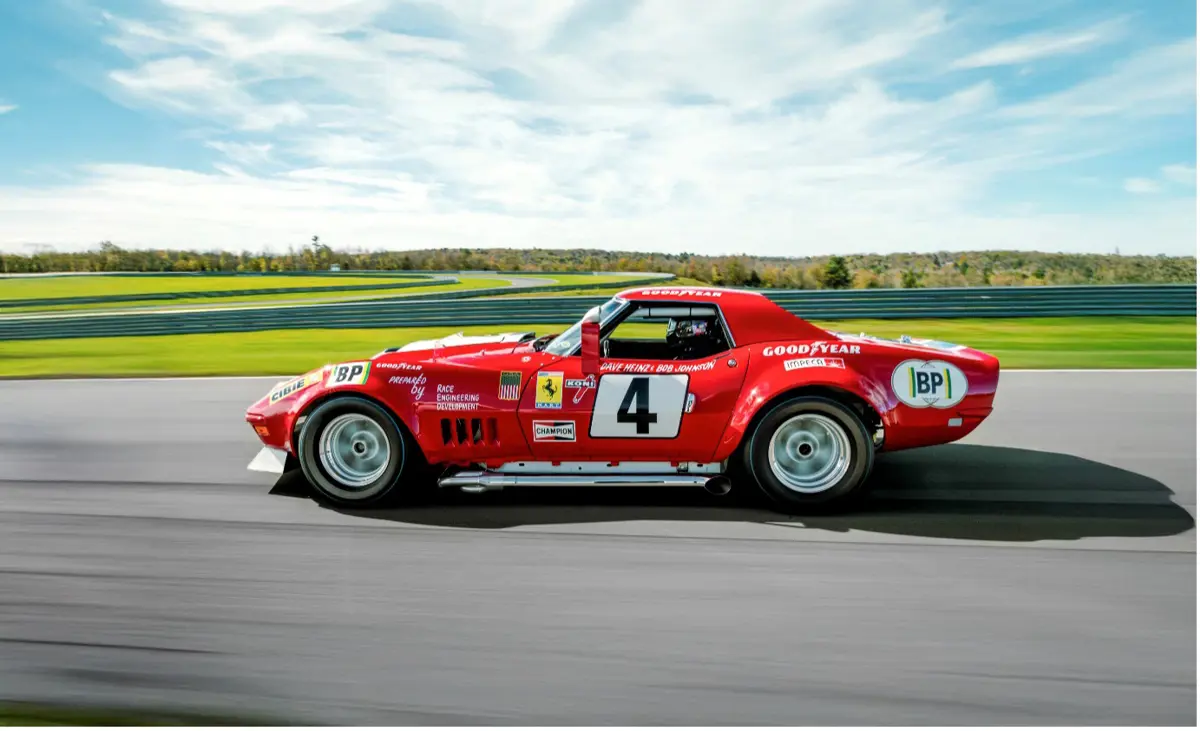
That meant a 650-bhp alloy-headed 427 mill, M22 “rock-crusher” gearbox, race brakes, suspension and steering, and FIA-approved flared wheel arches to cover massive mag wheels and racing tyres. During the meticulous race preparation, English decided to detune the mighty engine’s power slightly, in search of greater reliability during the long race to come—although, with a slightly milder cam and lower-compression pistons, it was still producing 575 bhp at the flywheel. It was to prove a crucial move.
But from the start of the project there was a big snag. The French race organisers turned up their Gallic noses at the RED car and refused its entry: they already had four Corvettes entered for the race. Two of these came from the ultra-professional John Greenwood team, which was backed by BFGoodrich tyres. However, Heinz and Johnson had just beaten them to class victory at Daytona, running a new Goodyear radial tyre, which had delighted its Racing Director Larry Truesdale. He decided that the Greenwood/Goodrich team had to be beaten once again.
So Truesdale put a call in to Luigi Chinetti. As a driver in the 1930s and ‘40s, the Italian had won Le Mans three times. Now, as Ferrari’s USA importer, Chinetti ran the North American Racing Team (NART), which had fielded Ferraris at Le Mans since 1958, and won the race outright in 1965 when the works cars failed. The team was much favoured by the Le Mans organisers, and in the 1972 race it lined up four Goodyear-shod Ferraris. But it also had a reserve entry. Massaging his own relationship with Goodyear, Chinetti agreed to do Truesdale a favour and utilise his reserve. Now there was a fifth NART car on the entry list, and it wasn’t a Ferrari.
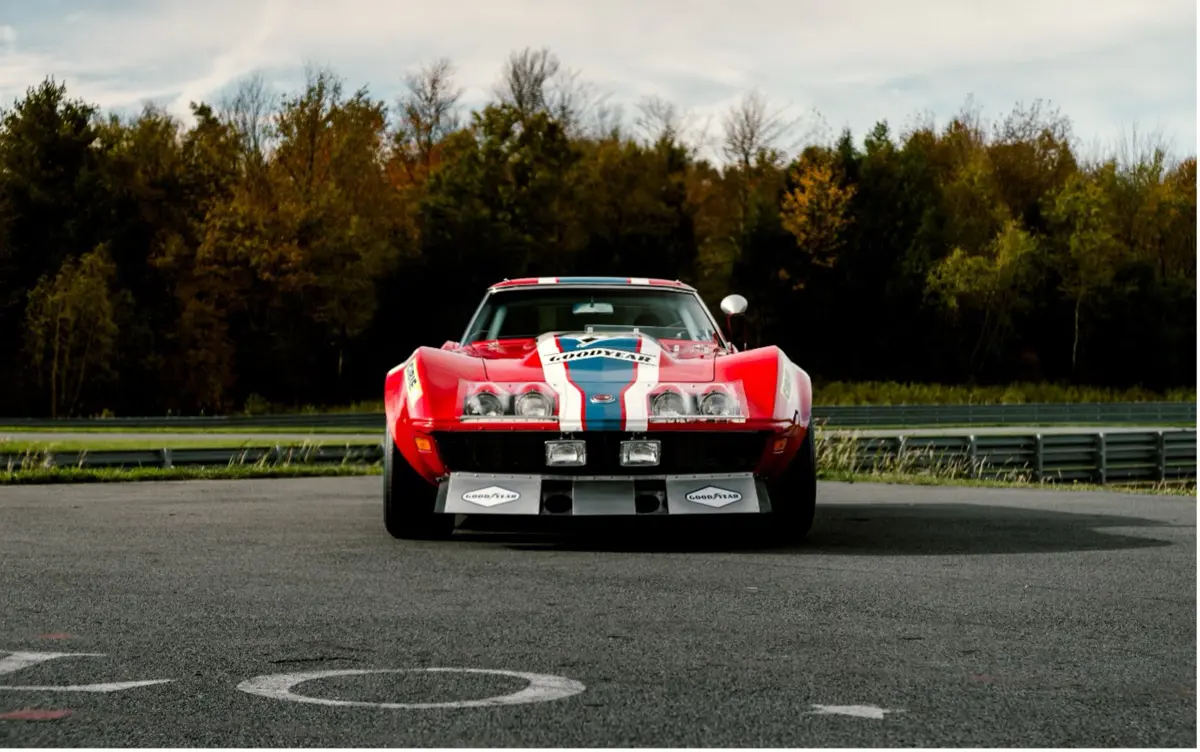
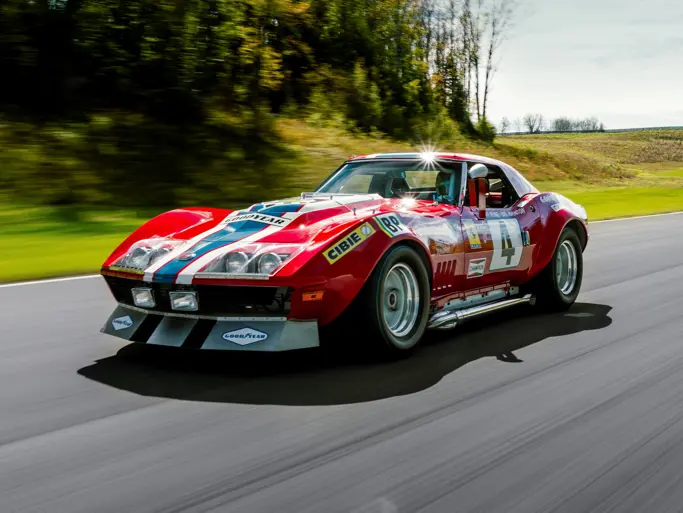
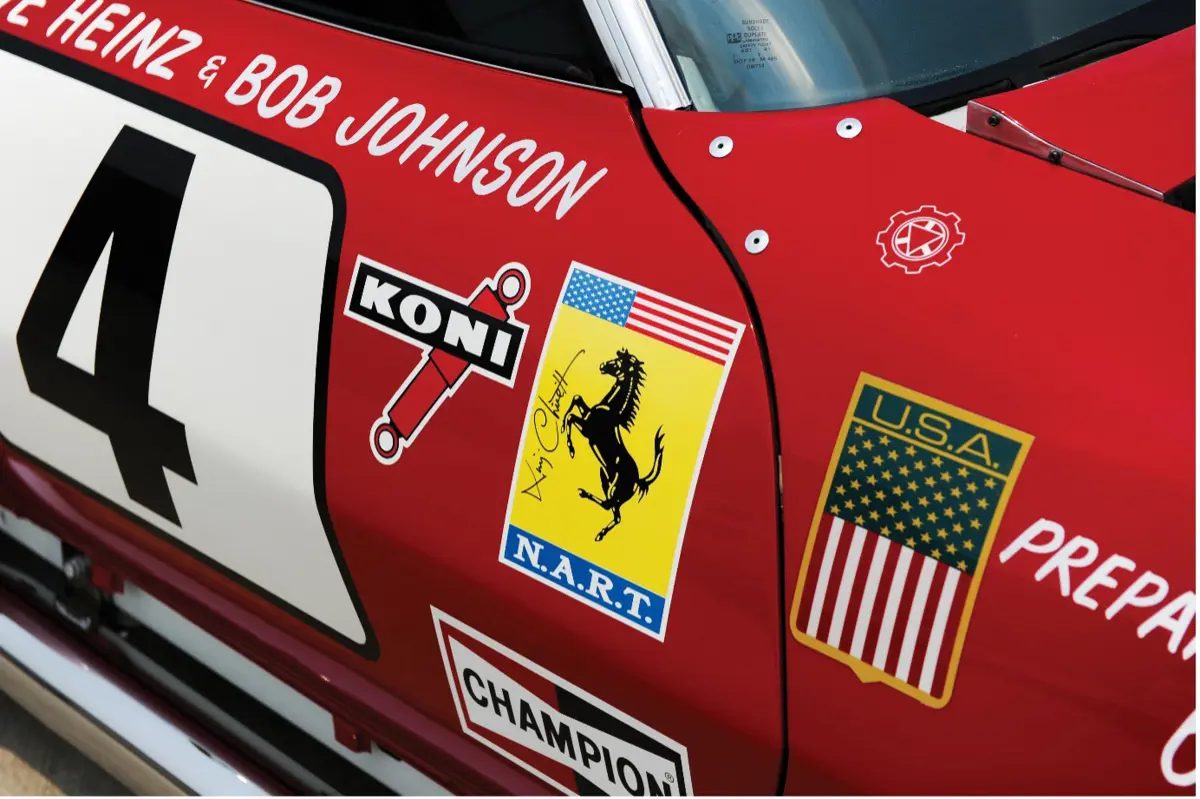
The Corvette was unsponsored, but among the trade suppliers’ decals on the L88, along with BP (fuel), Champion (plugs), Koni (dampers), Cibié (lights), and of course Goodyear, was the NART badge wearing the iconic black Prancing Horse. The car was painted in NART’s livery, red with a white and blue stripe running fore and aft over bonnet, roof, and tail to acknowledge the USA racing colours.
The car was barely finished in time to be flown to Paris—Heinz had persuaded TWA to cover the transport costs—and then towed down to Le Mans, where the team borrowed some space in a local VW dealership to set up shop. But right from the start things went badly.
First, it failed the quixotic and unpredictable Le Mans scrutineering. RED’s build had included passenger seat, glass windows, and interior trim, but they hadn’t realised the cockpit had to retain its carpeting. Tearing the carpet out of the team’s Peugeot rental car solved that. The car also had to carry a spare wheel and tyre, so that was borrowed from the rental car as well, and although it was completely the wrong size it seemed to satisfy the officials. (Remarkably, the car’s meticulous restoration back to its exact Le Mans spec has included sourcing and fitting a Peugeot wheel, which is on the car today.)
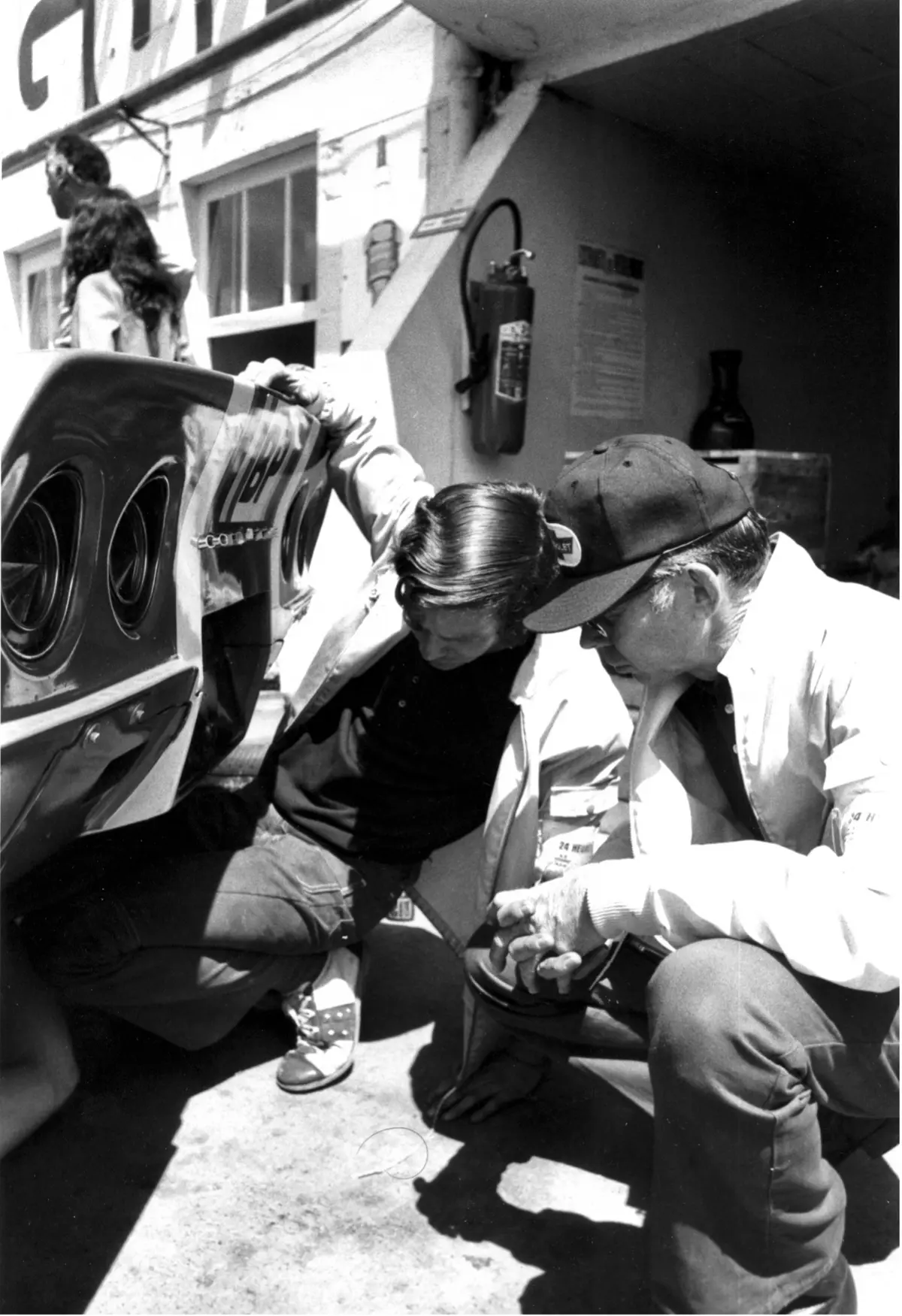
Neither Heinz nor Johnson had raced at Le Mans before, but taking up the role of team manager was another Bob Johnson, the former Cobra and GT40 racer whose Le Mans experience included racing the Chaparral there in 1967. Within the team he was known as Columbus Bob to distinguish him from Marietta Bob, for the driving Johnson came from Marietta, Ohio.
During the days before practice, with Columbus Bob shouting advice from the back seat, the long-suffering rental Peugeot squealed its way around the track as the drivers committed every twist and bump to memory. Once official practice was under way the Corvette, helped by an ultra-high rear axle ratio and Goodyear’s biggest tyres, was hitting an astonishing 212 mph down the straight.
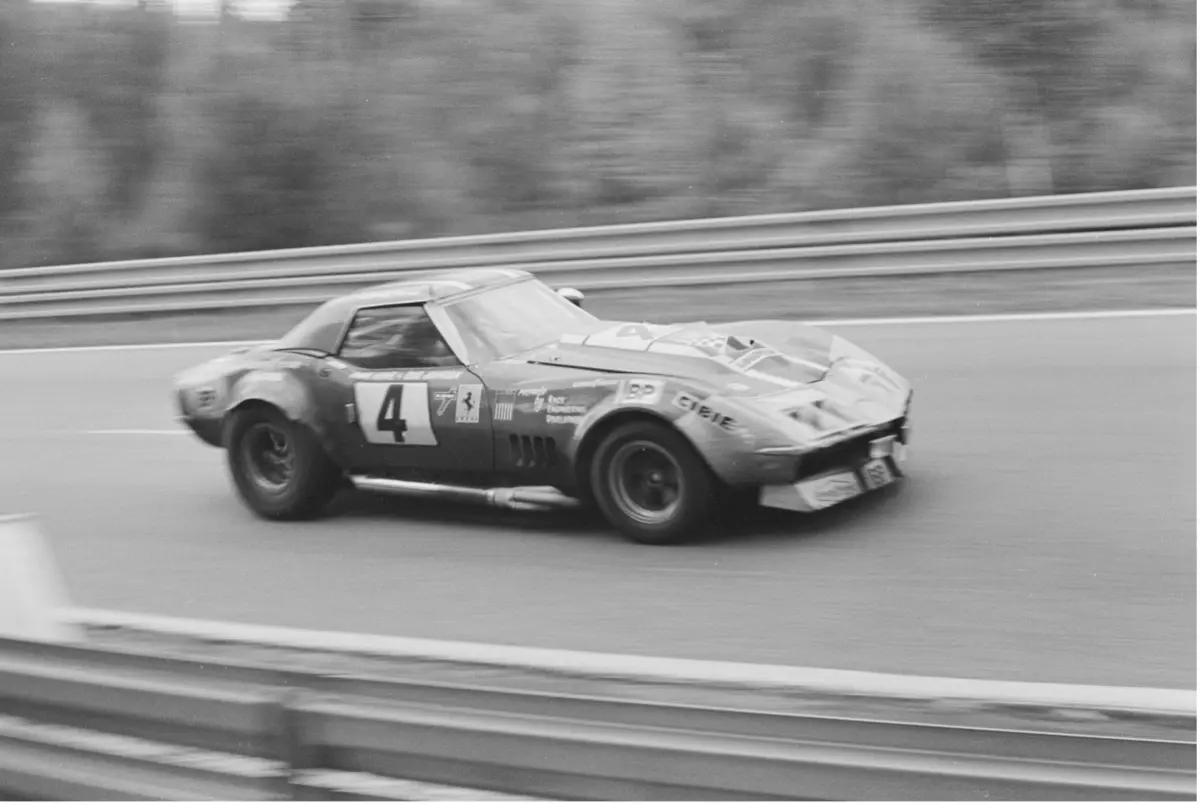
Then, during Johnson’s first practice session, a big plastic advertising banner blew down and landed on the track. At over 100 mph, as he swerved to avoid it, the car crashed into the barriers, showering fiberglass and headlights across the track.
Back at the paddock, the team surveyed the damage. The front of the car was badly smashed up, but there was no time for anything more than a patch-up job. Sheets of aluminium were pop-rivetted across the nose, supported by wooden slats torn from a packing case. The RED boys carefully followed the original shape of the nose and covered it all with yards of silver duct tape—20 rolls of the stuff. Having arrived at the track immaculately turned out, the Corvette was already looking somewhat second-hand. The French scrutineers were not happy with the car starting the race in that state, so while they watched one of the team jumped up and down on the car’s nose. It held, and it was waved through.
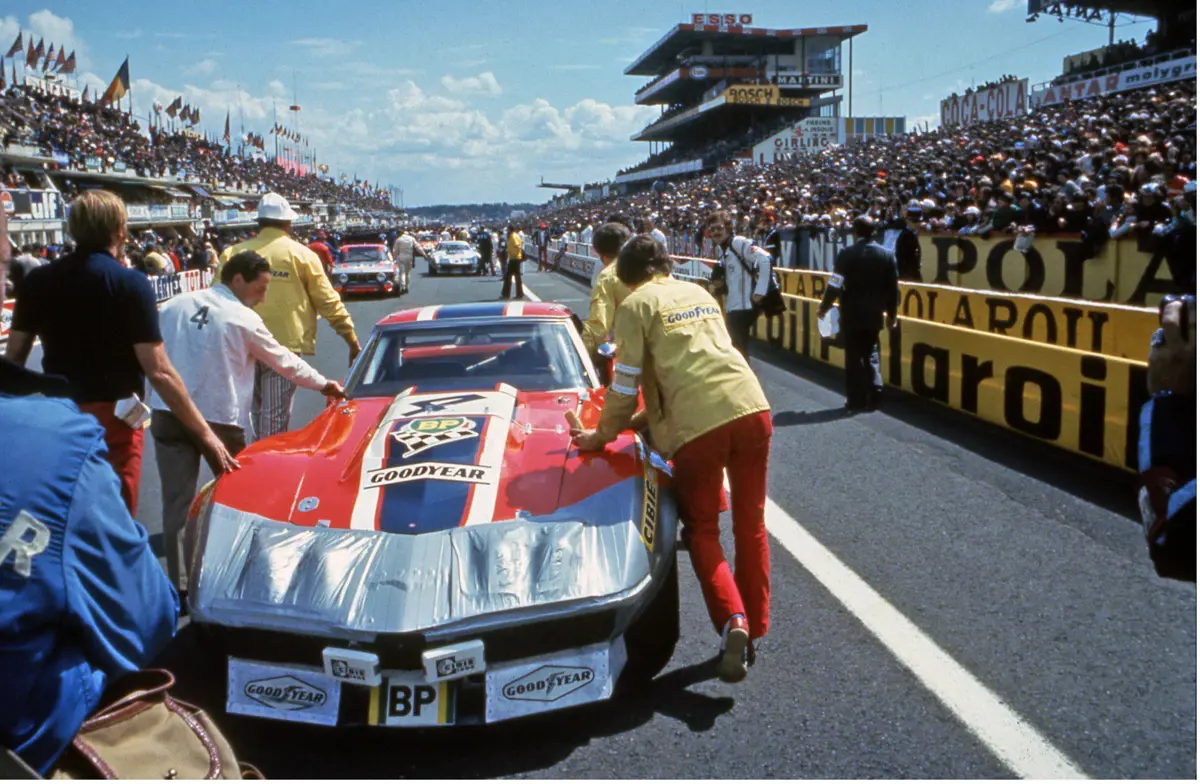
After all these problems the Corvette only qualified 51st of the 55 starters, but from the start at 4 p.m. on the Saturday the team’s high hopes were boosted as Heinz and Johnson rapidly moved it up the field to 28th place. But after just one hour the car began to splutter. Far too early, it was running out of gas.
The engine stopped completely approaching the pits, but fortunately Johnson was just able to coast silently in. Unbeknownst to the team, in the practice accident the tank overflow pipe had been damaged. Eventually this was identified, and dealt with in a lengthy stop. Now the car’s fuel range returned to normal.
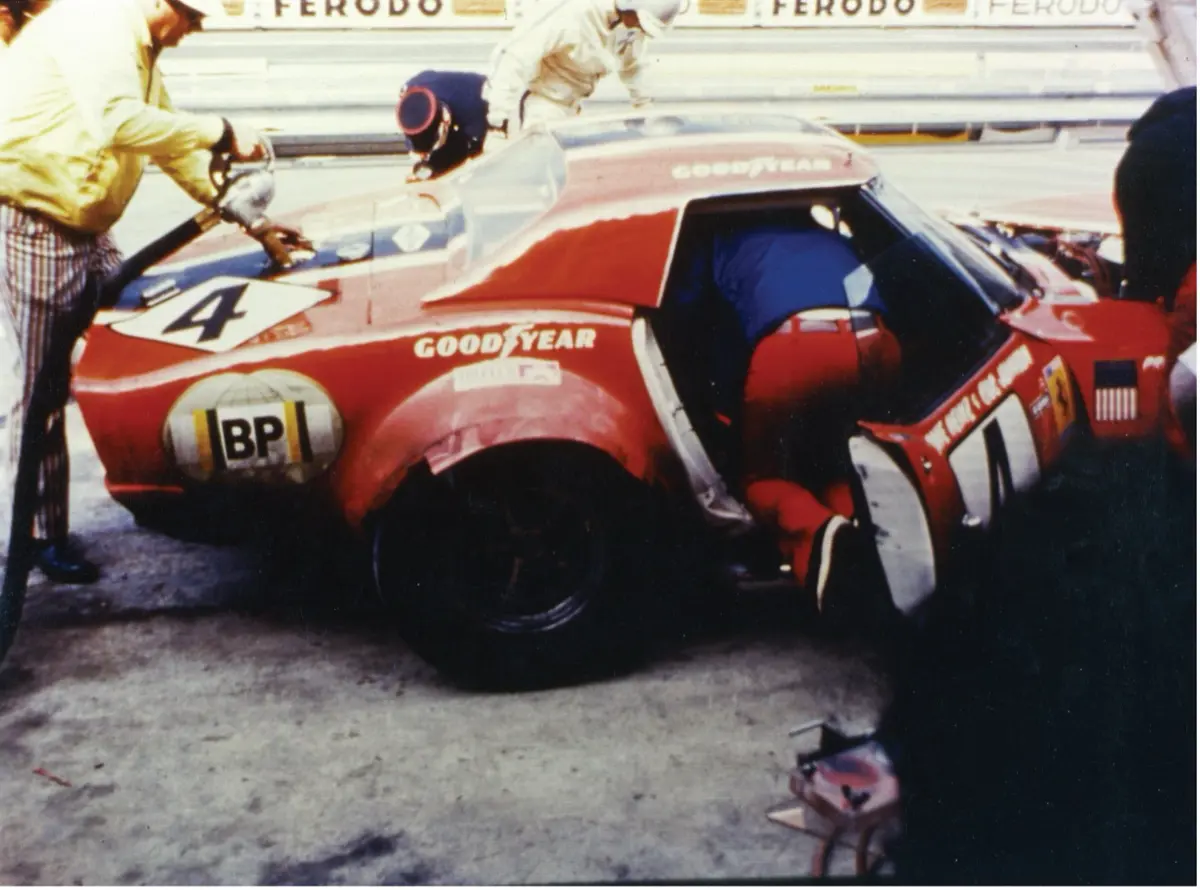
As darkness fell, it began to rain. With spray drastically cutting visibility, the great speed differential between the fastest cars and the slowest was a major hazard. Then, flat out on the Mulsanne Straight, Dave Heinz hit a sheet of standing water. The big ‘Vette spun like a top, but miraculously missed the steel barriers lining both sides of the track. Once it was pointing in the right direction Heinz grabbed a gear and carried on.
As always, Le Mans that year was a race of attrition. Both the Greenwood cars were out before dawn with blown engines, vindicating Toye English’s decision to prepare for durability. One of the French-entered ‘Vettes had crashed during the rain, and the engine of the other, running behind the RED car, expired with just three hours to go.
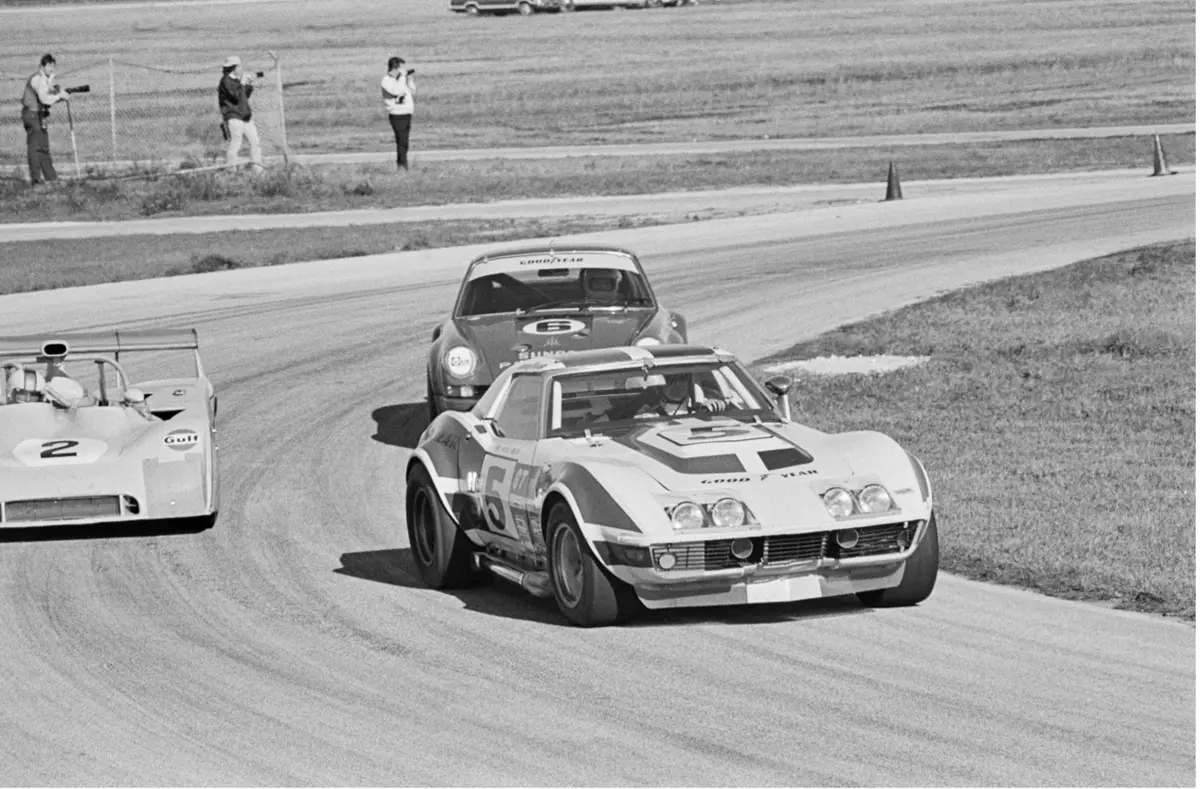
Meanwhile, as Heinz was accelerating up from Mulsanne Corner towards Arnage, smoke began to curl up the windscreen from under the hood. He swerved to a halt at the edge of the track, got the hood opened, and discovered that part of the wiring was on fire. As the other cars roared by a few feet away, he got the flames out, tore off the damaged wiring and, using a length of wire carried in the car’s meagre tool kit, spliced it roughly together and got the car restarted. Back at the pits a proper repair was carried out, but precious time had been lost.
However, the car was now running as well as ever. The rain returned on Sunday morning, but the track had dried again when Johnson took over for the final shift. The hands of the big clock over the pits crawled round to 4 p.m., the chequered flag came out, and as Johnson rolled to a halt he had tears in his eyes. They had finished 15th overall, and they were two laps ahead of the only other finisher in the big GT class, a De Tomaso Pantera.
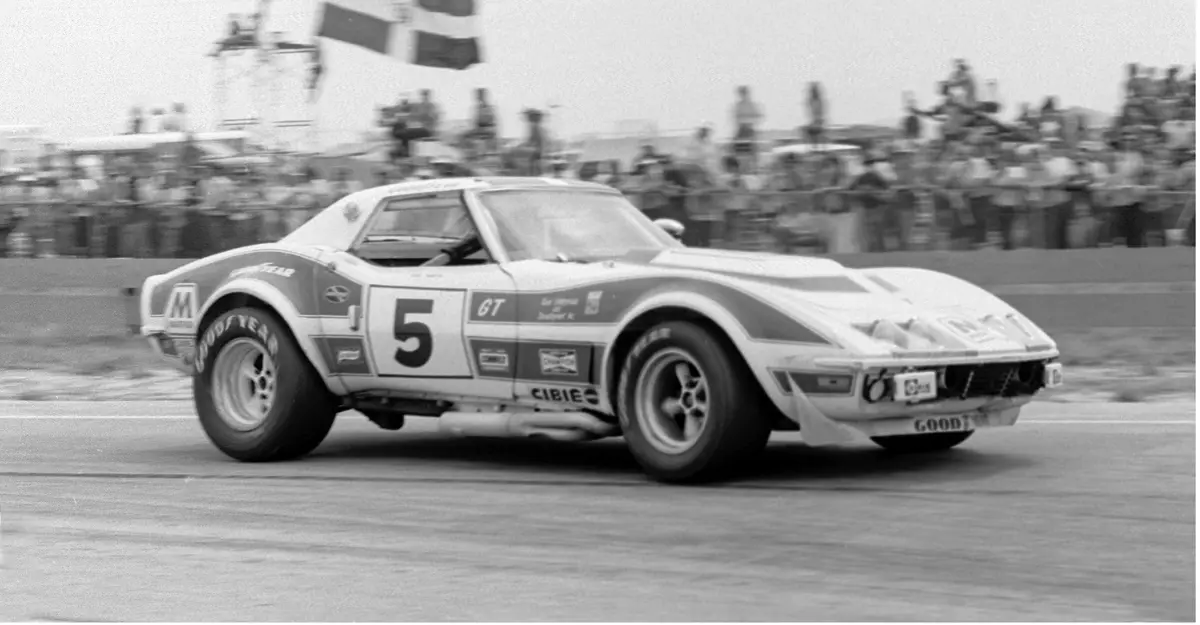
It was a wonderful victory, and cemented the Corvette marque into an ongoing relationship with Le Mans. Since 2000, the official Corvette Racing team has come home class winners in the 24 Hours nine times.
Back home, the RED Corvette resumed its racing career. No longer in NART colours and now wearing a dramatic Stars ’n Bars scheme, it scored a superb result in the 1973 Daytona 24 Hours, finishing 3rd overall. It raced on with Dave Heinz until 1976 and continued in others’ hands, eventually becoming highly competitive in the historic classes—including a 3rd in class at the HSR Sebring in 1995, driven by a guesting Bob Johnson.
In 1995 it was bought by Mike Yager, founder of the classic Corvette parts supplier Mid America Motorworks. He commissioned the expert team at Corvette Repair in Valley Stream, New York, to carry out a total and meticulous restoration back to its exact 1972 Le Mans specification, which included painstaking research to ensure that every detail was right—including the NART Ferrari badges, of course, and even down to that Peugeot spare wheel.
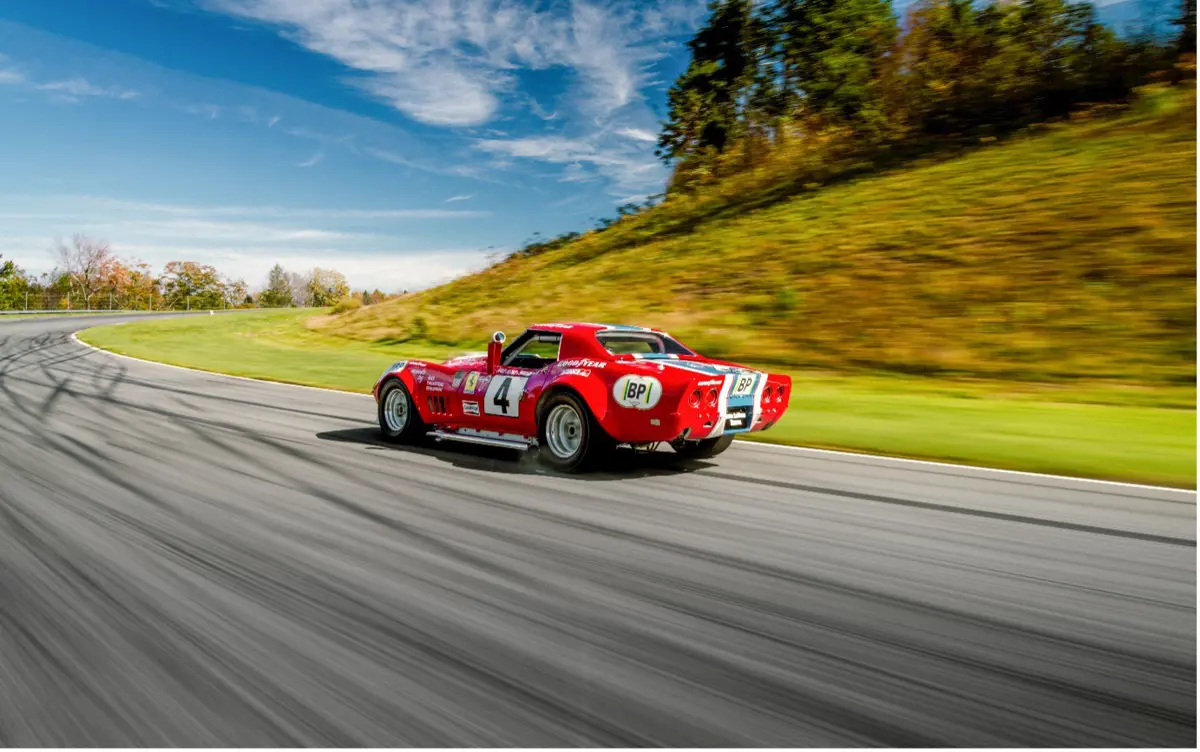
During its honourable retirement it has garnered a host of concours awards and been on display from Monterey to Carlisle, from Amelia Island to Bridgehampton, and been exhibited at the National Corvette Museum in Bowling Green, Kentucky. The first Corvette to find success in the Le Mans 24 Hours lives on as a monument to the brave little team from Wauchula, Florida, 54 years ago, and its story has become a key chapter in American motor racing lore.