Industrial designer and inventor Sam Mann has owned many of the world’s greatest classic automobiles during his long life. He explains his collecting philosophy—and why he now feels the time is right to take a step back.
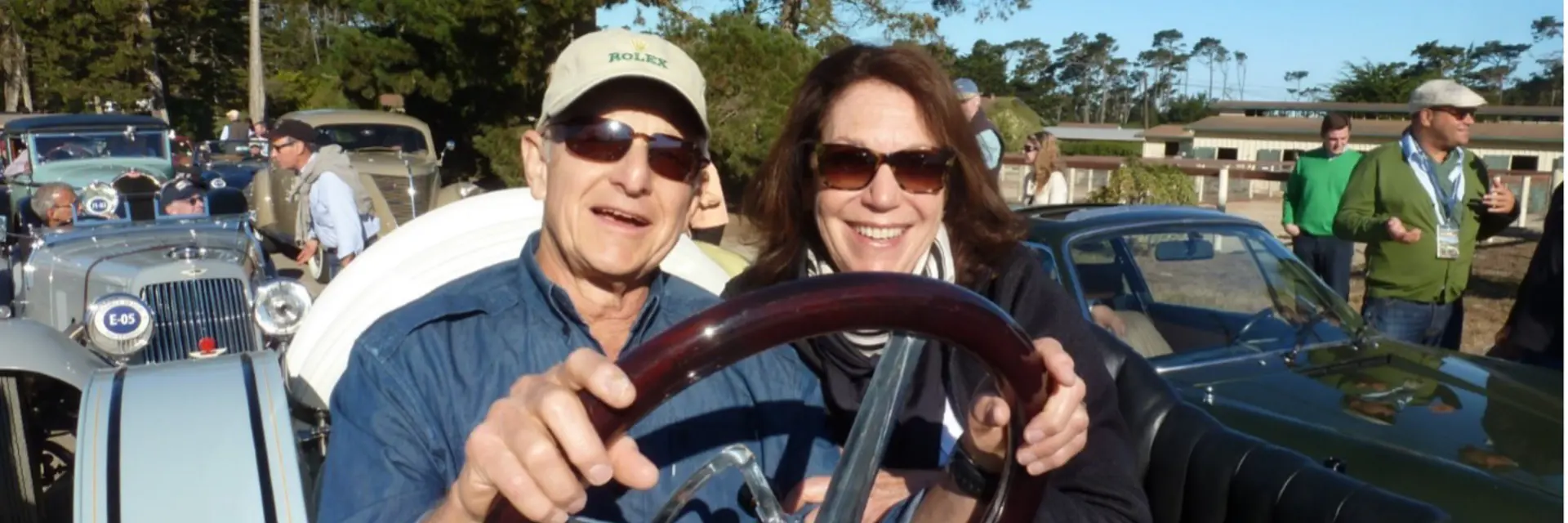
“After all the cars we’ve restored, the drives we’ve done with them, while still running a business and a household, we’ve been overly busy,” says Sam Mann, musing about why he’s decided to offer almost two dozen cars from his collection at RM Sotheby’s Monterey sale. “For as many years as I’ve been collecting and restoring cars, I’ve also been active racing, sailing, and skiing... and, of course, working. Part of me is yearning for a little ‘dull time.’”
He’s certainly earned it. Now well into his 92nd year, he’s had an incredibly active life, including a hugely successful career as an industrial designer, consultant, and manufacturer: One that allowed him to indulge his lifelong passion for interesting automobiles.
“I didn’t actually get my first car until I was 20 years old,” Sam recalls, “because in those days, where I grew up in New Jersey, teenagers generally didn’t have cars. There really was such a time! But there was a Gasoline Alley community of custom body and race shops only a block-and-a-half from my home, so as a kid I’d bike over there and try to learn things by helping out and watching. I was fascinated by the sounds, the sights, and the smells of cars—everything about them.
“I got my first wheels at 14, a junked motor scooter that I rebuilt and drove all over the neighbourhood. Local police watched me but never seemed to mind... different times! My first car was a ‘49 Ford convertible, four or five years old, which I customised myself with advice from the guys in the Alley. I hot-rodded the engine and did the interior; it was a great learning experience. My father had no automotive skills, but he did have a wood shop in the basement that he seldom used, and I spent a lot of time there making things. As a kid, between sports I taught myself woodworking and metalwork, and I used to make things... which, surprisingly, people actually bought.”
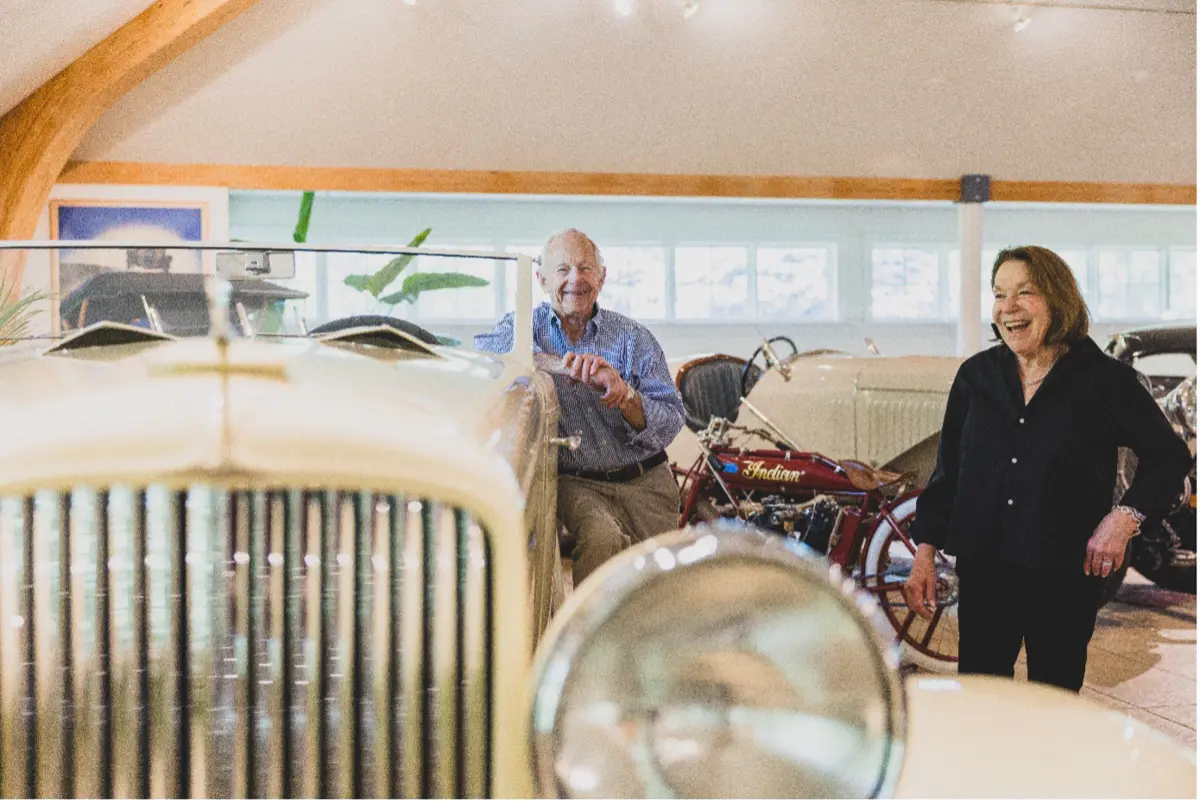
This fascination with design and making objects led Sam to study Industrial Design at the University of Cincinnati. “It was a co-op programme that alternated two months of classroom learning with two months of work in a professional experience for five years with almost no vacation—very intensive,” as he remembers. His first job after graduation was with an architectural and industrial design office in New Canaan, Connecticut, commuting 105 miles every day, in all weathers, in an Austin-Healey 100/4. “Seems back then my daily drivers were always cars that actually became collectables,” he says. “I had traded my ‘49 Ford for a 1947 Lincoln Continental when I was at college, and in the ‘60s I had a pair of Buick Rivieras, doing about 150-160,000 miles in each before buying the next, and an Alfa Giulietta. I still own today a lovely pair of 1964 and ‘65 Rivieras. Love them!
“I was always sketching ideas, and one of the designers I’d been working with early on was a ceramicist who’d developed a line of products, made them and took them to market. He encouraged me to take a similar approach but specialising in wooden decorative wares and cooking accessories. Back then, the banks were agreeable to lending money to start-ups, and my father taught me the useful lesson that if you borrowed a thousand dollars and paid it back quickly, they’d offer to lend you two thousand, and so on. Taking that advice, at the age of 23 I started my own manufacturing business selling to department, gift, and speciality stores nationwide.
“After five years, I received an offer from a competitor to sell. Coincidentally, at the time my products were attracting attention and I was asked to consult for some major companies. So I sold and opened a design consulting firm, and we serviced such clients as Westinghouse consumer products, Corning Glass, and several others. But, after 13 years as consultants, I realised how much I missed manufacturing, and the great learning experiences I’d had left me feeling that I might know how to run a larger-scale business.
“This was in the early ‘70s, and one of the first things that attracted my interest was the just-emerging popularity of ear-piercing for women. I was convinced that there was vast opportunity for improvement in the safety, convenience, speed, and accuracy of this then-bloody and often inaccurate process. I designed the concept of a moulded plastic capsule that enclosed the piercing earring, which was then pushed out by a gun-shaped instrument, through the ear, and into a tiny keeper behind. All completely sterile and quick, without any need for the operator to touch the product or the customer. The success of this and other inventions led to a multinational business with offices in the UK, Paris, and Frankfurt, and distribution into 57 countries globally. After 25 years, the company, Inverness Corporation, was sold to Berkshire Hathaway and continues today, over 50 years after its creation.”
One of Sam’s less obvious cosmetic inspirations was a shaving gel that didn’t need water, which led the US Army to acquire the product for the first Gulf War. “Because it was a lubricating product made using emollients and not soap, it could be rubbed into the skin as a moisturiser,” he explains. It’s one of over 80 patents that Sam has been awarded over his lifetime, the more recent ones including sailboat rope handling winches and a brake for downhill skis.
Not surprisingly, Sam was incredibly busy during this period, and it wasn’t until the early 1980s that he started to buy cars. “One of the first was a Mercedes 300 SL Gullwing. Business was pretty good and it seemed like several interesting American and European cars were just coming onto the market. Because I travelled a lot internationally, I got to see cars in Europe that hadn’t been driven for quite some time but that showed a lot of promise.”
Like many collectors, Sam originally tried to follow a self-imposed set of rules in deciding which cars to buy. “I’d have a closed car, an open car, and a race car from each marque—my passion was mainly for French marques and a few American ones—but it all got so exciting that I lost track of that discipline. I’d been a little bit naïve because collecting is all very serendipitous; you see something and your heart bends to it.
“I decided I only wanted beautiful cars, mostly one-of-a-kind automobiles where there was a direct connection of a single designer to the product and customer, which to me felt like the only way that uniquely beautiful design would result. There was a ‘special moment in time’ in the years between the late ‘20s and the beginning of the ‘40s during which automobiles had become mostly reliable, the smaller companies were closing and the industry was consolidating. Labour costs were low and plentiful. Some companies were still using hand-building techniques to fabricate coachwork, which encouraged companies like Duesenberg in the US and Rolls-Royce in England and virtually all the European marques to create one-off designs.
“What made this further possible is that, unlike the significant limitation of the machine to shape complex contours, the hand could form anything the designer’s mind could conceive. Unlimited opportunity! Think special Packard limited editions in the ‘30s, Chrysler concept designs in the ‘30s and ‘50s, Ferrari, Maserati, Aston Martin in the ‘50s and ‘60s… such a long list. Any design dreamed of in sheet metal could be created—economically. It was an absolute ‘golden age’ for automobile design, when designers and their clients created motorcars of such beauty that they deserve the accolade ‘Fine Art,’ worthy of as much attention and appreciation as the finest sculptures.
“Later, I also became increasingly interested in vehicles of the teen years, their design and their excitement to drive. Their design could be elegant, wonderfully proportioned; in a word, beautiful.”
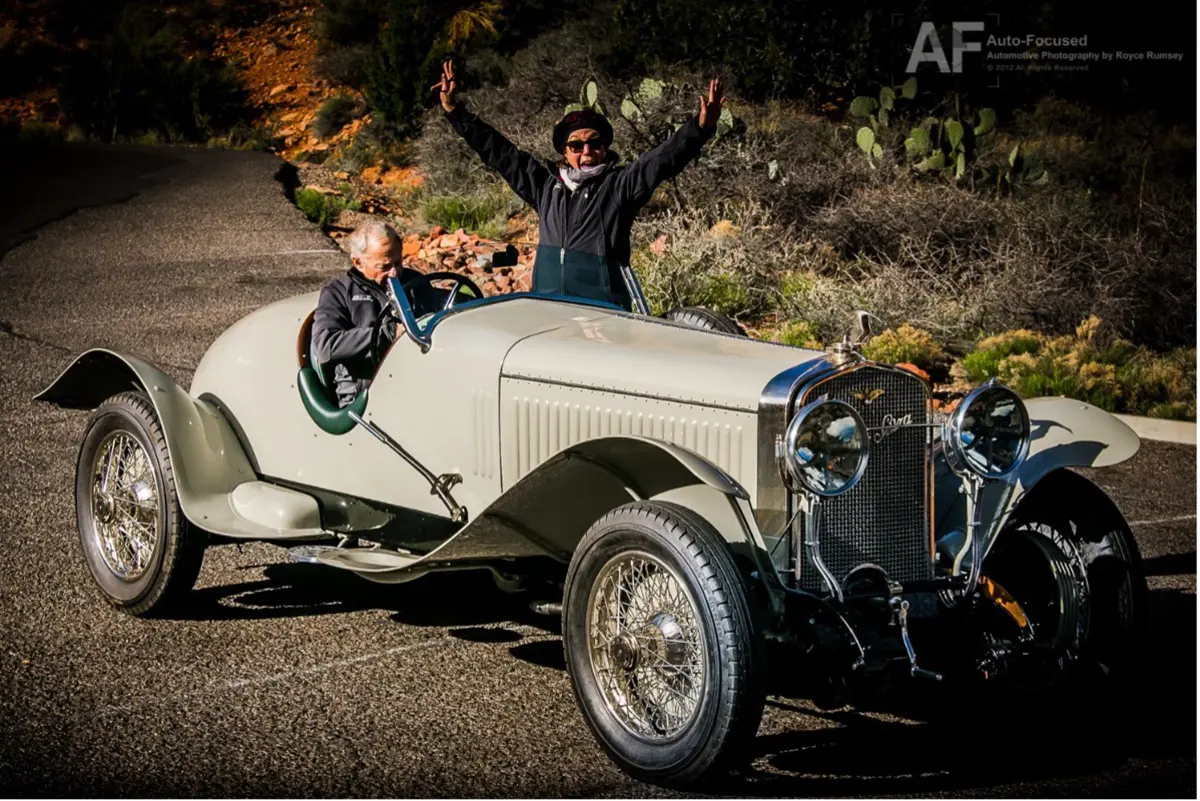
Back in the day, Sam had restored a handful of cars himself, including his old Austin-Healey, a 1941 Cadillac convertible, and a 1934 Ford cabriolet. “That’s the kind of stuff I was into then,” he explains. “Then, when I started a manufacturing company, I began acquiring cars and made an acquaintance who suggested I hire him and ‘we try to do our own restorations.’ He had much more experience than I did—I knew enough to know how much I didn’t know about show-quality work—and since I had some vacant space in my factory it sounded tempting. Shortly, a friend of his visited and before I knew it we had the makings of a restoration shop, and we became pretty good at it.”
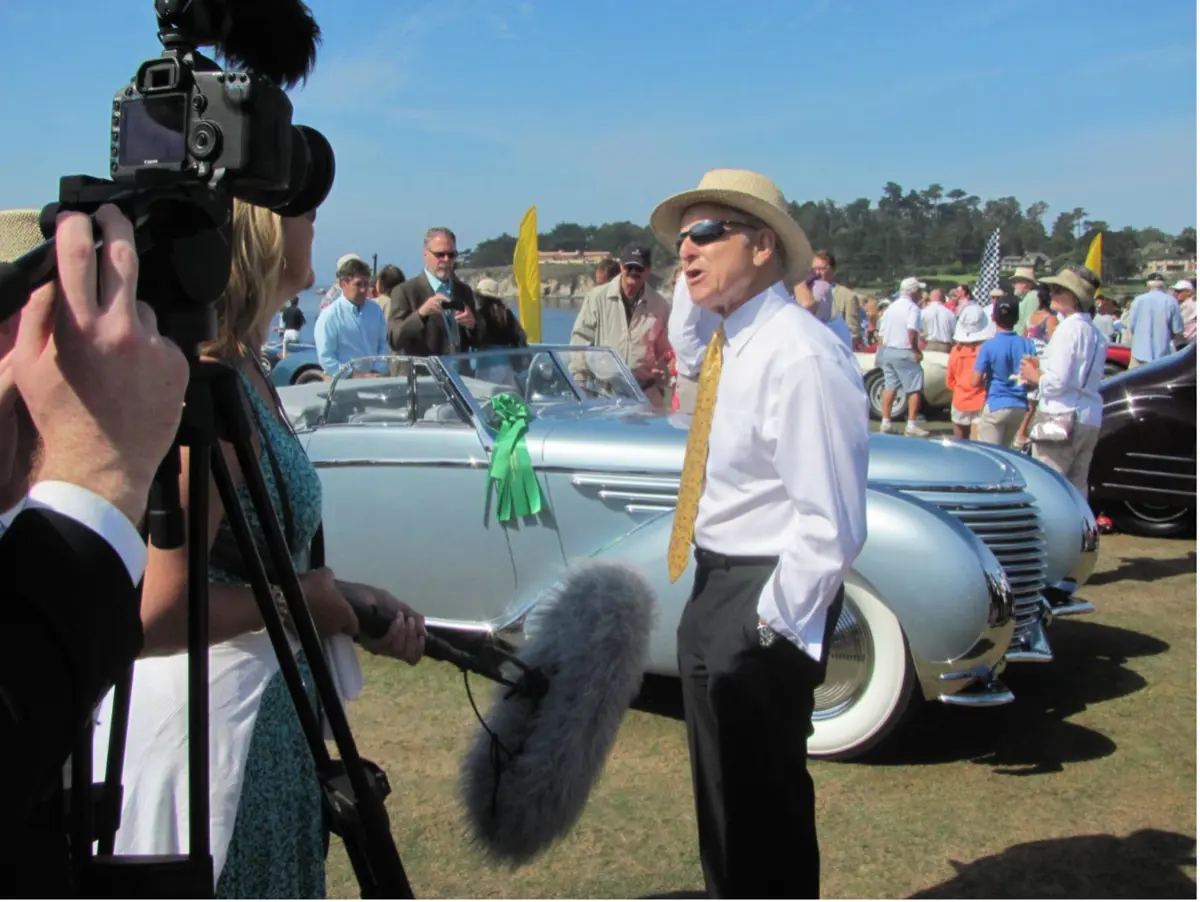
They certainly did. Sam and his wife Emily notched up no fewer than four Best of Shows at Pebble Beach over the years, along with four other of their cars being awarded Best of Show Nominee. Then there have also been numerous Class and Special Awards and similar overall victories at the likes of Amelia Island and Meadow Brook. Out of 37 full restorations they’ve overseen to date, 17 were carried out in-house at the Manns’ facility, which has been a real source of pleasure and education for him.
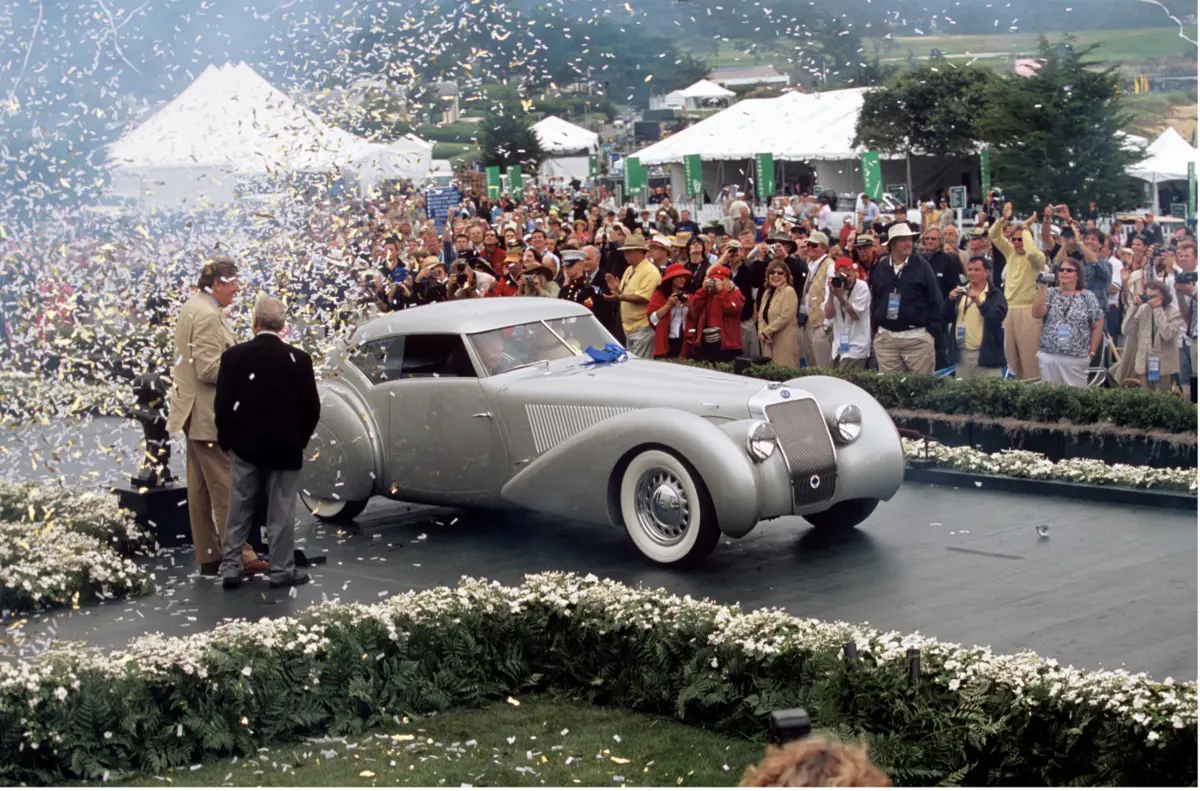
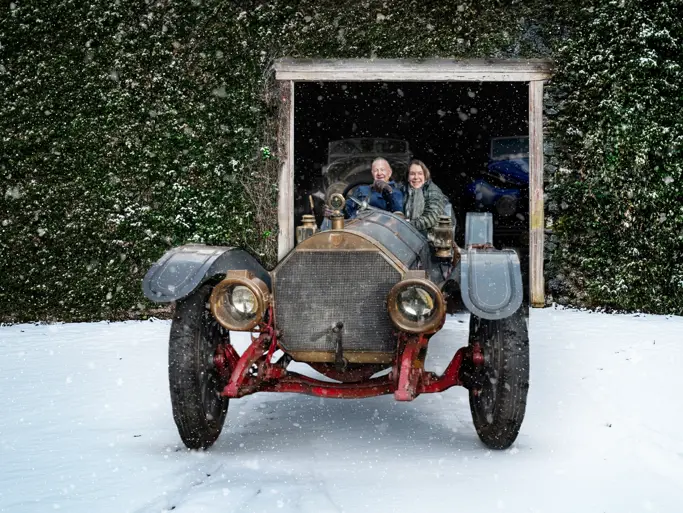
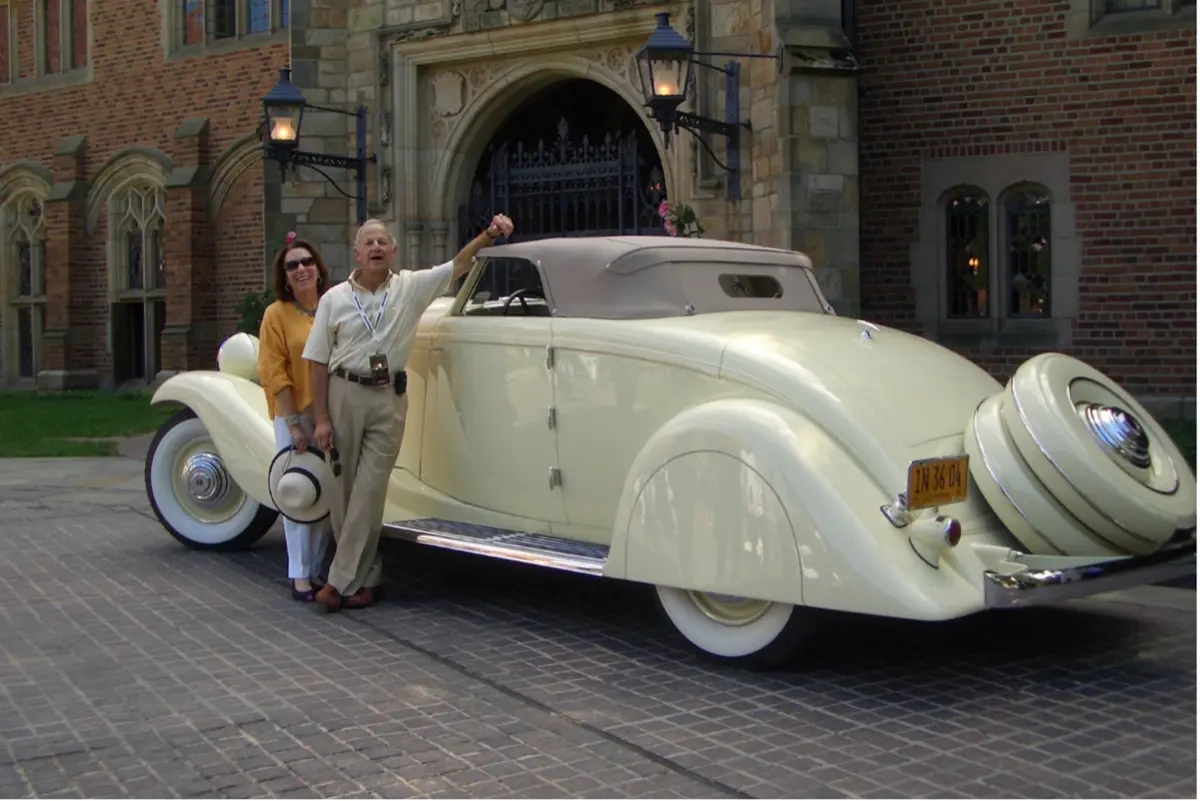
It’s appropriate that three of the four Pebble Beach winners are being offered by RM Sotheby’s at Monterey this year: the 1932 Chrysler CH Imperial Speedster design study that took top honours in 1991; the 1934 Avions Voisin C23/24 Roadster by Saliot, which triumphed in 2002; and 2005’s winner, the 1937 Delage D8-120 S Aerodynamic Coupé by Pourtout. Not to mention the Manns’ ex-Clark Gable 1935 Duesenberg Model JN Convertible Coupe by Rollston that was then customised by Bohman & Schwartz; their 1938 Bugatti Type 57 Atalante by Gangloff; or a wonderfully patinated 1913 Mercer Model 35-J Raceabout; or the 1914 Rolls-Royce 40/50 HP Silver Ghost Colonial London-to-Edinburgh Skiff by Schapiro-Schebera…
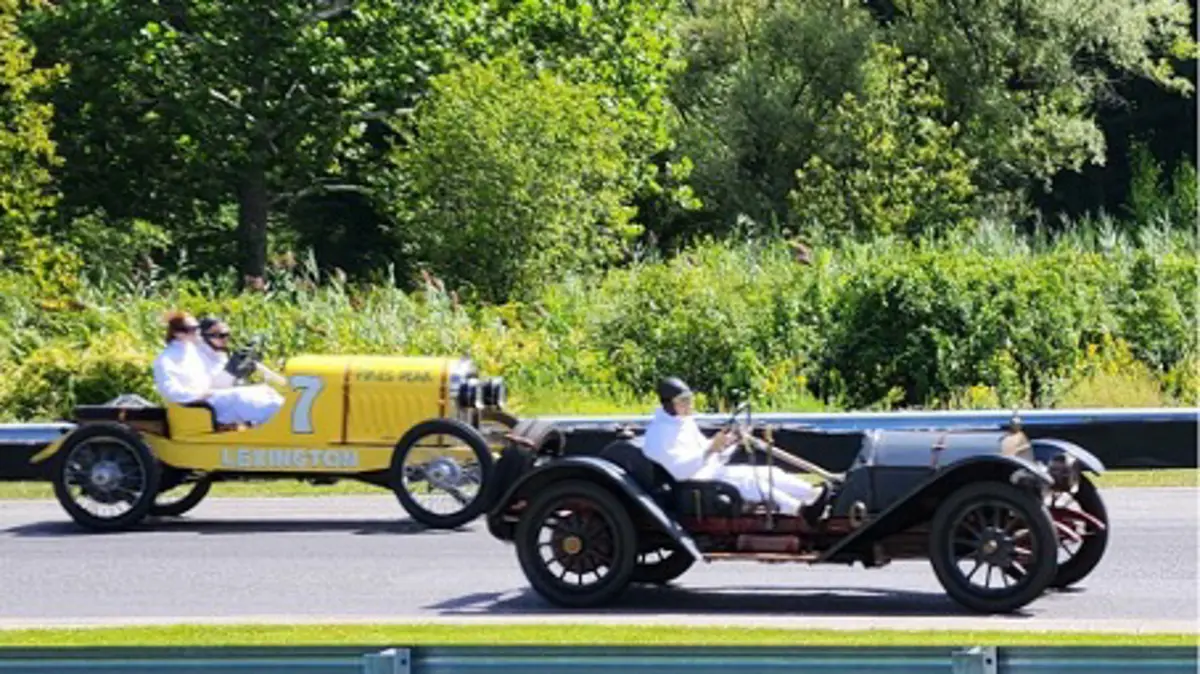
Silver Ghosts are a particular favourite of Sam’s because of their usability, for the Manns have always loved to use their cars. “For a long time, we would drive 4,000-5,000 miles a year in organised events like the Colorado Grand, Arizona Copperstate, Duesenberg Tour [which Sam founded], and Classic Car Club tours, including a lot of driving in the Ghosts. But as the really exotic cars became increasingly valuable, we started to use them less. For example, we had a two-nine Alfa [a 1932 8C 2900B Lungo Spider by Touring] that we bought as a project. It hadn’t been that expensive, and when Tom Price started running his Alfa 8C tours in 1999 we did every one of them, seven or eight in all, plus the Copperstate. When Tom retired from producing tours, so did we. I wasn’t comfortable with running something so valuable.” RM Sotheby’s duly sold the Alfa Romeo at Monterey in 2016.
Sam has always been pragmatic in deciding when it’s the right time to sell one or more of his cars. Despite his evident love for them, he’s not overly sentimental. It still comes as a surprise, however, to learn when questioned that he’s never had a desire to track down his old Austin-Healey 100/4. “You got me!” he laughs. “Truth be told, that car almost killed me... twice. I’m certain Donald Healey never meant for that car to be used for daily commuting in a snowy climate. I am sentimental about many of our cars and there are many that I never considered selling until now. But occasionally selling is also how we’ve been able to play in this area and experience and enjoy so many different and wonderful cars.”
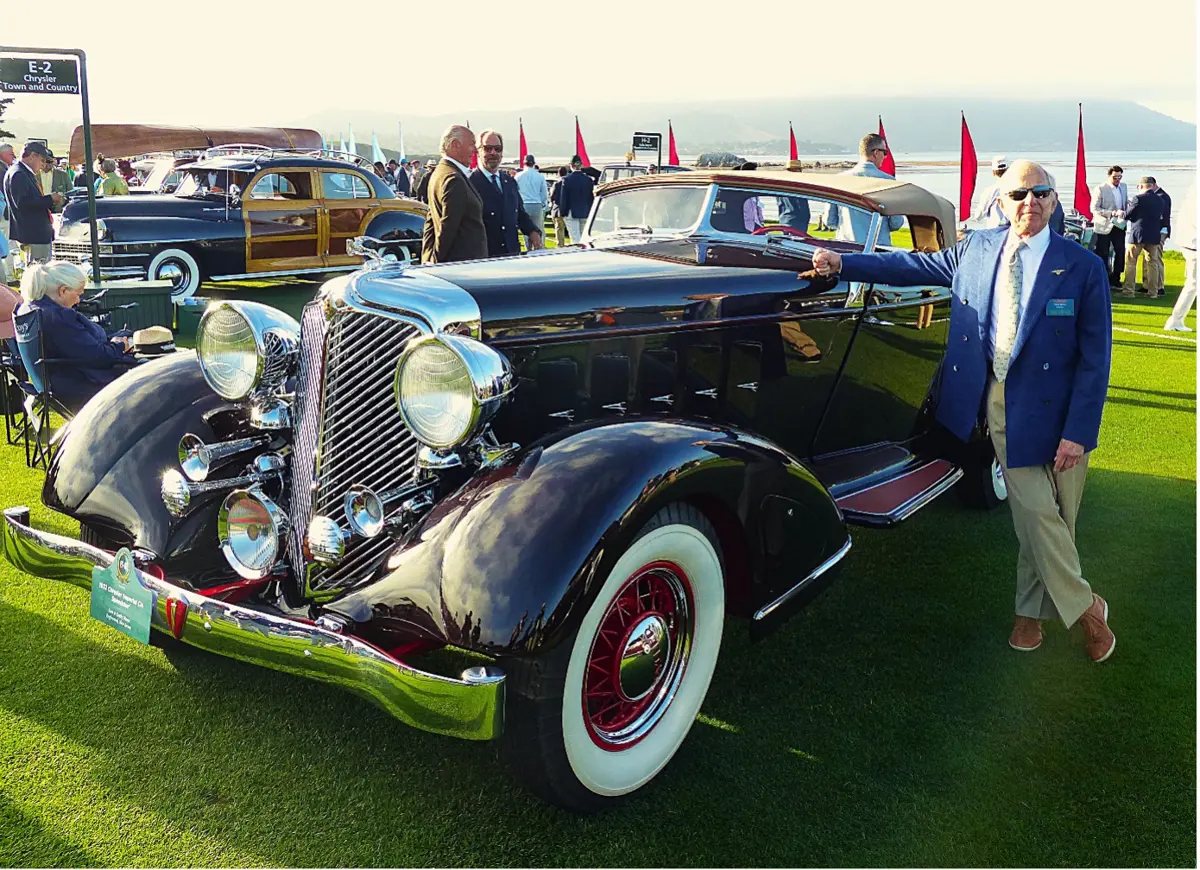
There is one car that Sam does regret selling. “A Maserati A6G/2000 Frua Spyder. I bought the body from a Maserati dealer; it had been put on a Triumph chassis after the original chassis was reportedly turned into a racecar. But the shape! It made you cry, it was so beautiful and complete. I bought an Allemano Coupe coachwork version of the same car and used the chassis to restore the Spider. But then I had to have a pacemaker fitted after a heart valve replacement—and I found out that my heartbeat increased in direct proportion to the speed of the car! My heart felt like it was going to pop out of my chest. After also trying a friend’s Shelby Cobra, which had side pipes like the Maserati, I realised that it was the sound waves radiating from the very nearby exhaust system that were interfering with the pacemaker. So I figured I’d be done for, and I put the Spyder up for auction. But that car’s design—it was true perfection.”
This time around, Sam’s decision to part with many of the cars in his collection is mainly because he doesn’t want his children to be burdened with the task of disposing of them when—hopefully not for a good few years yet—he finally passes. “My three boys are wonderful, but they have their own lives, families, and businesses. They have always had such a terrific relationship with each other, and my worry is that only one of them would have the time to deal with the cars’ disposal, and that would likely colour the relationship. That would be a sad ending to the wonderful life this hobby has afforded Emily and me.”
Now, however, Sam is looking extremely good for his age. What’s his secret? “Always take the stairs and never use the elevator! I used to run the stairs, now I walk them, but it’s something I’ve done all my life. Making every activity a chance for exercise is a habit that’s served me well.”