Jake O’Gorman tells the story of the first Chevrolet Corvette to fly the flag at Le Mans, the legendary Briggs Cunningham car number one.
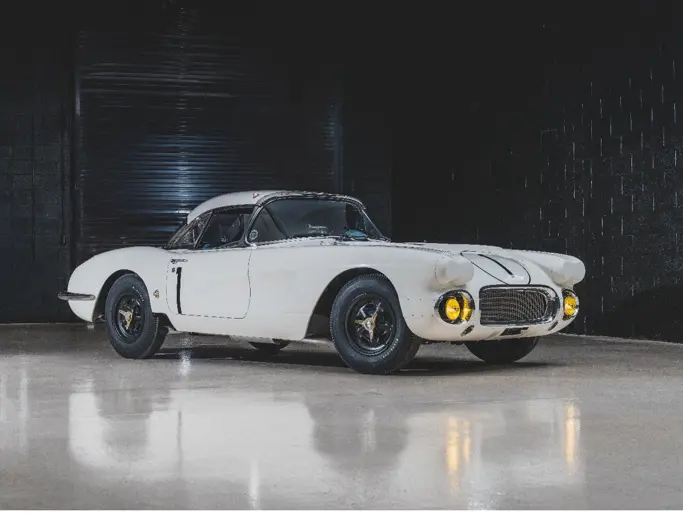
Braced that I was about to see something special, the excitement was palpable as the doors were finally opened at the Auburn Auction Park. That soon faded as my eyes adjusted to the gloom, and there, languishing in a dark corner and looking more like an old project than a piece of history, was the car. No ribbons, no stanchions, no matching wheels; this was a car that needed everything-plus. When I was told the auction estimate back in spring of 2021, I checked for gold bars in the trunk. Struggling to wrap my head around the number, I eventually asked what made this old Corvette so special. And then it hit me: This wasn’t just a forgotten, unfinished project—it was the very 1960 Chevrolet Corvette LM that first flew the flag for the model at Le Mans, racing in the 1960 24-hour French epic by Briggs Cunningham. That is how I was introduced to what would be the most significant and historic American racing car that I have ever had the honor of handling for RM Sotheby’s.
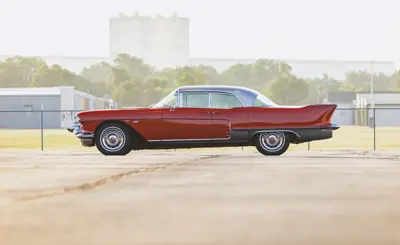
Cunningham’s three-car entry to the 1960 24 Hours of Le Mans was the culmination of over a decade of running American cars at La Sarthe, starting with a pair of Cadillacs—including the famous custom-bodied Series 61 Spyder “Le Monstre”—in 1950. The racer went on to create his own cars to take on the likes of Ferrari, usually crewed by American drivers, but after five years the company eventually folded. Their last race was in 1955.
That same year, a violent crash at Le Mans sent shockwaves throughout the racing world, prompting Mercedes-Benz to withdraw from racing. Across the Atlantic, the big Detroit automakers also agreed to a self-imposed ban on competition—but not before Zora Arkus-Duntov had developed the 1957 Chevrolet Corvette SS, with his sights set firmly on Le Mans. The curtain eventually came down on the project following a sole competitive outing at the 12 Hours of Sebring—but Arkus-Duntov had other ideas.
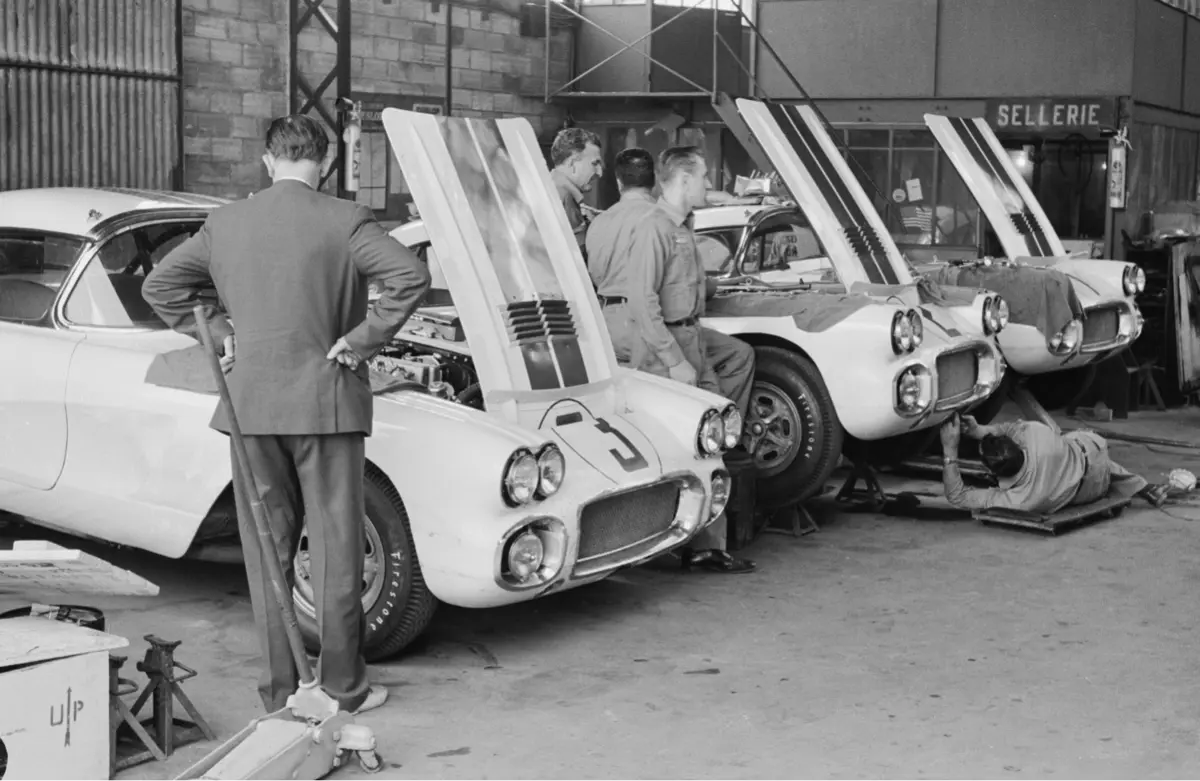
In 1959, the engineer approached Briggs Cunningham with a proposal: to return to Le Mans with a fleet of Corvettes, backed—totally unofficially—by the factory. This clandestine operation was further obscured by selling the Corvettes via Don Allen Midtown Chevrolet in New York, so as to remove any manufacturer involvement. At first glance, the three cars were standard production vehicles, but beneath the surface each had been hotted-up with a temperature-controlled radiator fan, quick-ratio steering, a close-ratio four-speed manual transmission, and a Posi-Traction rear end—not to mention heavy-duty suspension, sintered-metallic brake linings, and beefed-up brakes.
Cunningham’s team manager, Alfred Momo, tweaked things further, adding a set of magnesium Halibrand wheels with Firestone racing tires, an additional front sway bar, Koni competition shock absorbers, a high-capacity fuel tank with a center-mounted Halibrand quick release fuel cap, Bendix fuel pumps (primary and backup), side-exit racing exhaust, more accurate Stewart Warner instrumentation, and, rather incredibly, two lightweight seats from a Douglas C-47 Skytrain aircraft. The stock motors were pulled and replaced with race-spec fuel-injected engines provided by Zora Arkus-Duntov’s engineering team.
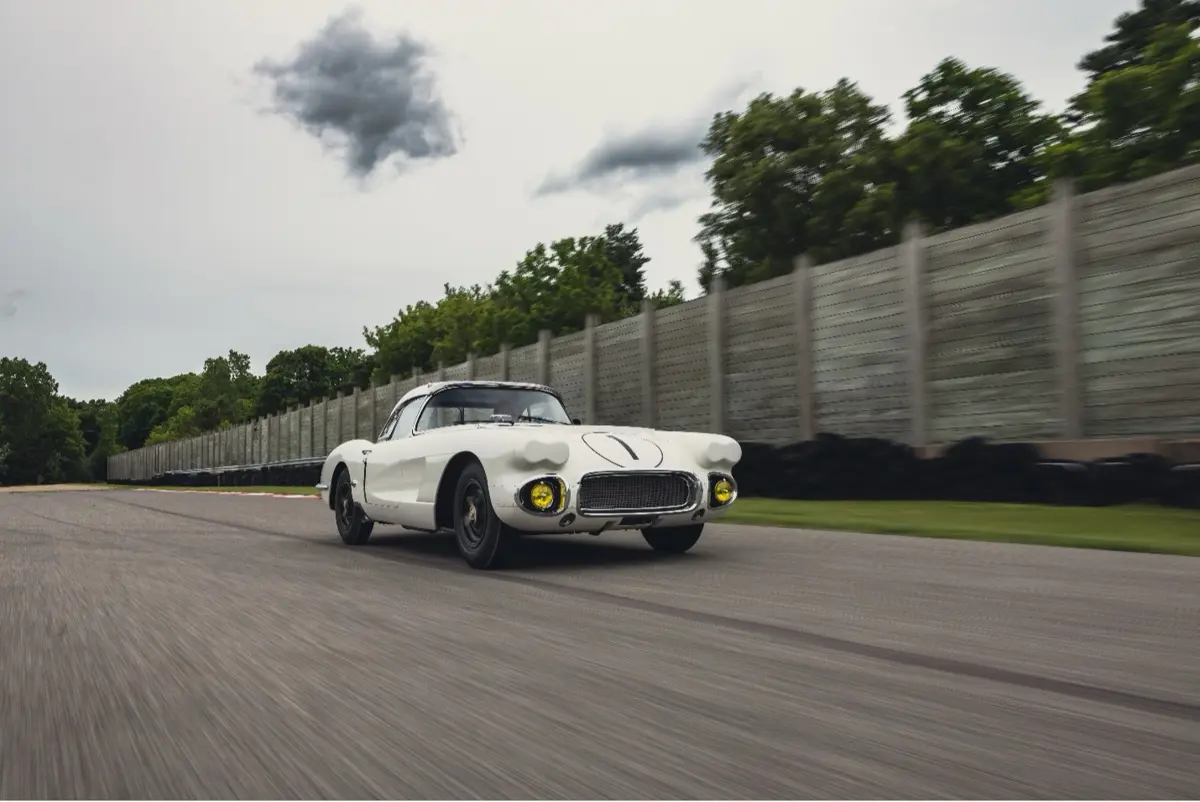
The car that stood before me wore #1 for the race and was likely the car that was flown to the Circuit de la Sarthe for practice in April 1960. Clocking 112.5 mph through the speed traps on the Mulsanne Straight, it lapped the famous circuit in just 4 minutes 28.3 seconds, returning to the track in June having been driven the 170 miles from Cherbourg to Le Mans. There it was driven by Briggs Cunningham, with American William “Bill” Kimberly a late stand-in for Zora Arkus-Duntov, who had been bumped from the driving roster by Chevrolet General Manager Ed Cole.
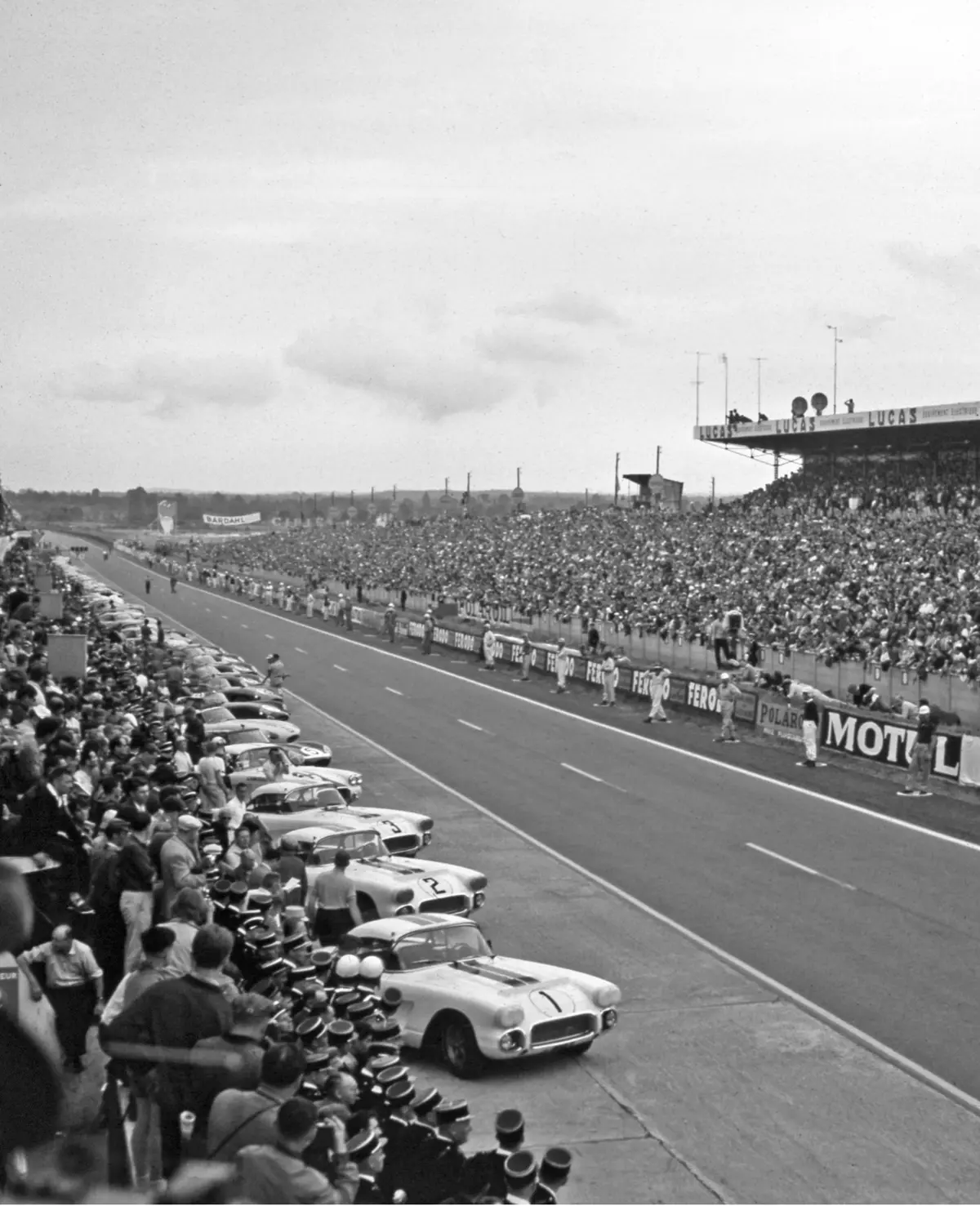
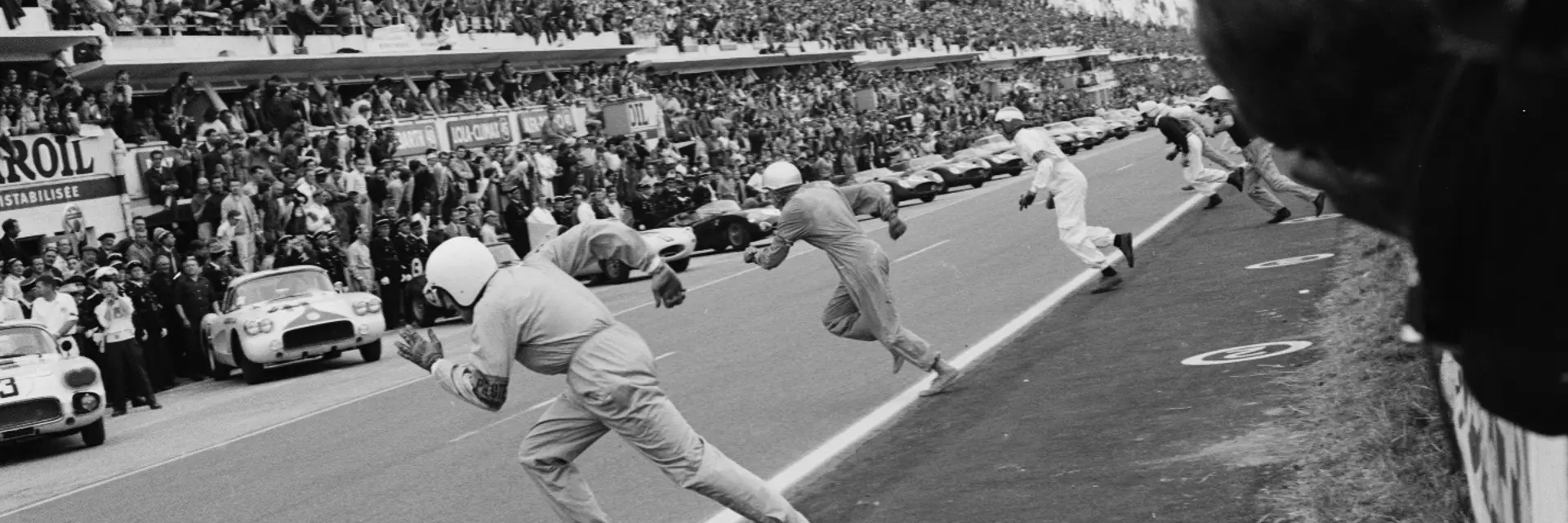
Building on the success of qualifying, the Corvettes started well following the traditional running Le Mans start, with Cunningham taking the first stint in chassis 3535. By the first hour mark the Cunningham Corvettes had more than held their own, with #1 24th on the road. By the second hour Cunningham had taken a handful more positions and was driving well before eventually pulling into the pits on lap 26. Filled with fuel and fitted with new Firestone ‘dry’ tires, the car tore out of the pits with Kimberly now behind the wheel. He quickly got to grips with the Corvette, settling into a nice rhythm as lap after lap was ticked off—but things weren’t to last.
On his sixth lap, Kimberly wound the Corvette up to top speed on the Mulsanne Straight, weaving through Mulsanne Corner, Indianapolis, and Arnage with Lloyd Castner’s Maserati Tipo 61 in hot pursuit—but as he crested the hill after Arnage, the car hit what Kimberly described as “a wall of rain.” Losing control at 100 mph, he left the track near Maison Blanche before rolling end over end, eventually landing right-side-up. Kimberly was unscathed, but the Corvette had run its race. Damage sustained during the crash, coupled with an engine fire that had melted key ignition wires, meant that chassis 3535 was forced to retire after just three hours and 32 laps.
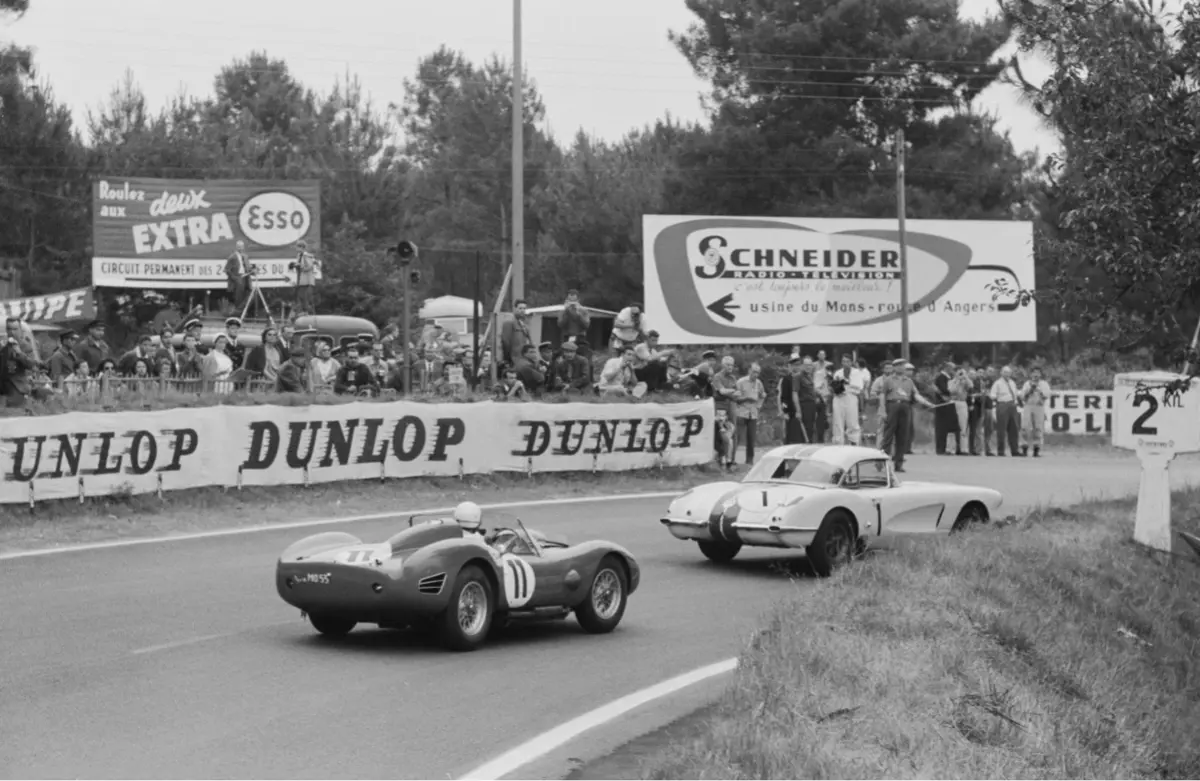
Following its historic outing at Le Mans, chassis 3535 and its two sister cars returned to the United States aboard the RMS Queen Elizabeth, where their race engines were removed at Momo’s shop. The car that had fought so valiantly at La Sarthe was sold, minus its engine and hard top, to a close friend of Cunningham. Lightly modified, it lived a quiet life, passing through the hands of a small number of owners before being bought by Richard W. Carr in 1976 and falling into obscurity for almost four decades.
The car finally resurfaced in 2011 when Rick Carr, who had begun settling his late father’s estate, discovered the unique then-burgundy sports car in the corner of a warehouse. Cunningham historian Larry Berman then confirmed that this was no ordinary sports car. After spotting the relocated passenger-side windshield wiper, a patch on the rear deck where a quick-fill Halibrand gas cap once sat and, most importantly, chassis stampings on both the steering column and underbody, it became clear that this was the very car that had been campaigned by Cunningham and Kimberly at Le Mans in 1960.
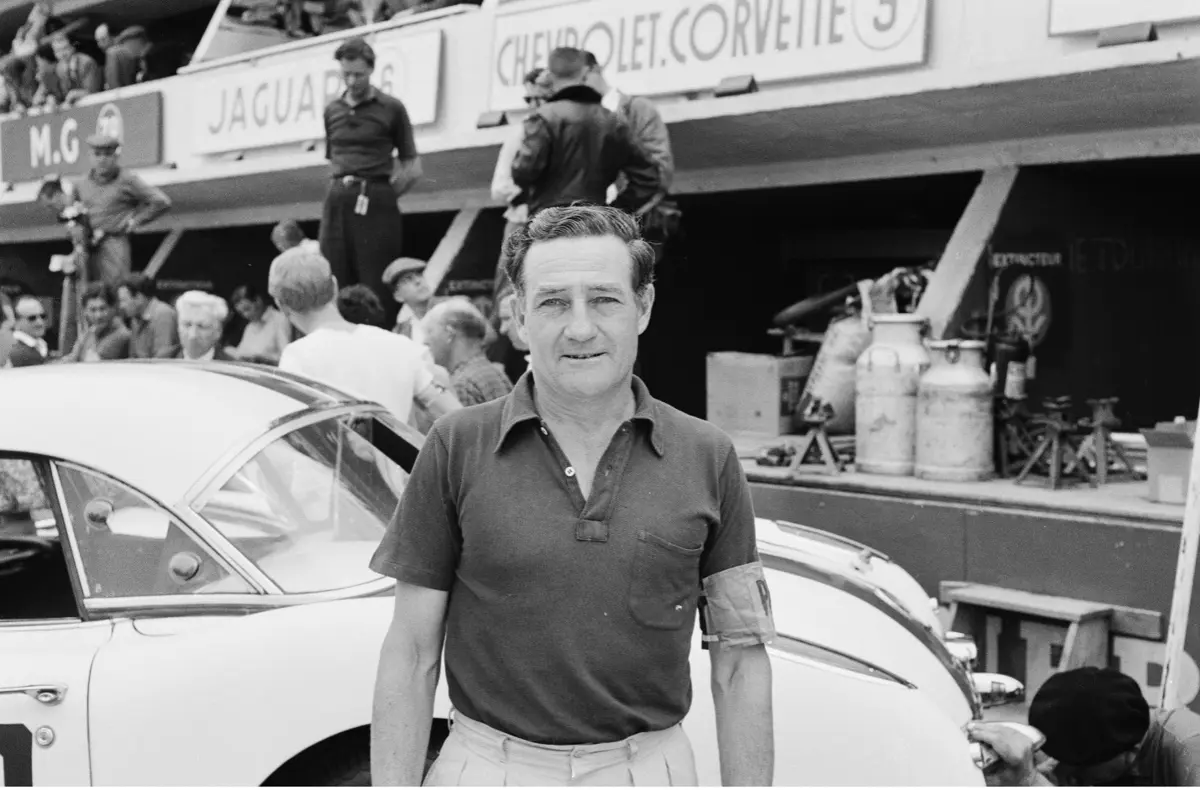
News of the Corvette’s discovery spread like wildfire, but it wasn’t until March 2021 that the car found a fitting new home. Or rather, an old home, as it was purchased by none other than the Cunningham family themselves. Keen to preserve a piece of American racing history, the family sent the Corvette to Kevin Mackay at Corvette Repair Inc. for a complete body-off restoration. The subsequent rebuild took two years and cost more than half a million dollars, returning the car to the exact specification in which it raced at Le Mans some 66 years earlier.
Seeing the car for the first time post-restoration was a true revelation—but being able to drive it was something else. If you have driven an early fuel-injected Corvette the starting procedure will be familiar, with some caveats. Battery on, key on, fuel pump switch on (a loud pulse quiets as it primes and reassures you there are enough gallons per minute on tap). Car in neutral, one pump of the throttle to set the choke (too much and it won’t start no matter how mad you get), thumb the start button and brace yourself as all eight cylinders thunderously cascade to life. Close your eyes and you can picture the pit lane at Le Mans, a garnish of unburnt leaded racing fuel wafting up from the side-exit exhausts.
Steering is tight by 1960 standards, as well as braking. Knowing this car was tested and raced at Sebring, Daytona, and finally Le Mans gives a fuller appreciation of what these drivers actually piloted. There is no safety equipment save for a small lap belt and a shovel-pickaxe in the trunk (per Le Mans rules). The car, structurally, is a 1960 Corvette, so there is only fiberglass between you and the Mulsanne Straight; a clenching thought.
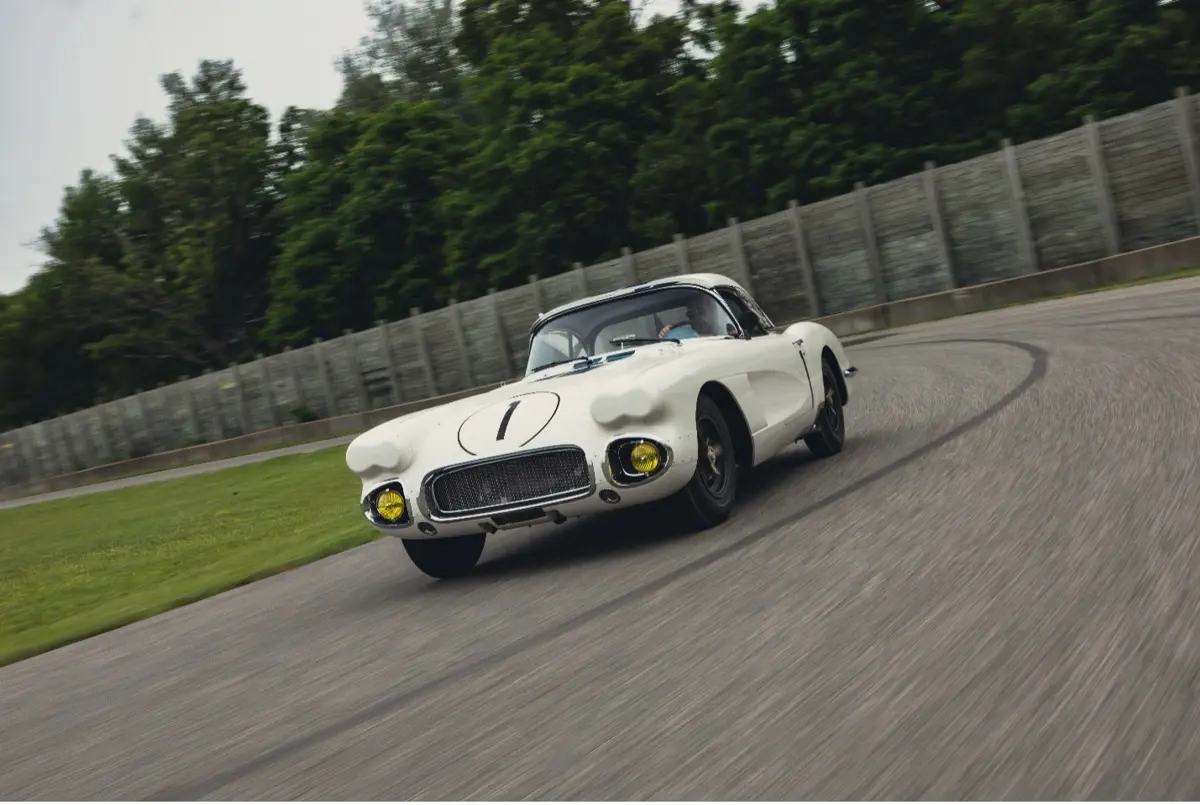
My experience of parading around the track in 68-degree weather is far from what Cunningham and Kimberly endured, but it gave a tantalizing glimpse into the grueling demands of Le Mans racing. Sitting in the tight cockpit on thin, hard aircraft seats with a forest of fuses lined up above the central dash clock ready to be changed on the fly, this is a car that was built for practicality not comfort. And while our video shoot was controlled and docile, there is no escaping that this is a machine built with purpose—to take the fight to the world’s best cars and drivers, and to win. Capturing the car in its element—from behind the wheel—is a special moment I will never forget.
That it has been returned to its former glory is testament to the perseverance and vision of the Cunningham family, who saw in its weathered fiberglass not only a family artifact, but a piece of American racing history, and Kevin Mackay, who so expertly restored it to exactly as it was all those years ago.