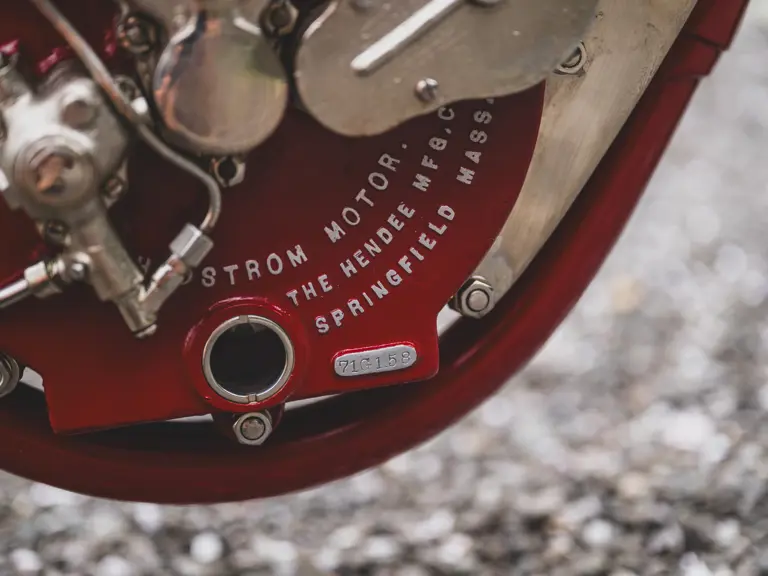
Engine No.
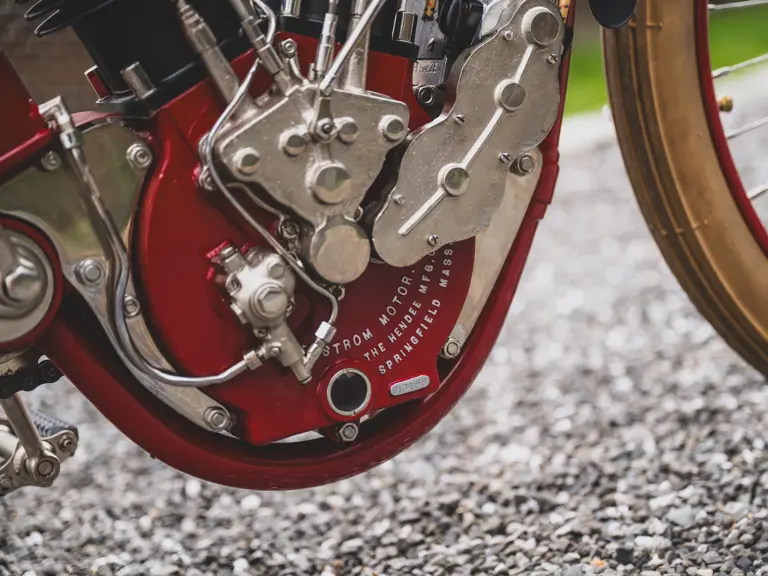
71G158
$60,000 USD | Sold
Offered from The Sam and Emily Mann Collection
{{bidding.lot.reserveStatusFormatted}}
Just as with automobiles, racing greatly accelerated motorcycle development in the first decades of the 20th century. At the same time, savvy manufacturers realized that success in competition led to success in the showroom and invested heavily in racing efforts.
So it was with Indian of Springfield, Massachusetts. Almost from the very beginning, Indian excelled across a range of disciplines, including its famous 1-2-3 finish at the 1911 Isle of Man TT. Closer to home, Indian did battle with rivals like Cyclone, Flying Merkel, and Harley-Davidson on the board track—banked ovals built, as the name suggests, out of wooden boards all across the United States.
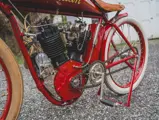
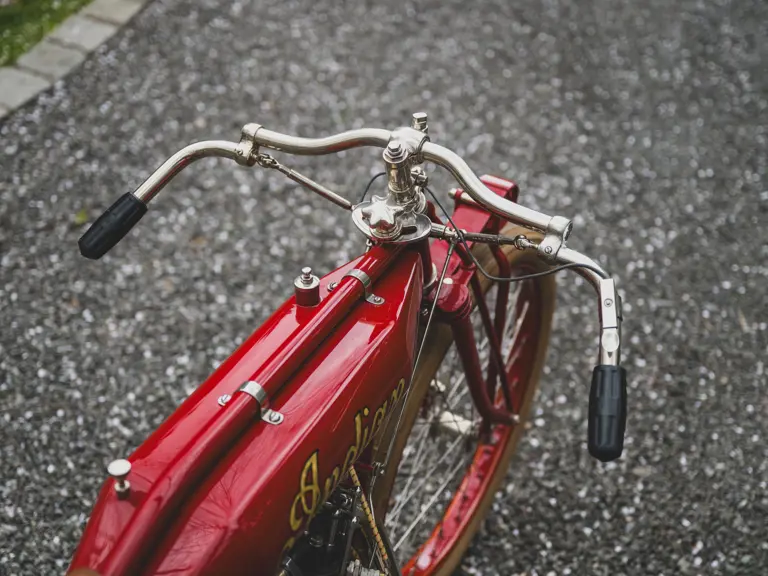
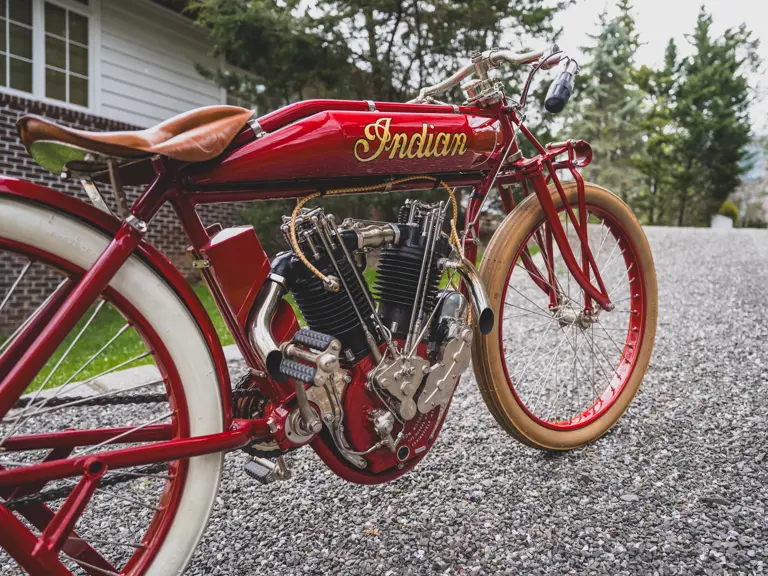
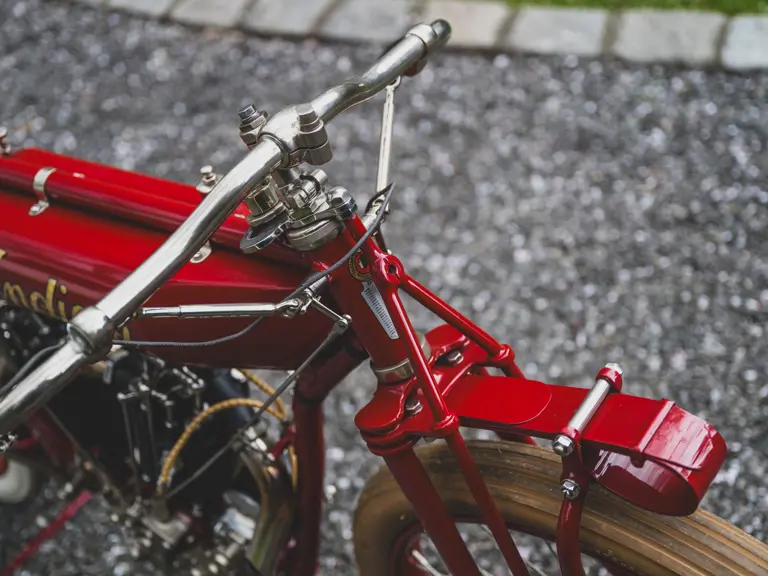
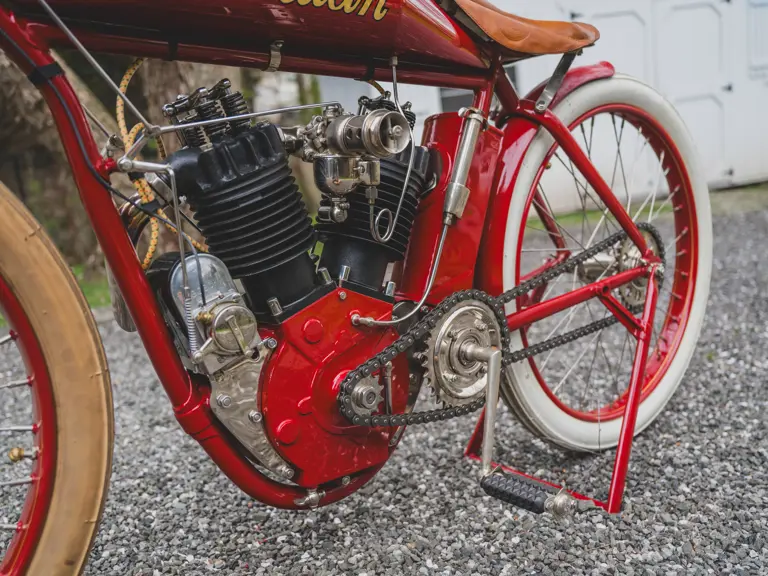
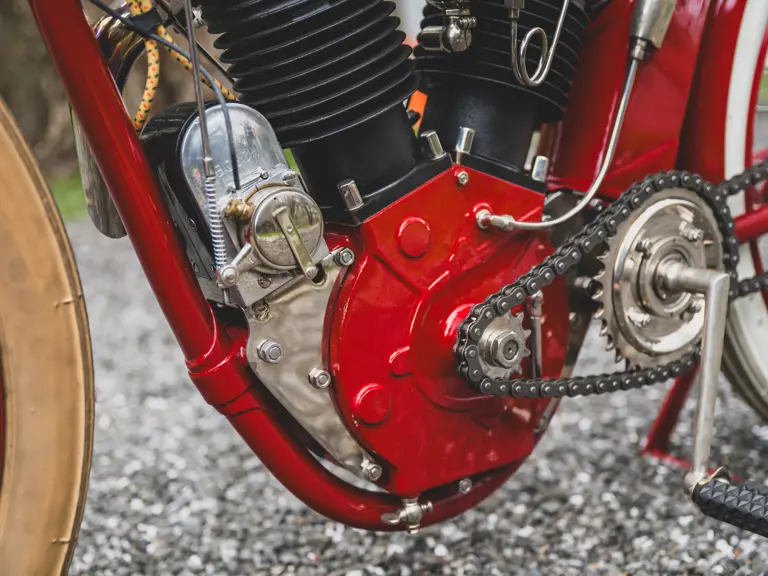
Board-trackers were truly purpose-built machines: There was just one speed, no conventional throttle, and no clutch; the bikes were meant to be push- or pull-started and run flat-out. Brakes were actually deemed a safety hazard and were omitted. At the end of the race, provided the rider made it that far, he would shut off the magneto and coast to a stop.
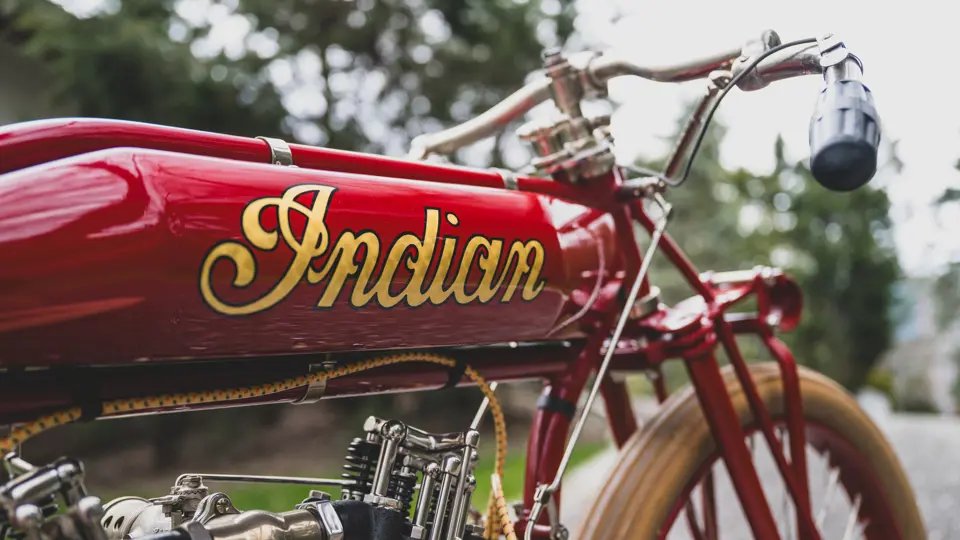
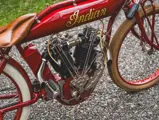
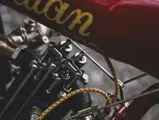
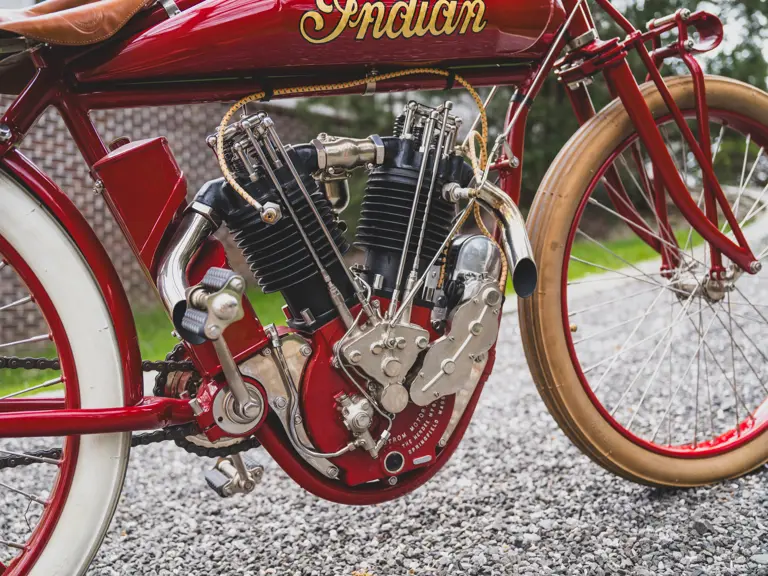
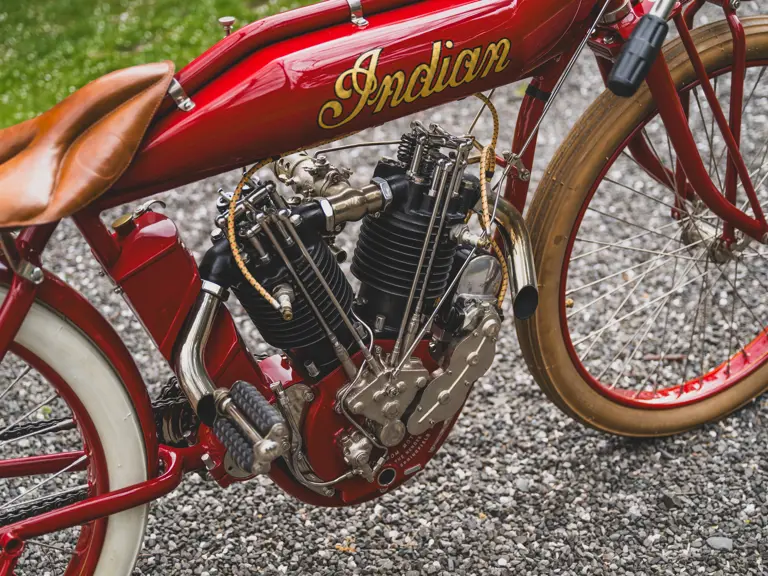
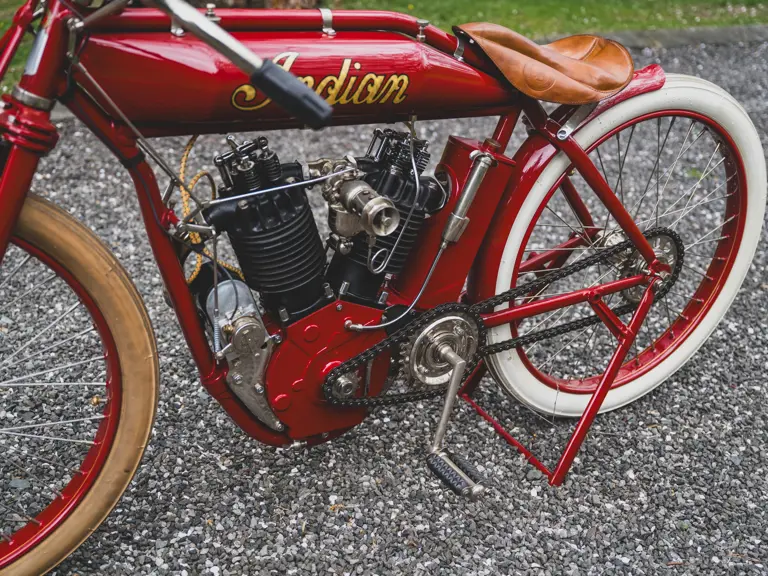
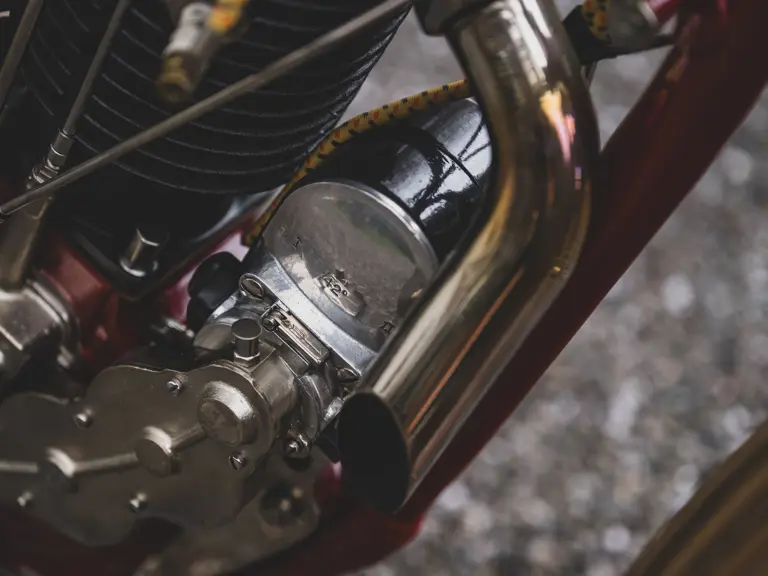
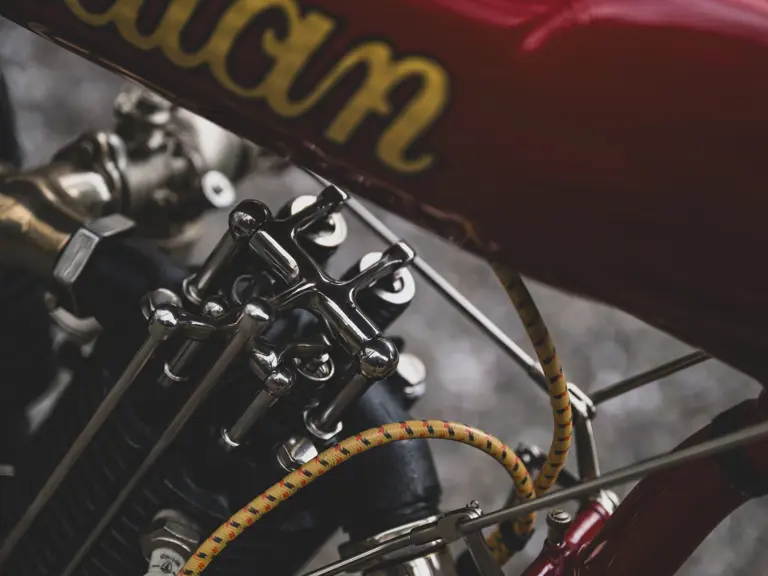
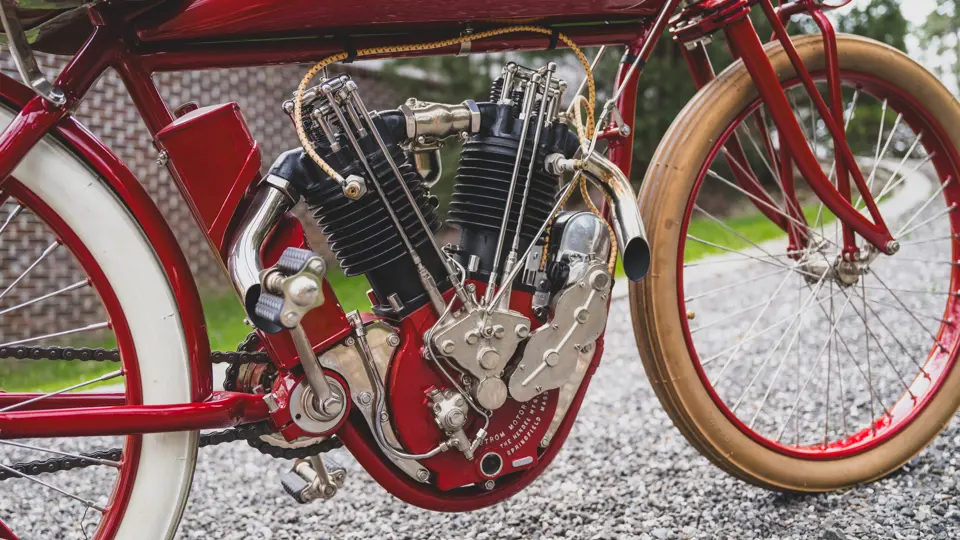
To maintain a competitive edge, Indian co-founder Oscar Hedstrom developed an eight-valve racing engine in 1910. This design featured two overhead intake and exhaust valves per cylinder—cutting-edge technology that would take quite some time to filter down to standard roadgoing motorcycles. This enabled speeds of up to 120 mph—again, on a motorcycle with no brakes!
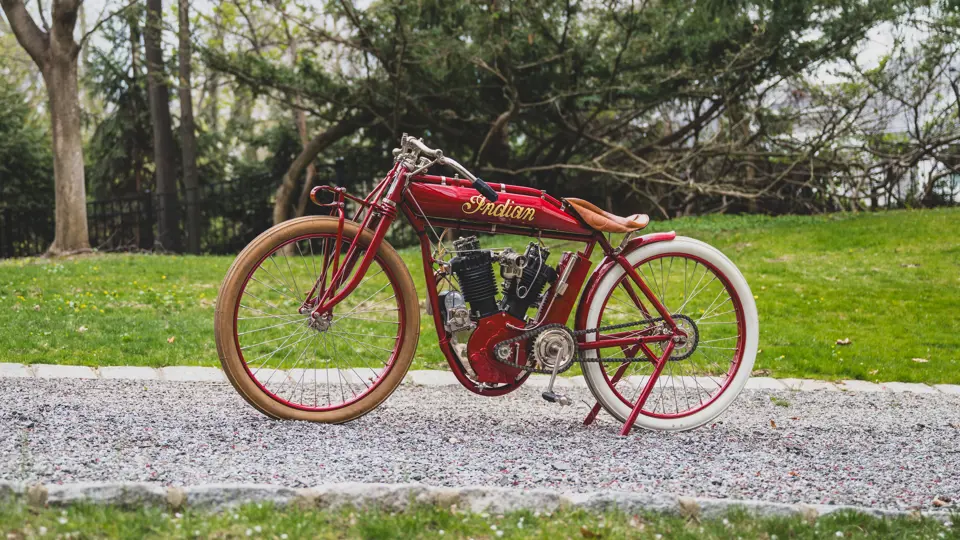
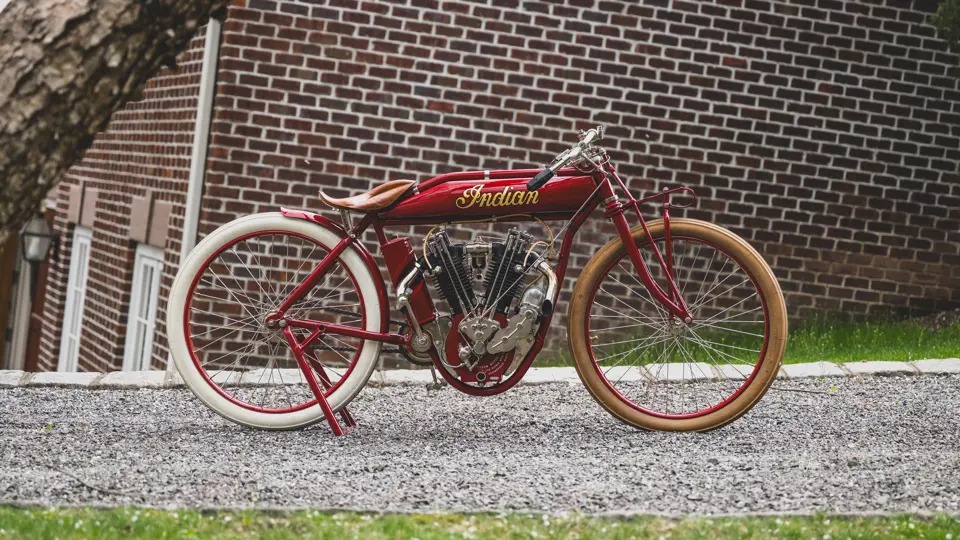
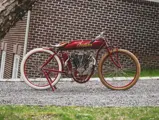
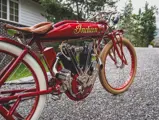
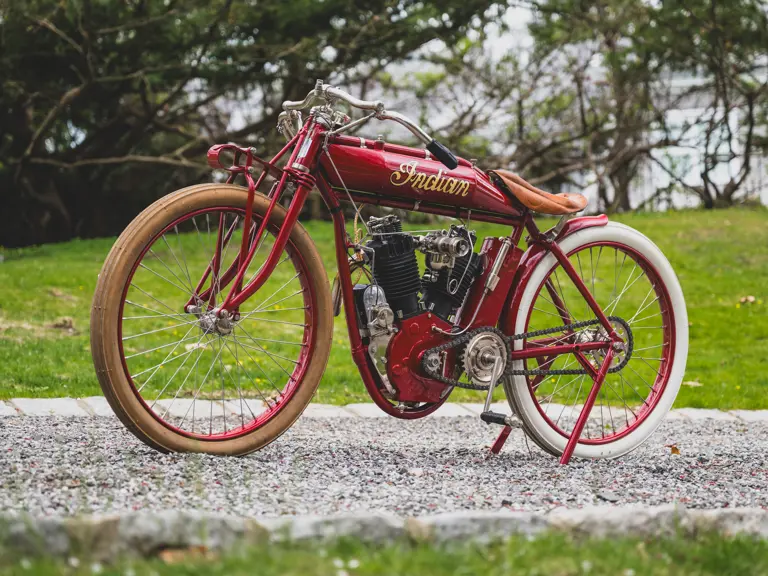
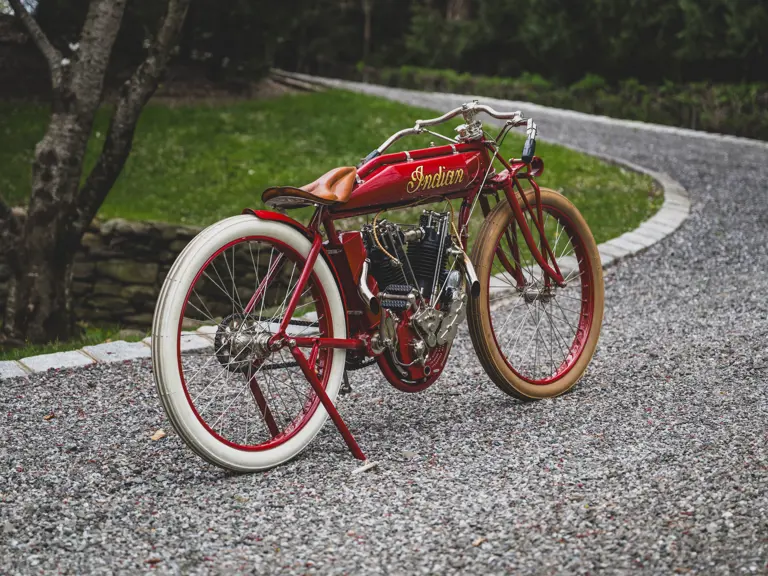
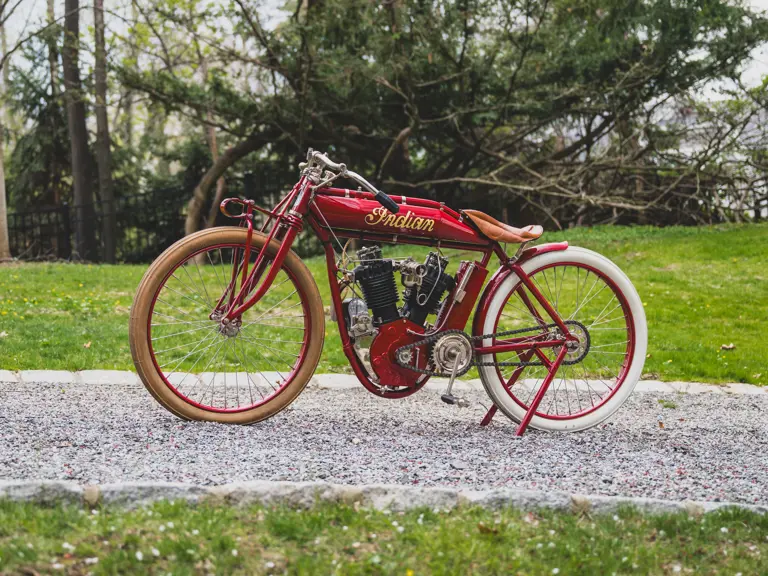
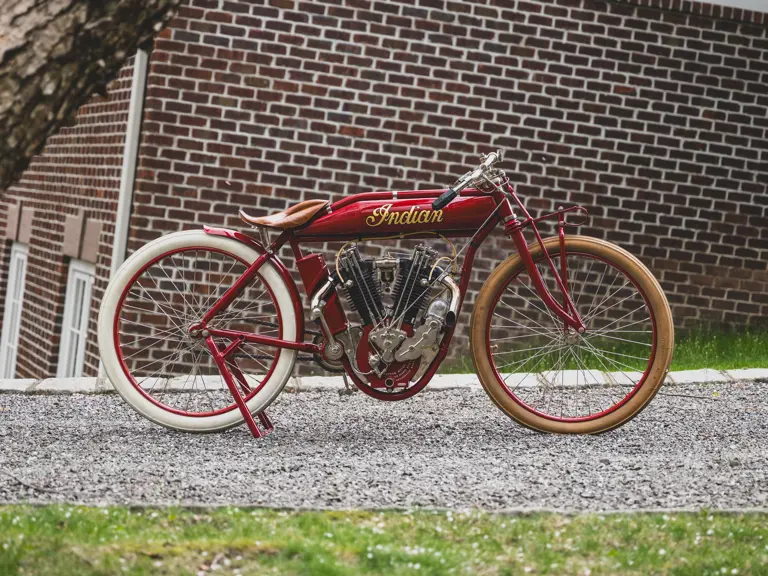
Board track racing was raw, incredibly dangerous, and, for a few decades, immensely popular. Yet today no original board tracks, and very few authentic board track racers, survive. Genuine eight-valve Indians are even rarer, but exacting re-creations such as this can give a taste of what the riders of the day piloted before cheering crowds.
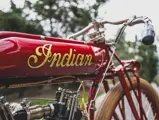
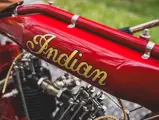
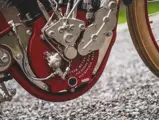
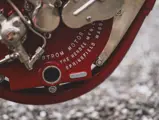
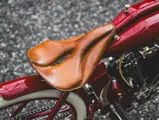
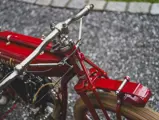
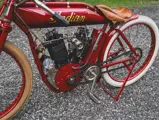
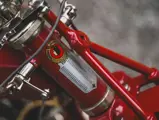
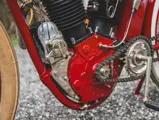
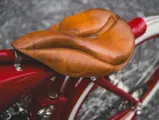
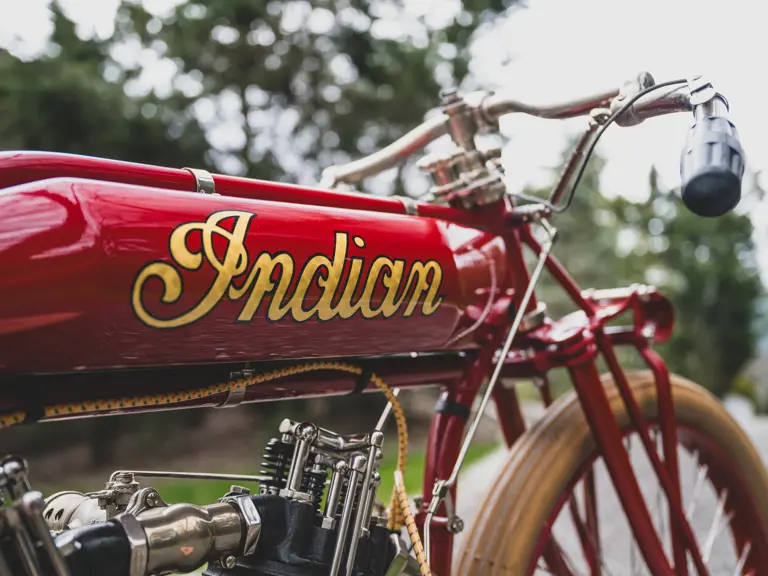
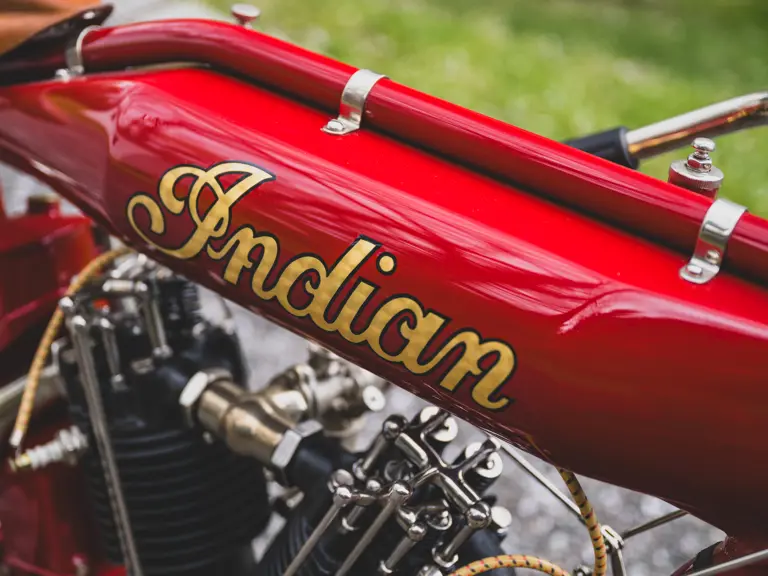
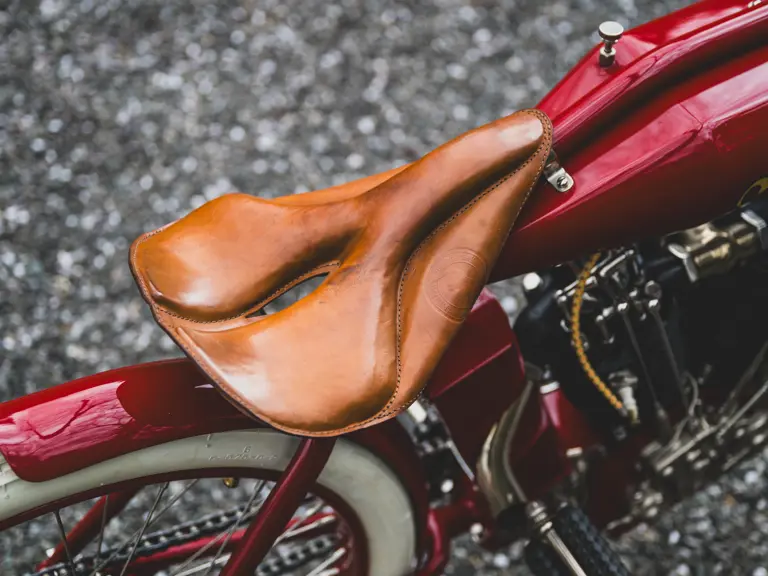
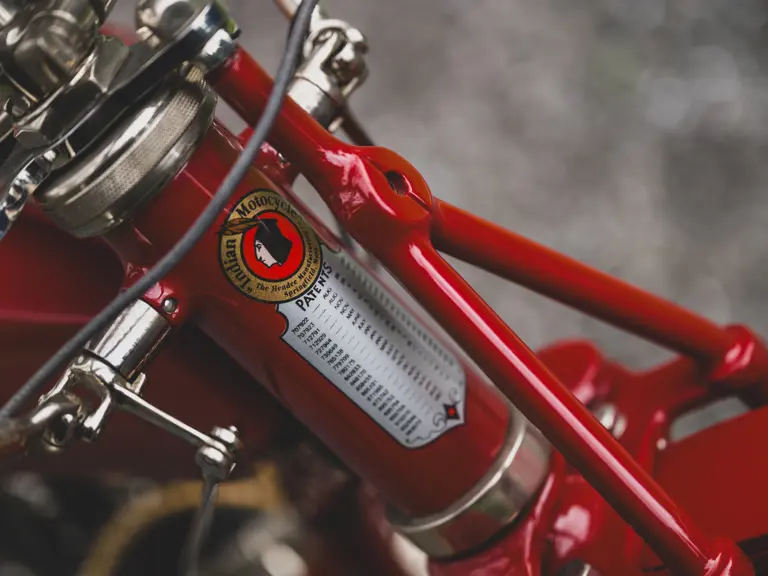
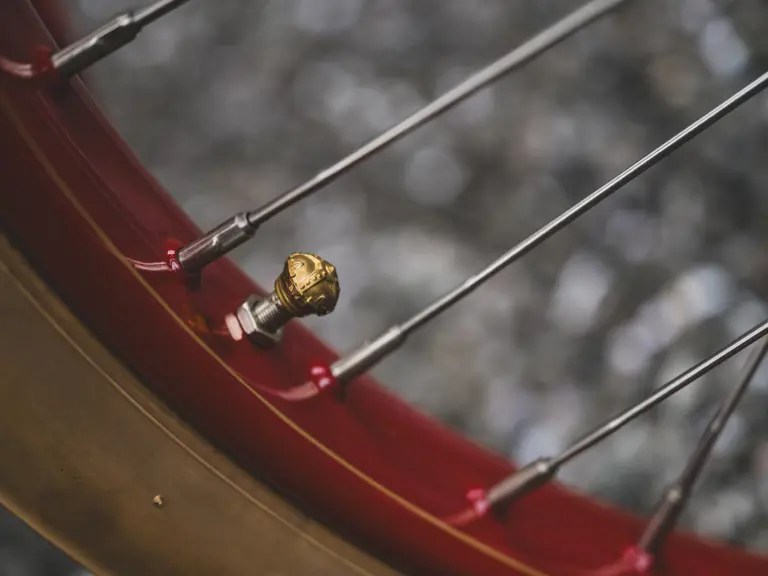
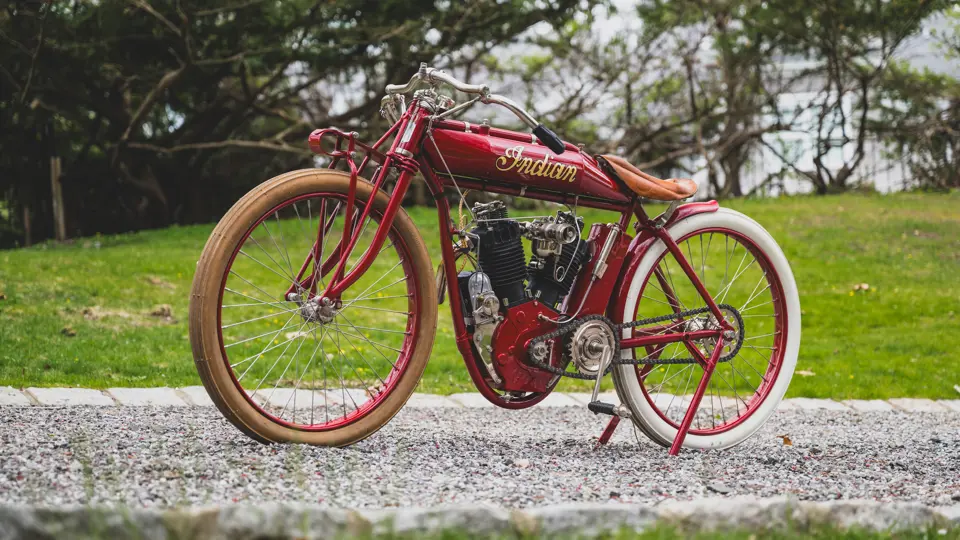
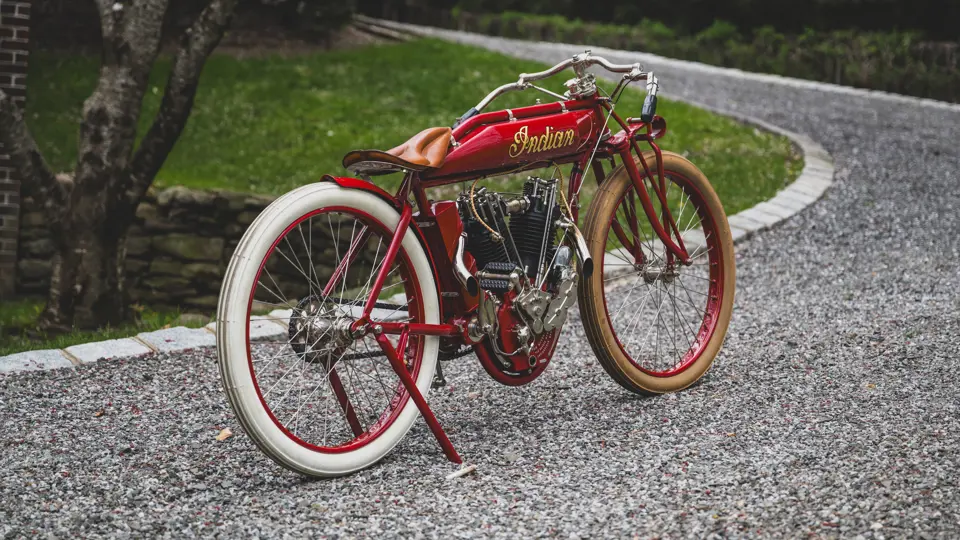
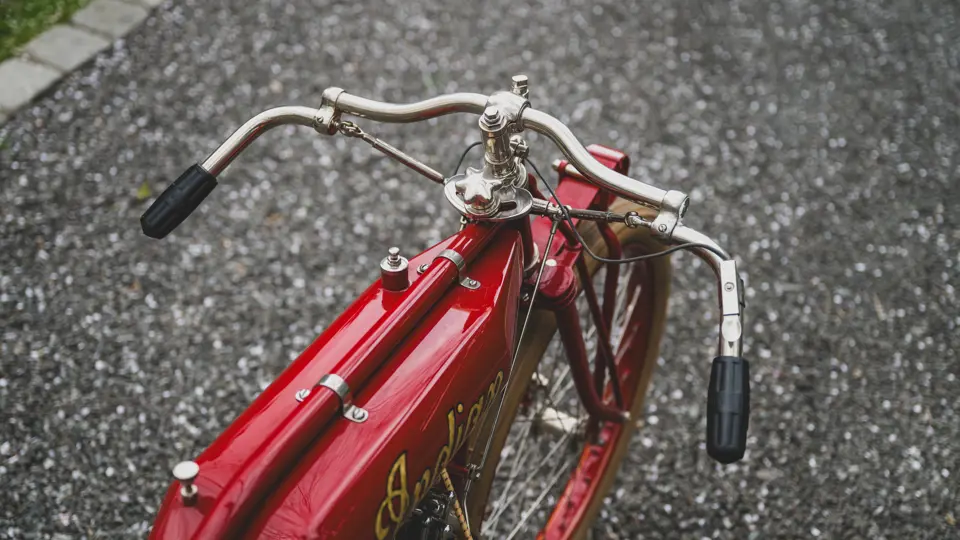
This Indian was previously owned by a motorcycle restorer and collector, who is said to have brought it to its present, polished condition. As part of this comprehensive job, the eight-valve top-end setup is understood to have been meticulously replicated, using an original set as a reference; this was then fitted to a 1915 61-cubic-inch Indian V-twin engine, which is cradled in a “loop” frame finished in the brand’s signature red.
The Indian was acquired by Sam and Emily Mann in 2008. A visually striking showpiece while on static display in the Manns’ collection, this motorcycle represents form following function to its most extreme ends: A pure speed machine—quite literally all gas and no brakes—conceived in one of motorsport’s most thrilling, and perilous, eras.
 | Monterey, California