Location
 | Miami, Florida
{{lr.item.text}}
$8,400 USD | Sold
{{bidding.lot.reserveStatusFormatted}}
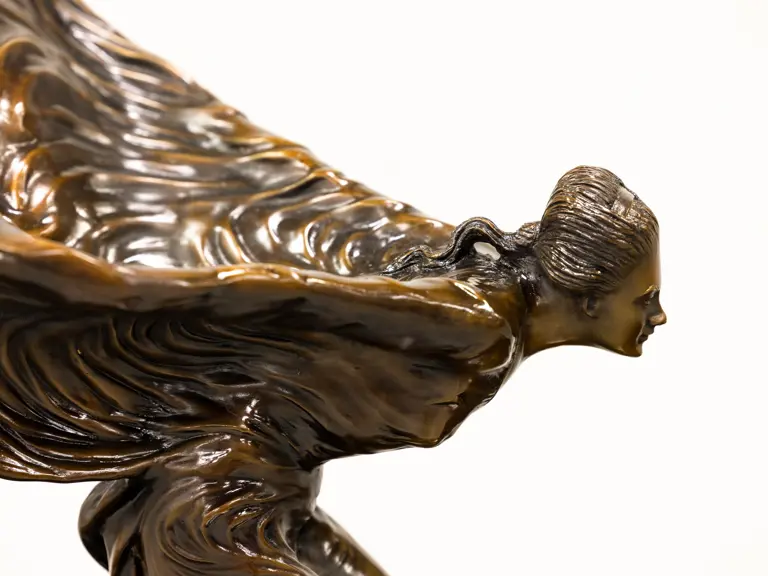
The story of Rolls-Royce’s famous “Spirit of Ecstasy” mascot actually began several years before its creator, noted sculptor and illustrator Charles Sykes, became directly involved with the marque. Circa 1904 Sykes, while working for the British weekly distributed automobile magazine The Car Illustrated, created for his friend, editor of the magazine, and early auto enthusiast, Baron Montagu of Beaulieu John Douglas Scott, a radiator mascot for his vehicles. Sykes named the mascot “The Whisper” and used the Baron’s mistress, Eleanor Velasco Thornton, as his model for the design.
By 1910, Rolls-Royce Motor Cars co-founder Henry Royce, become infuriated with what he felt were tasteless mascots adorning radiator caps atop his company’s dignified automobiles. Managing director Claude Johnson suggested the company produce its own to supplant the demeaning devils, black cats, and other inanities of the day. Though he detested mascots of any kind, Royce eventually agreed and commissioned Charles Sykes to create a mascot befitting the brand.
For further inspiration, Johnson pointed Sykes to the second-century BCE Grecian marble statue “Nike of Samothrace” on display at the Palais du Louvre in Paris, depicting the winged Goddess of Victory draped in a flowing tunic and mantle. Ultimately, Sykes instead drew on his earlier work, “The Whisper,” to create something far more delicate and ethereal, expressing what was described in a letter from the company as “the spirit of the Rolls-Royce—namely, speed with silence, absence of vibration, the mysterious harnessing of great energy, a beautiful living organism of superb grace like a sailing yacht.”
Initially called “The Spirit of Speed,” correspondence indicates that Sykes had in mind the name “Spirit of Ecstasy, who has selected road travel as her supreme delight and alighted on the prow of a Rolls-Royce car to revel in the freshness of the air, and the musical sound of her fluttering draperies.”
Rolls-Royce registered the Spirit of Ecstasy as intellectual property in 1911. In 1920, it won a competition in Paris seeking the world’s best motor car mascot, with Sykes receiving a gold medal. An optional extra up until 1939, the Spirit of Ecstasy graced only about 40 percent of the 20,000 or so cars delivered during this period, though many were later retrofitted.
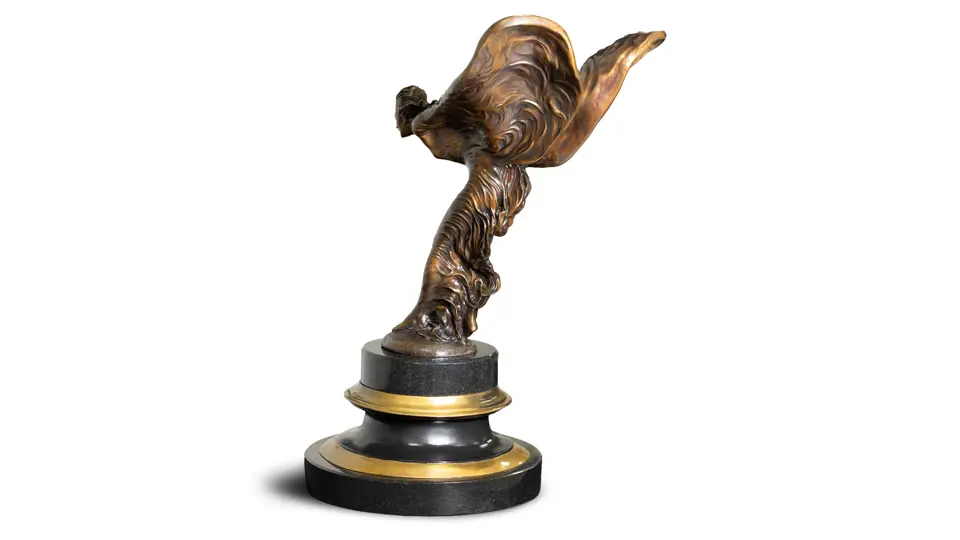
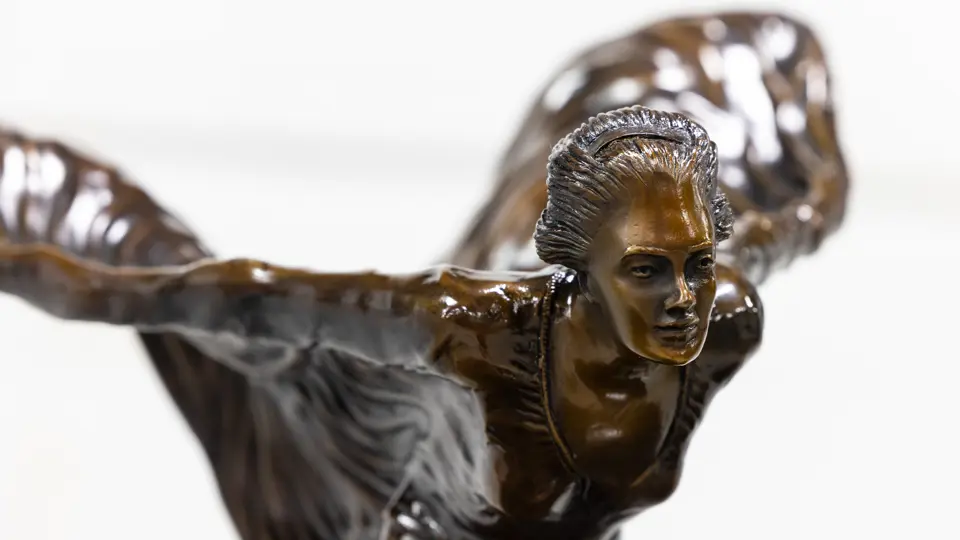
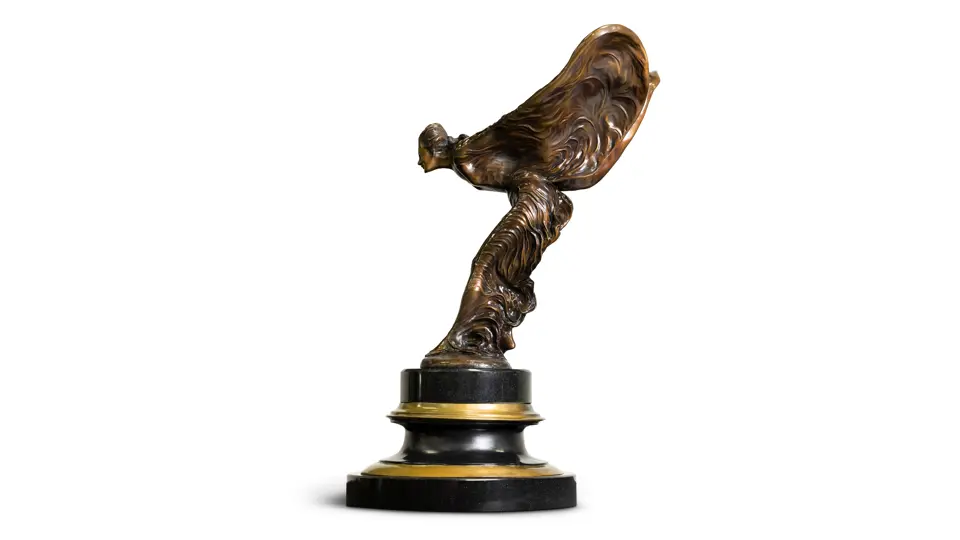
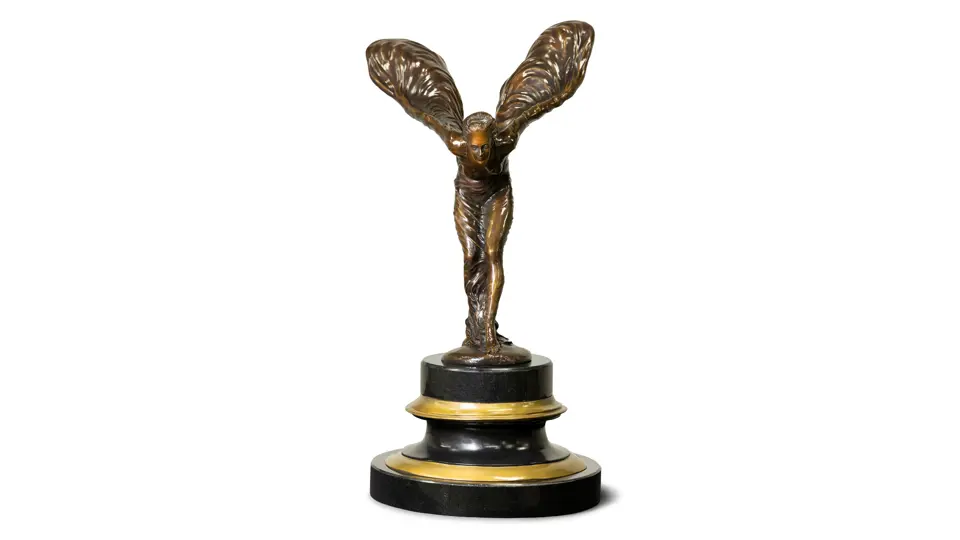
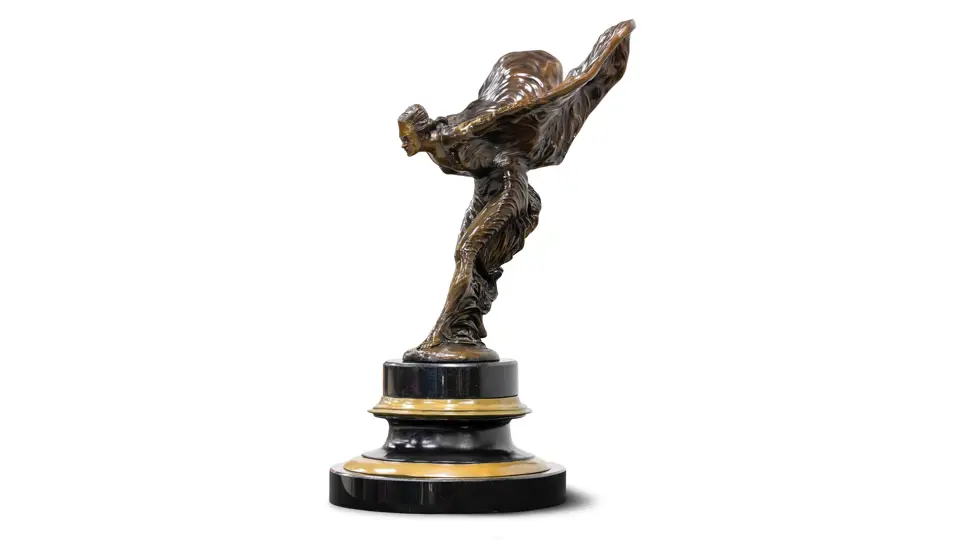
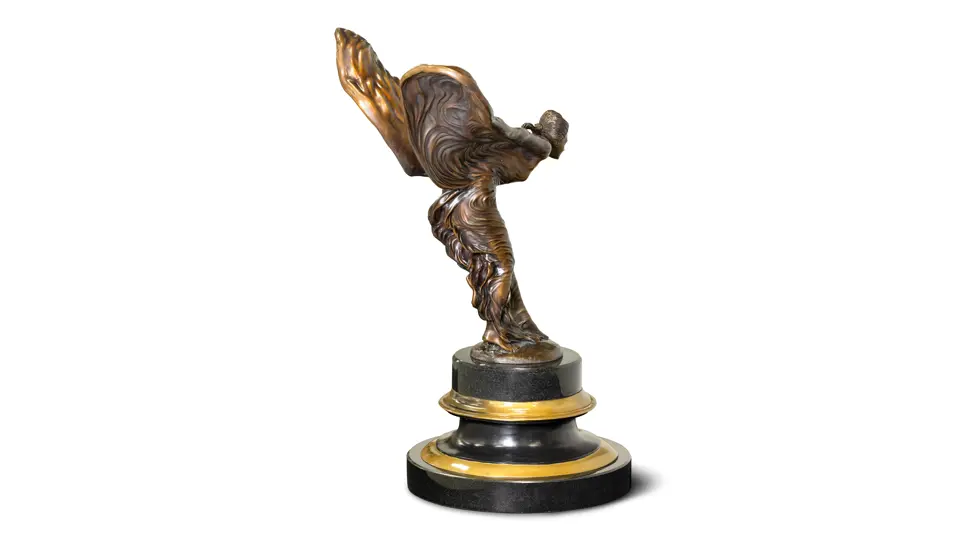
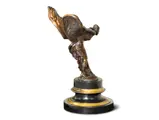
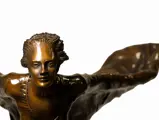
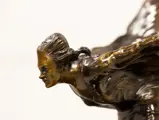
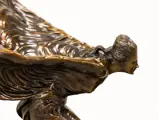
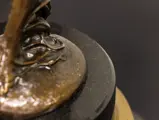
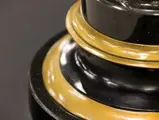
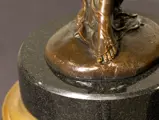
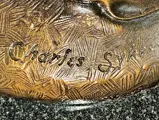
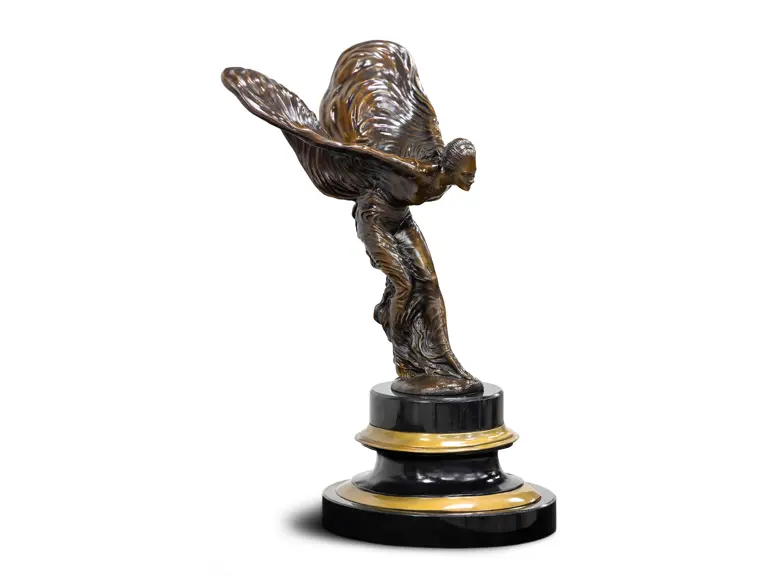
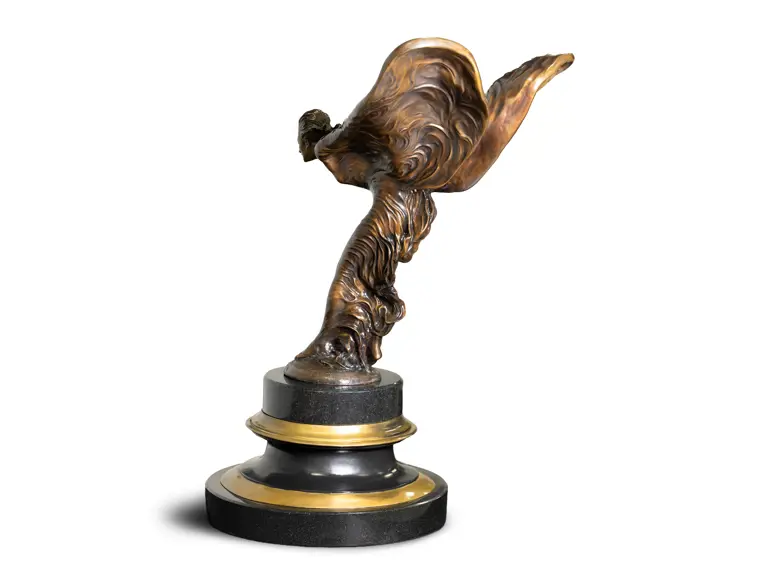
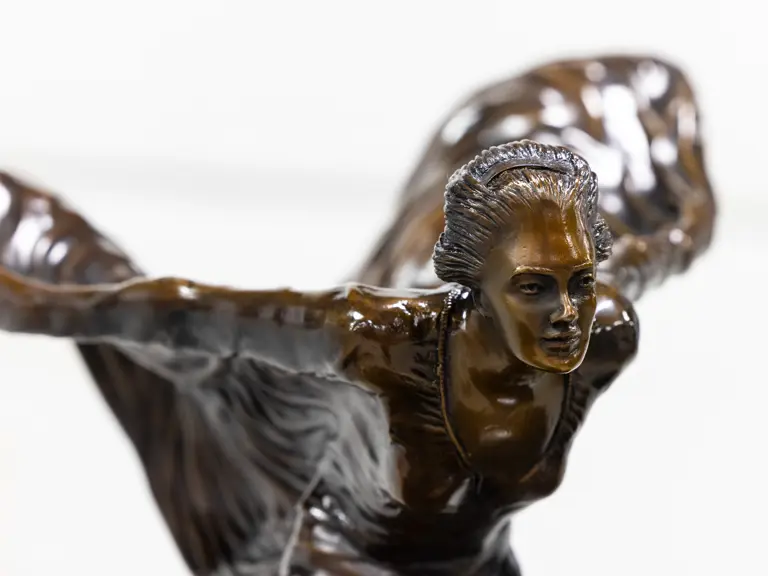
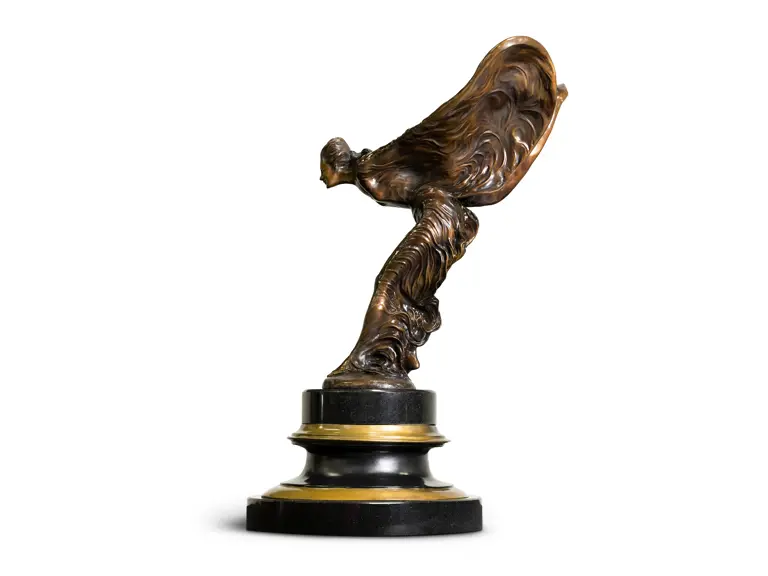
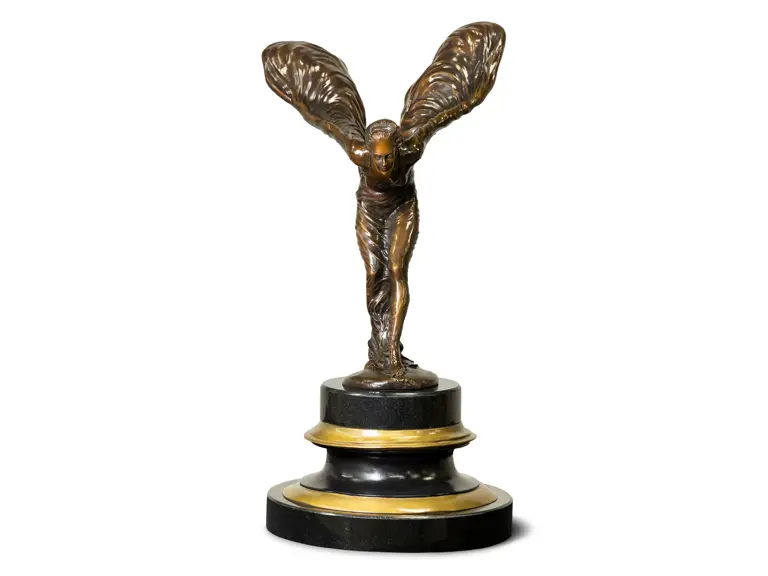
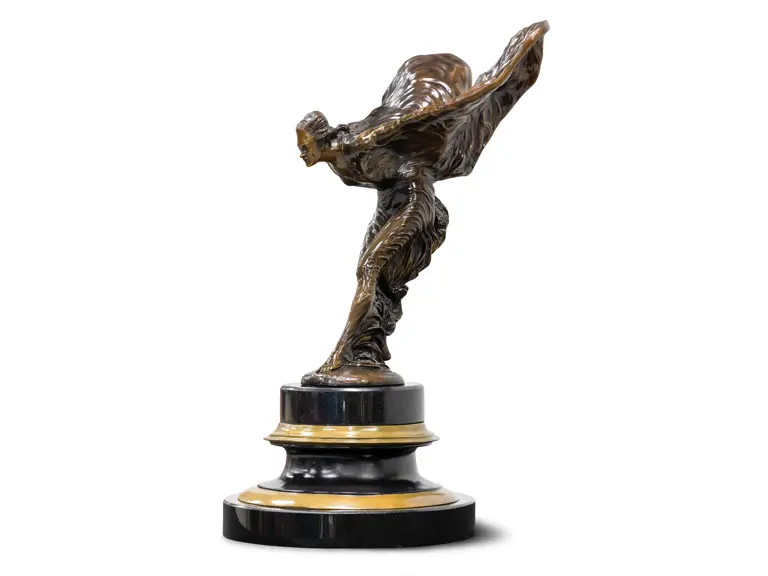
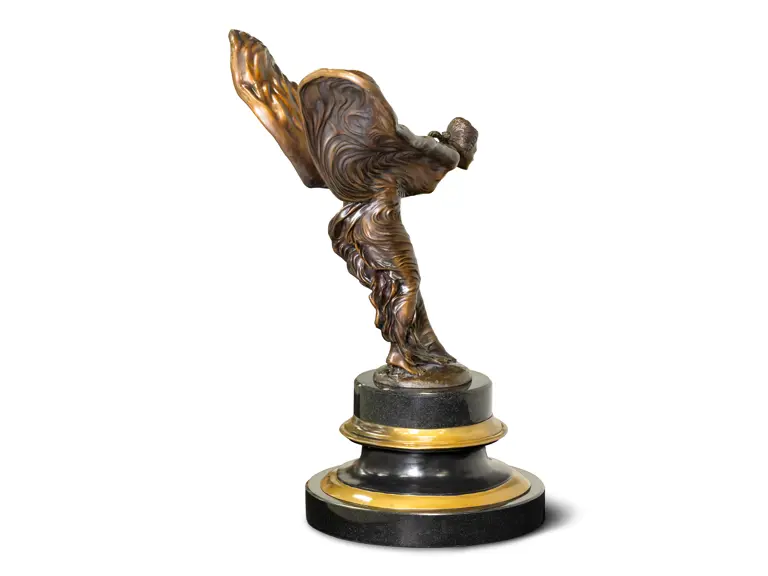
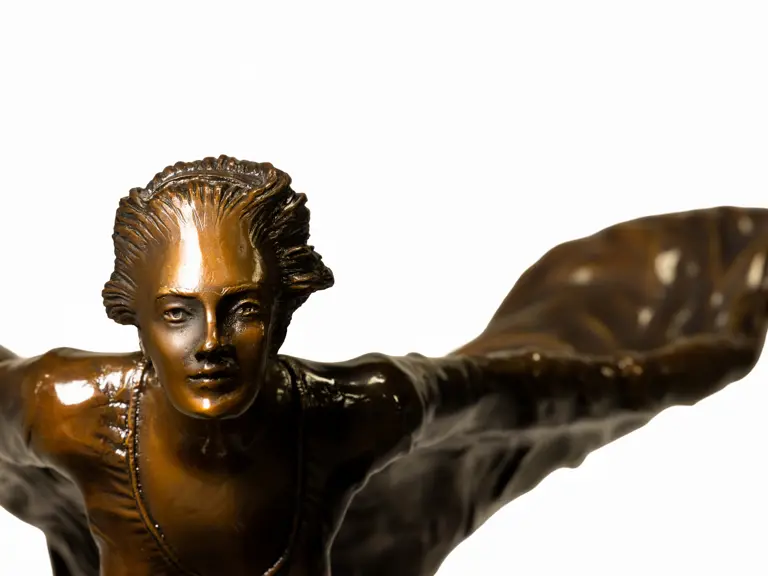
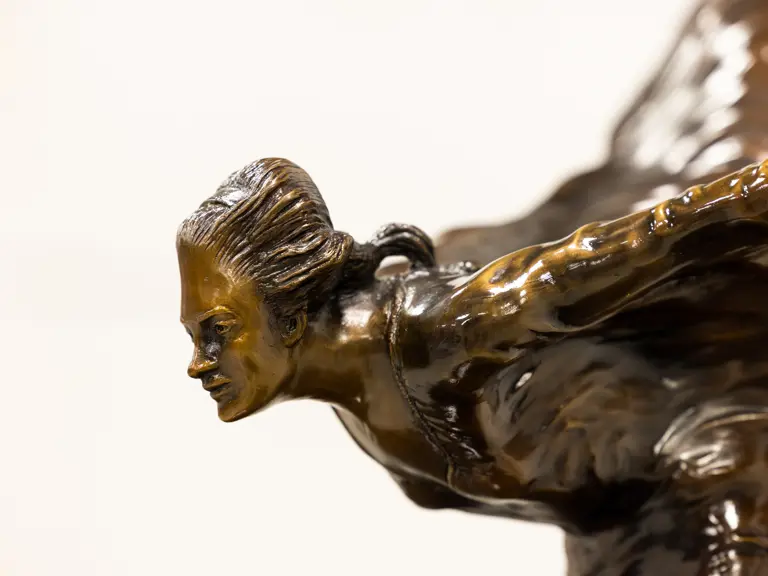
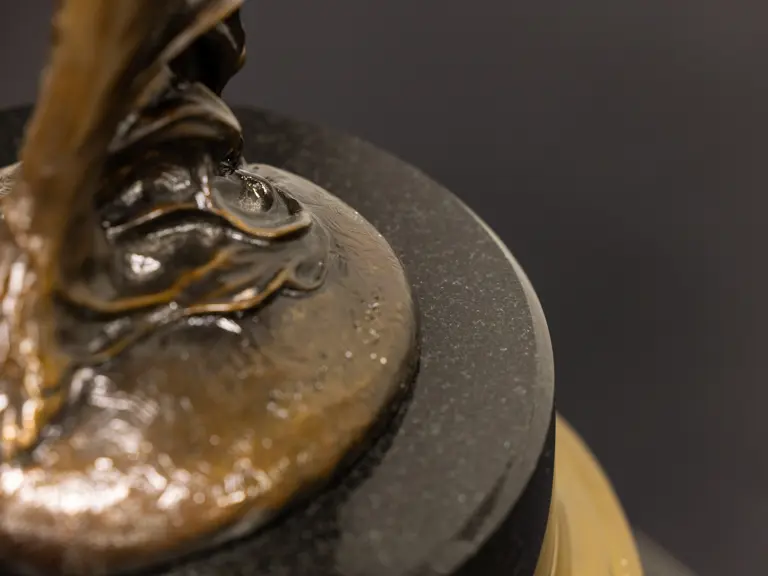
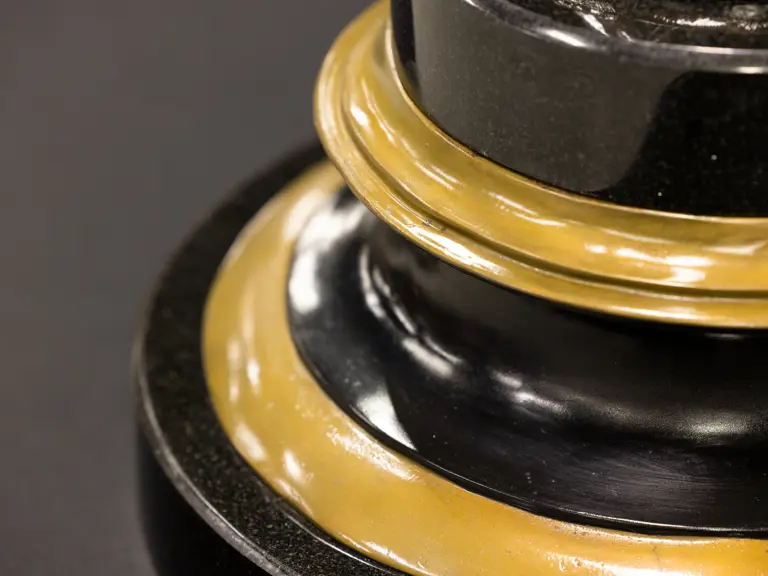
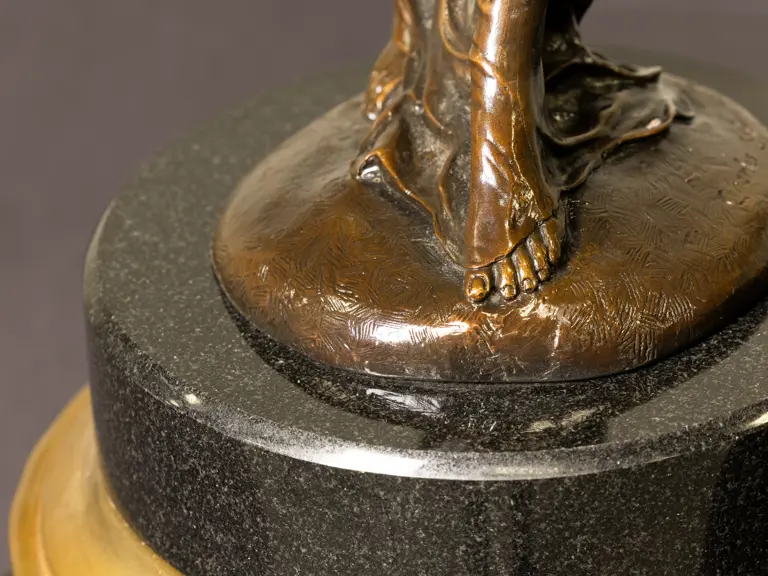
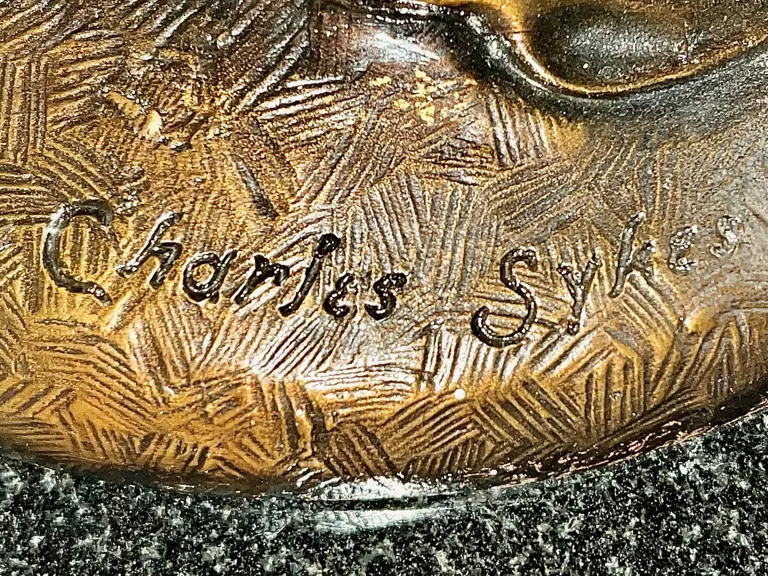
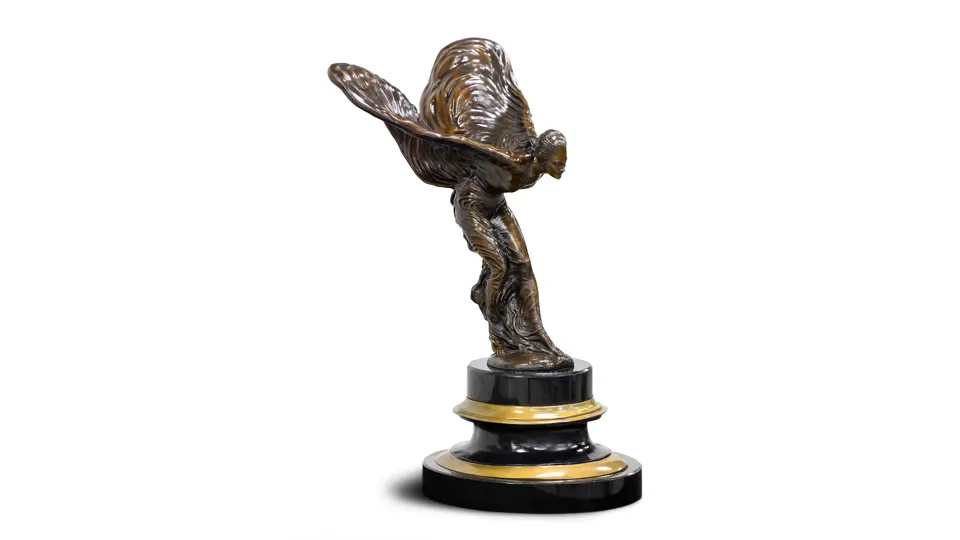
Standing over two feet tall, this bronze sculpture of the Spirit of Ecstasy is inscribed with Charles Skyes’ signature mounted on a beautiful marble plinth and would make for an imposing addition to any collection space.