
Identification No.
10856147
{{lr.item.text}}
Offered Without Reserve
{{bidding.lot.reserveStatusFormatted}}
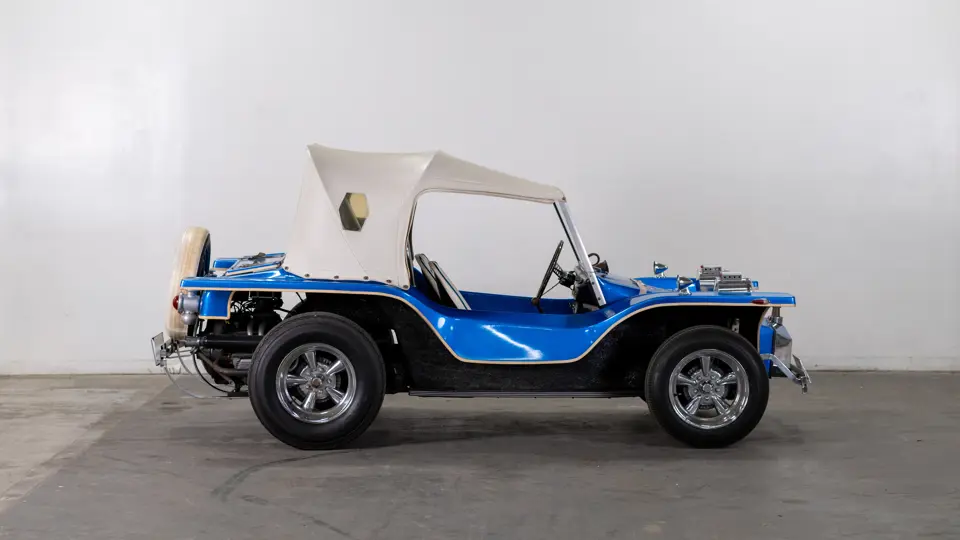
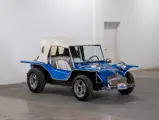
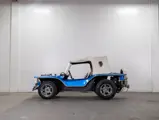
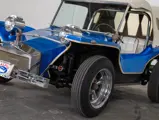
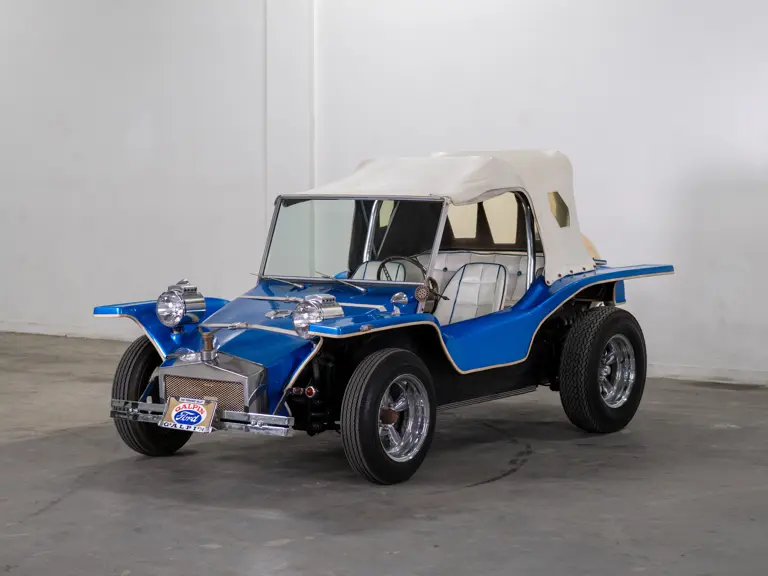
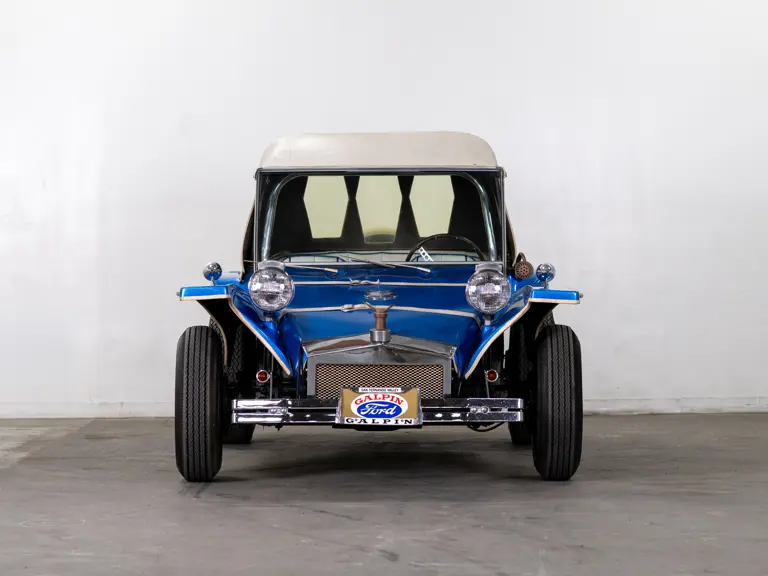
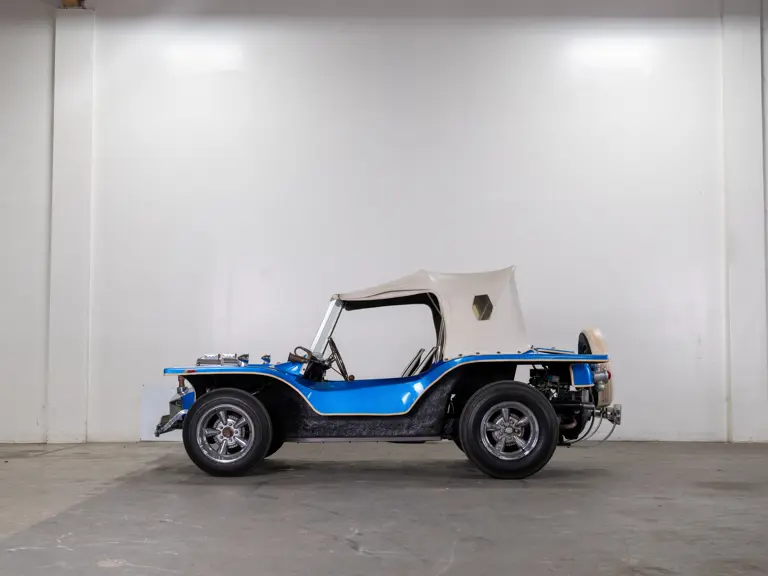
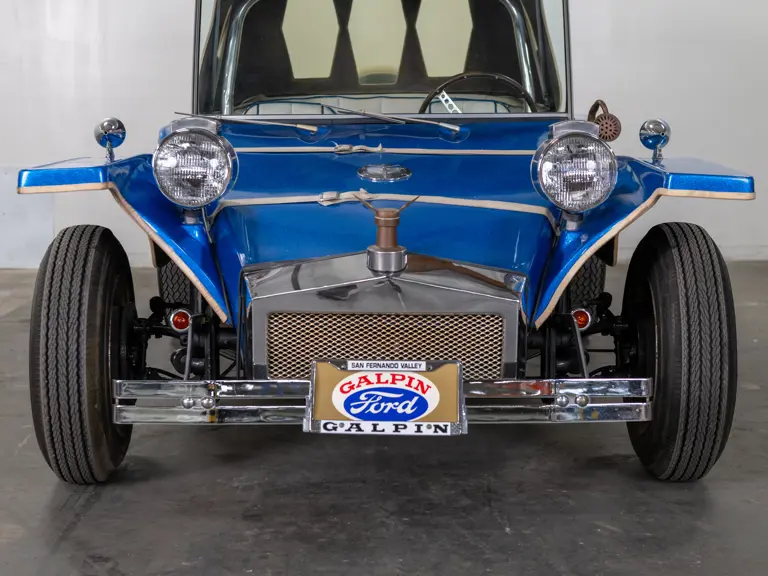
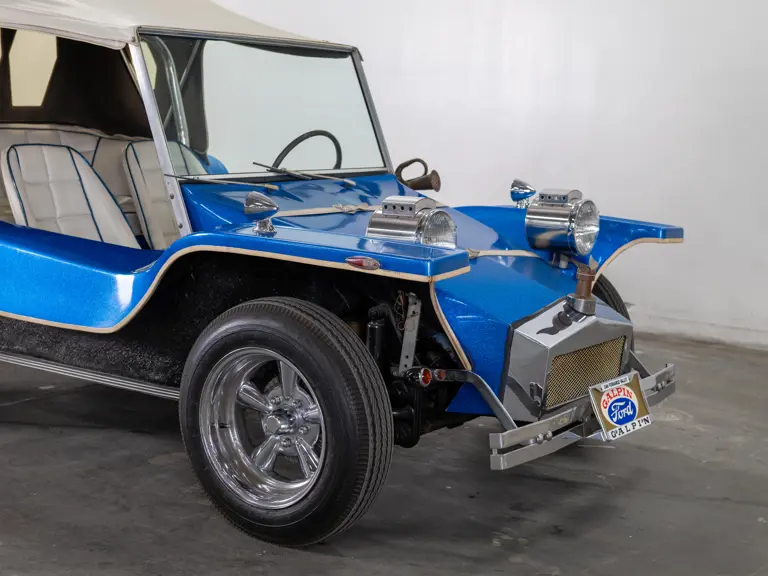
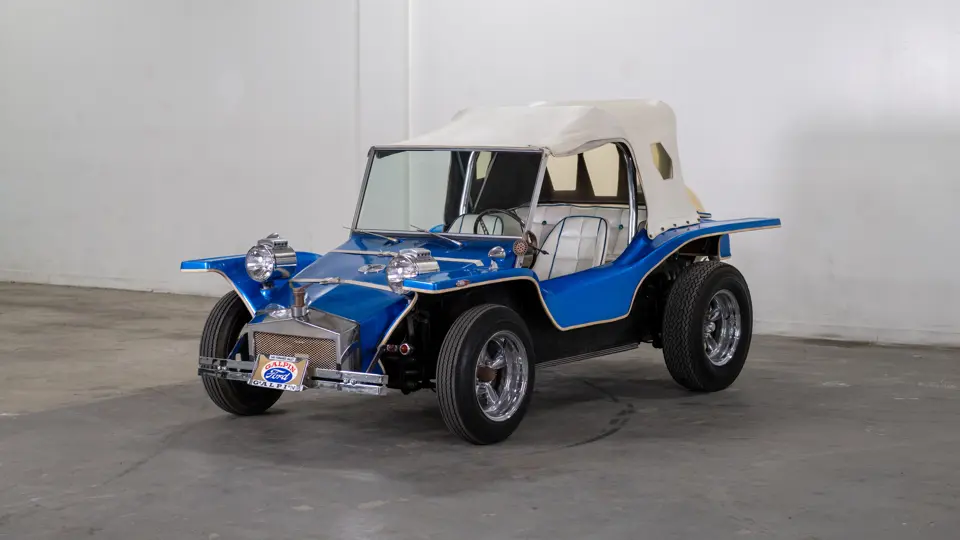
Barris Kustom was typically one to lead trends, not follow them, but not even they could resist the dune buggy craze that kicked off in the mid-1960s with the storied Meyers Manx. It goes without saying that Barris put a far-out twist on the concept, however, with the result being the vintage-inspired T Buggy.
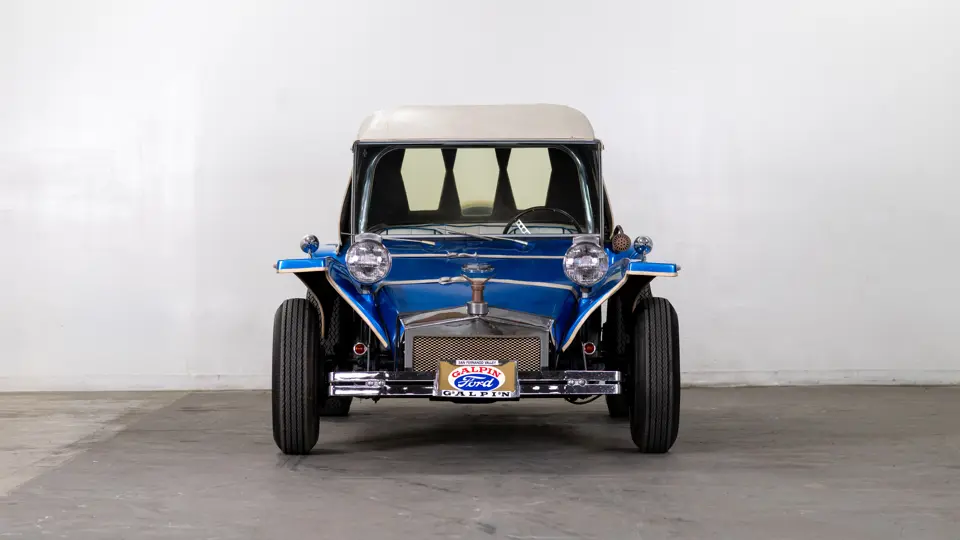
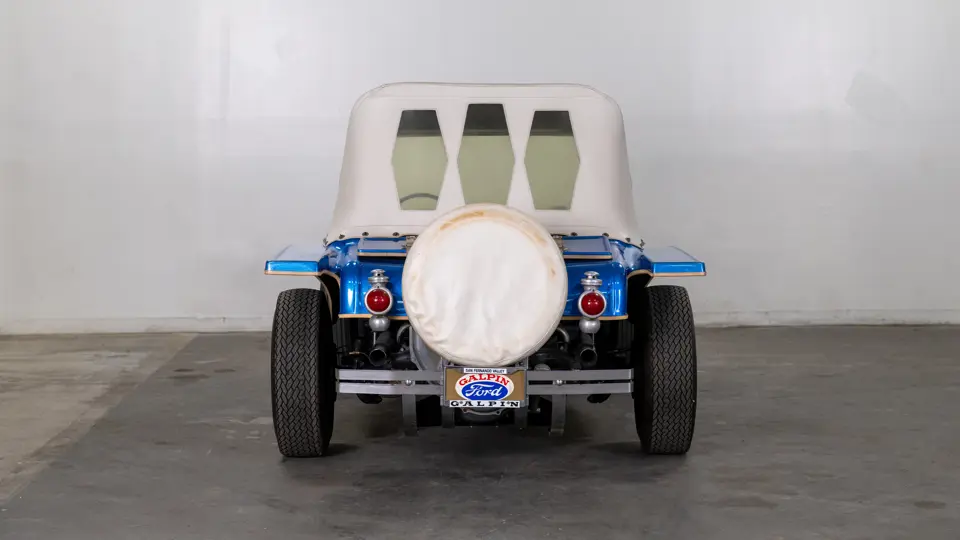
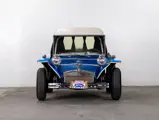
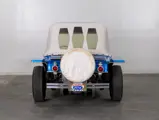
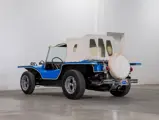
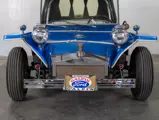
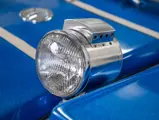
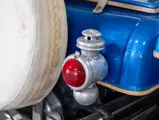
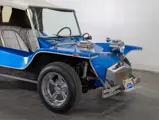
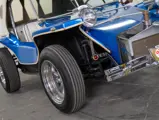
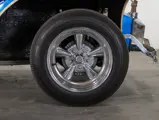
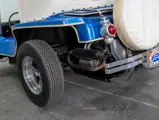
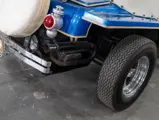
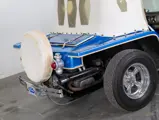
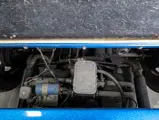
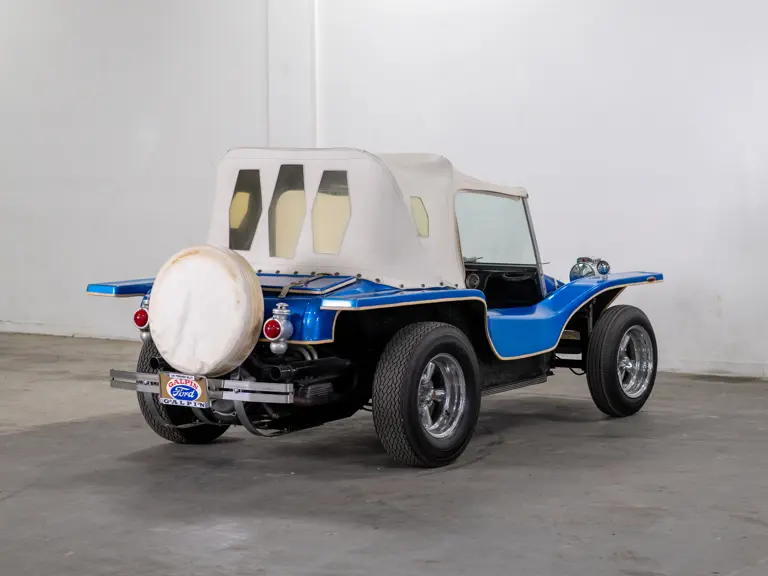
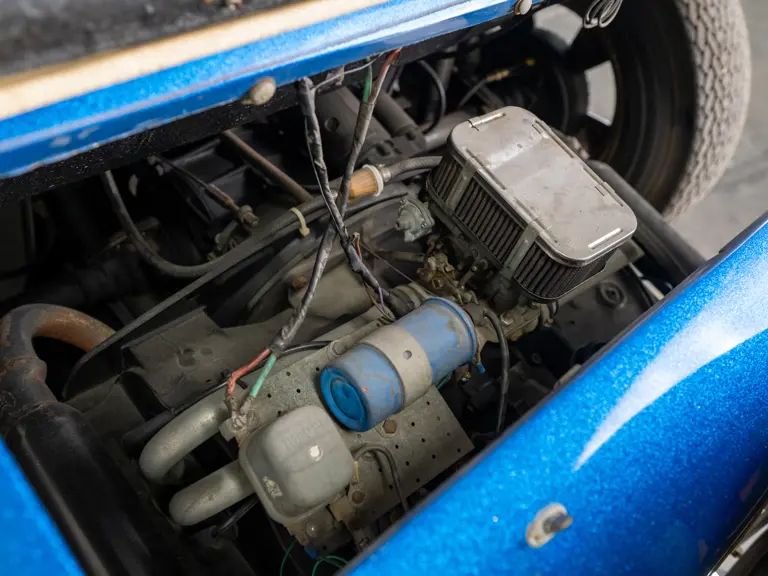
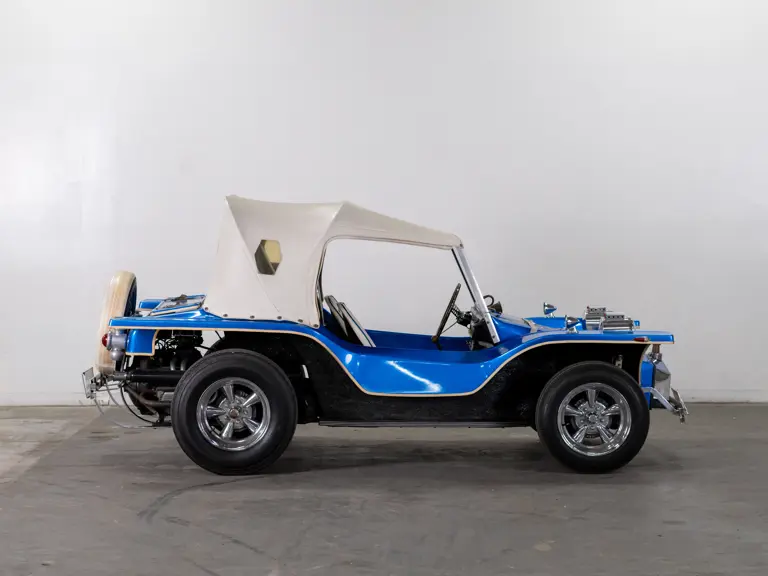
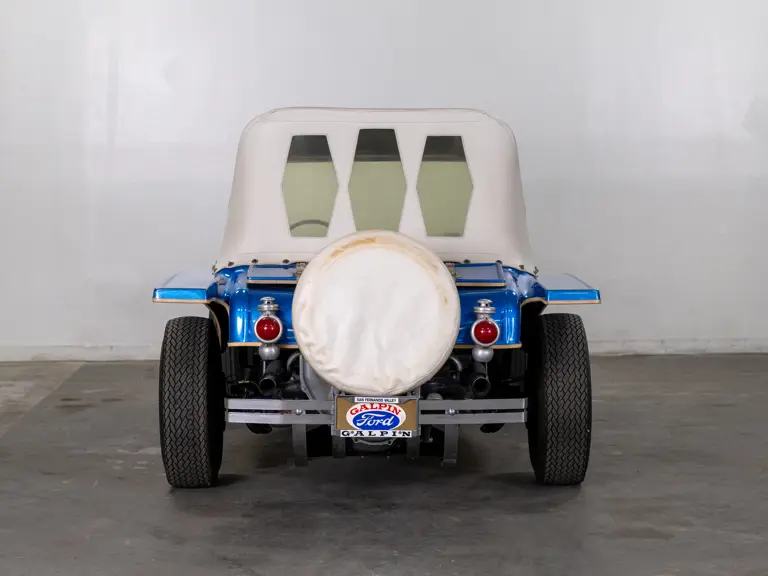
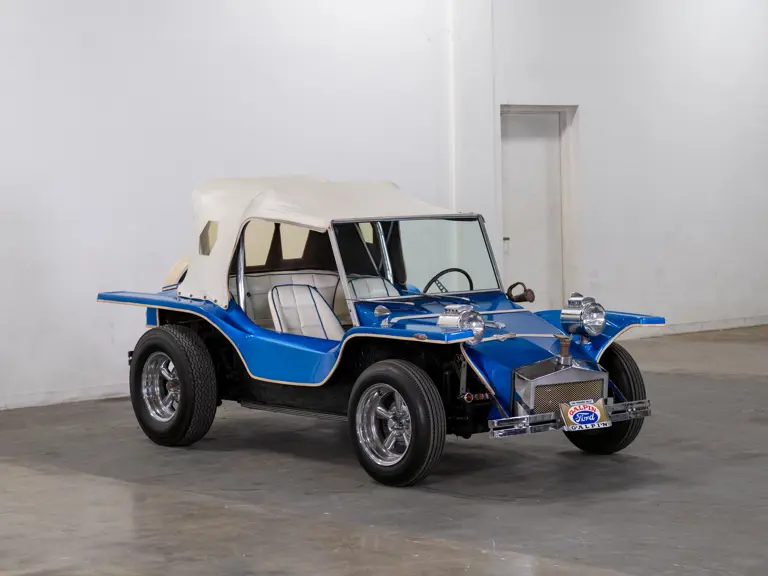
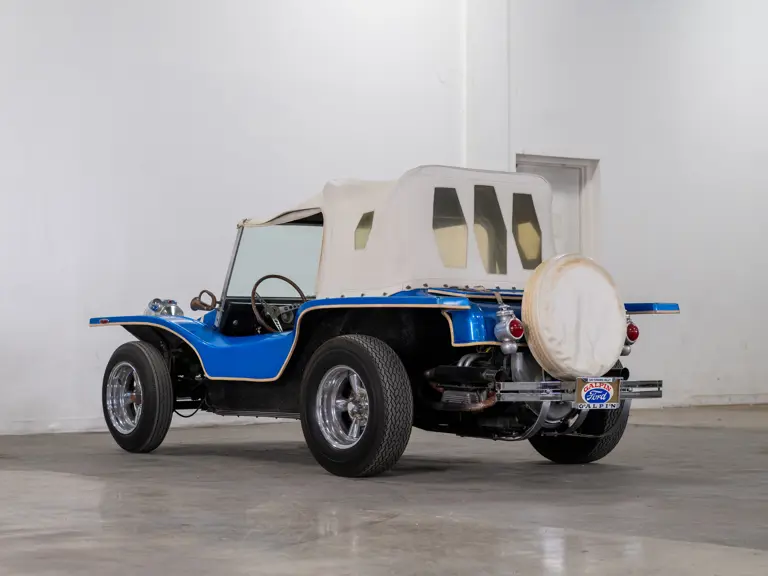
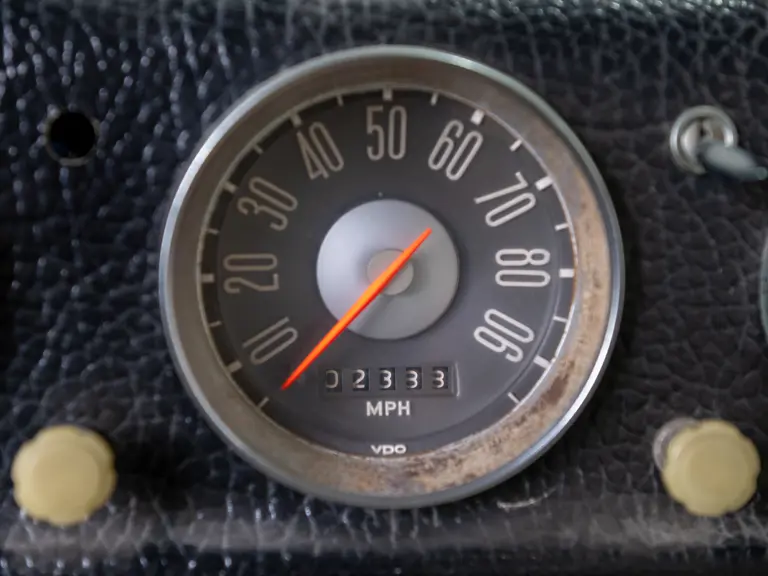
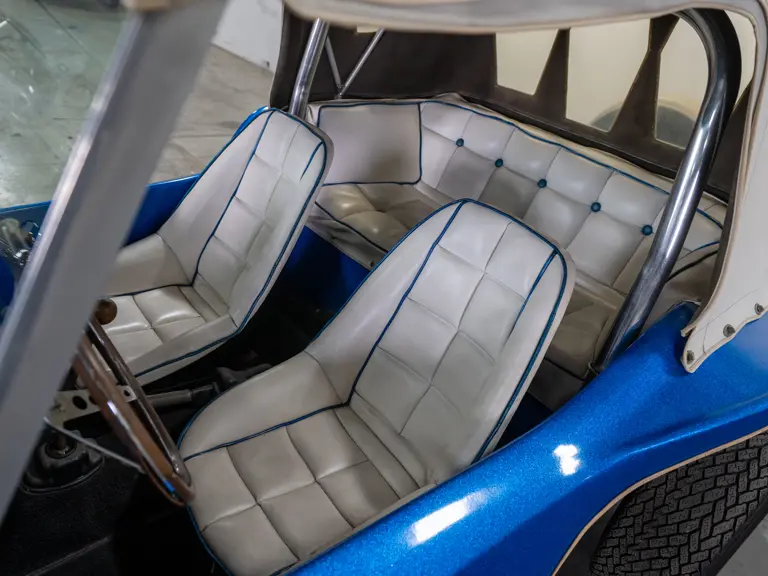
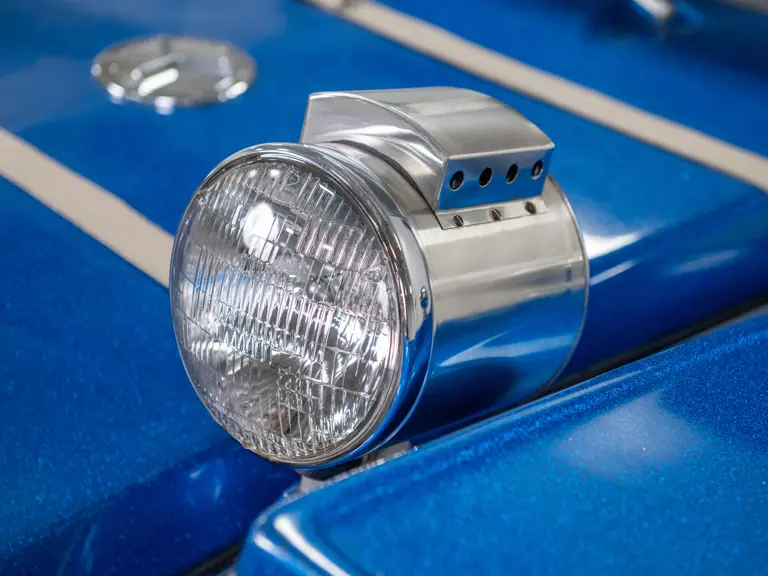
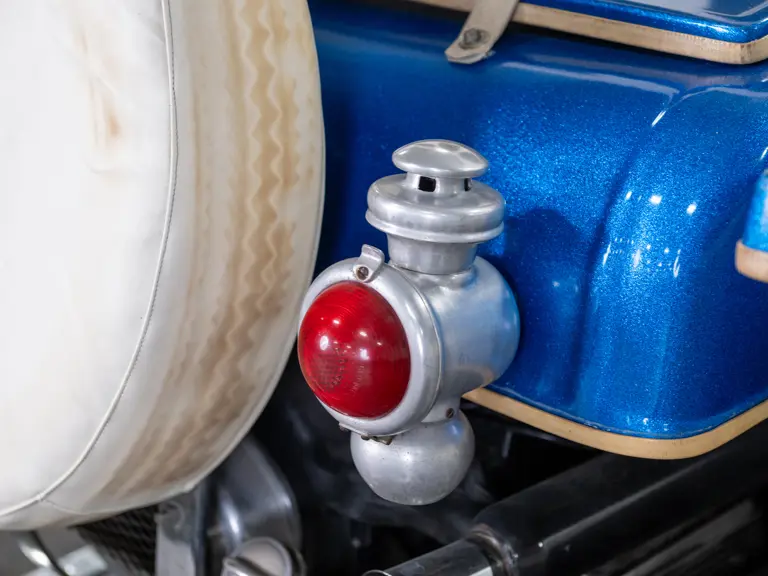
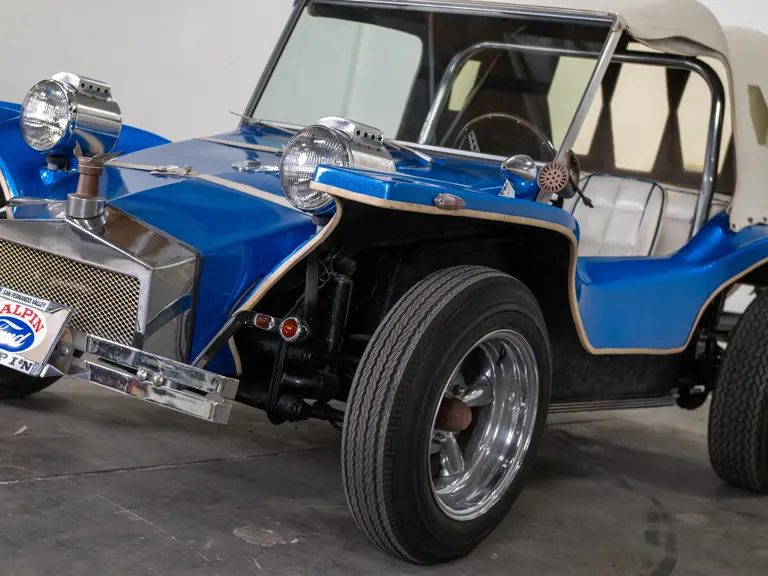
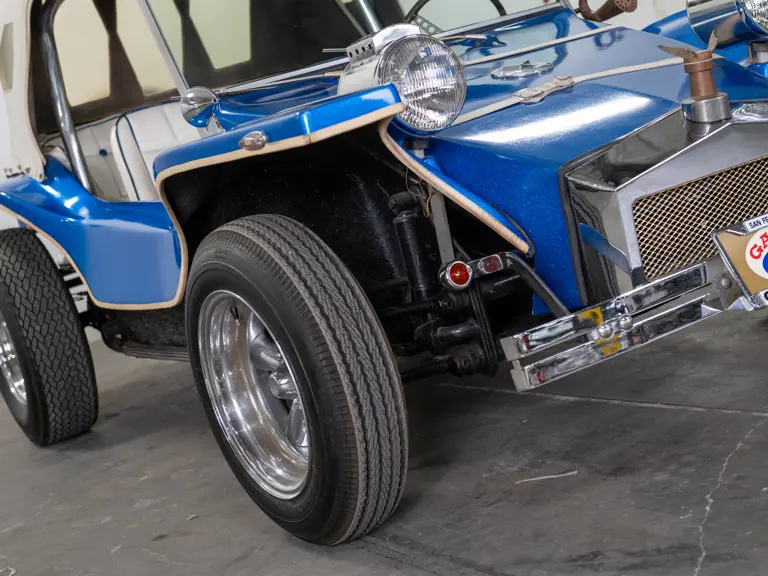
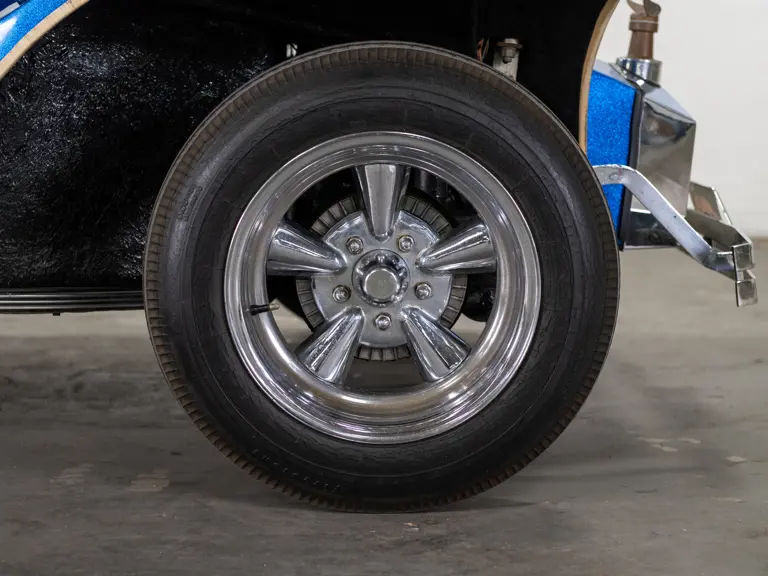
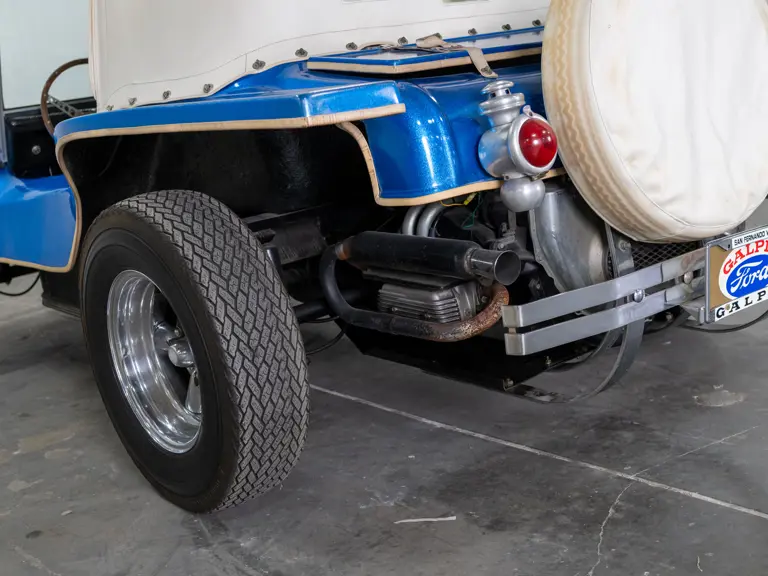
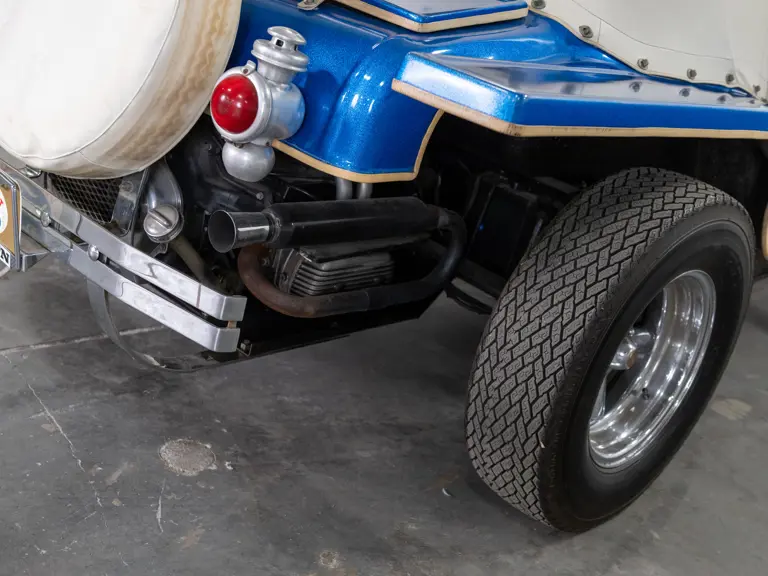
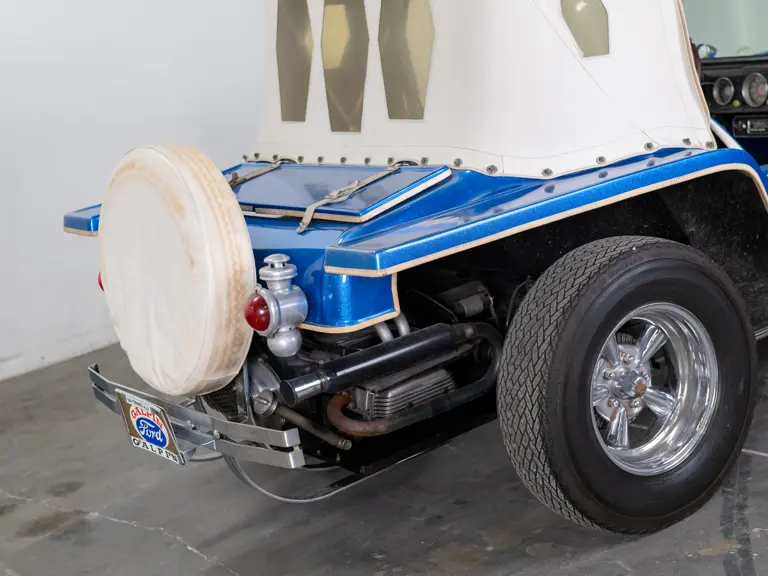
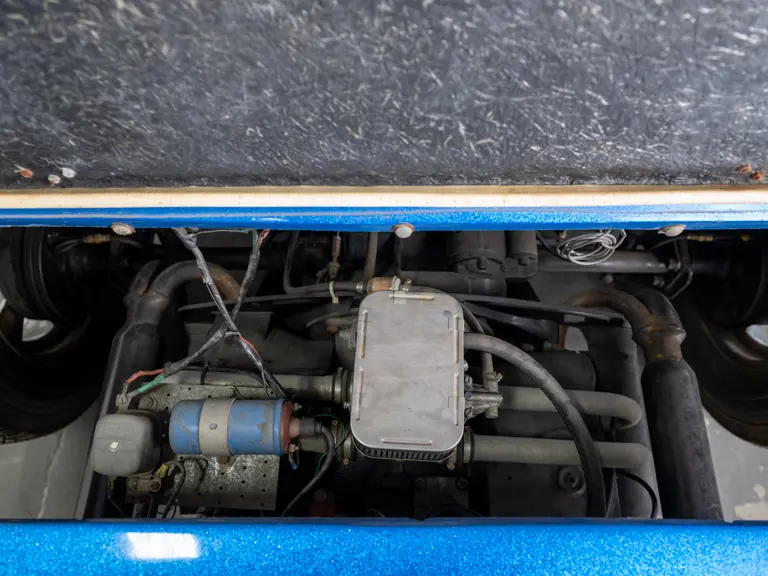
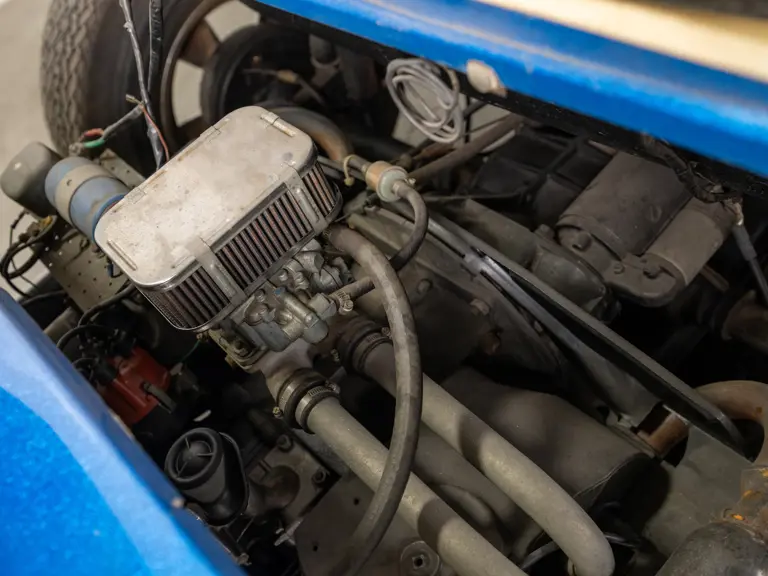
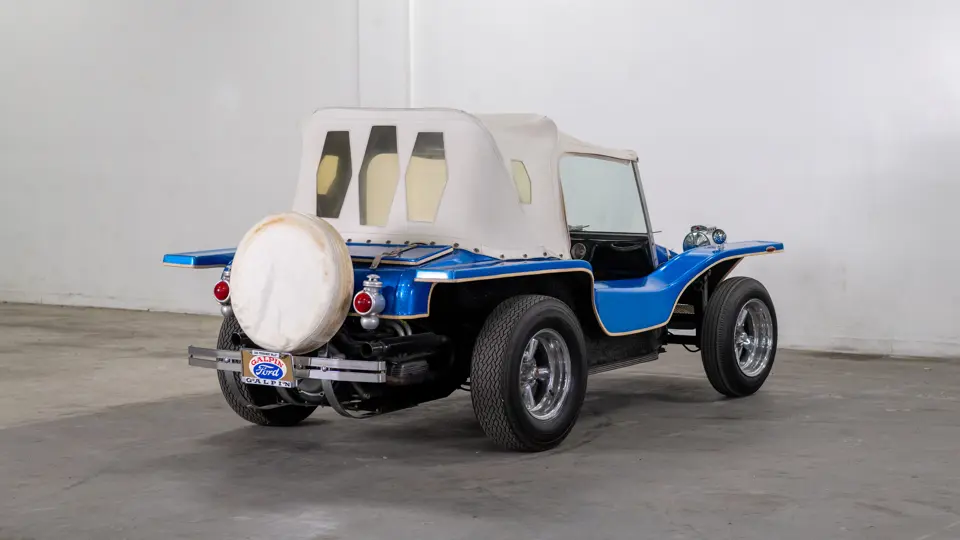
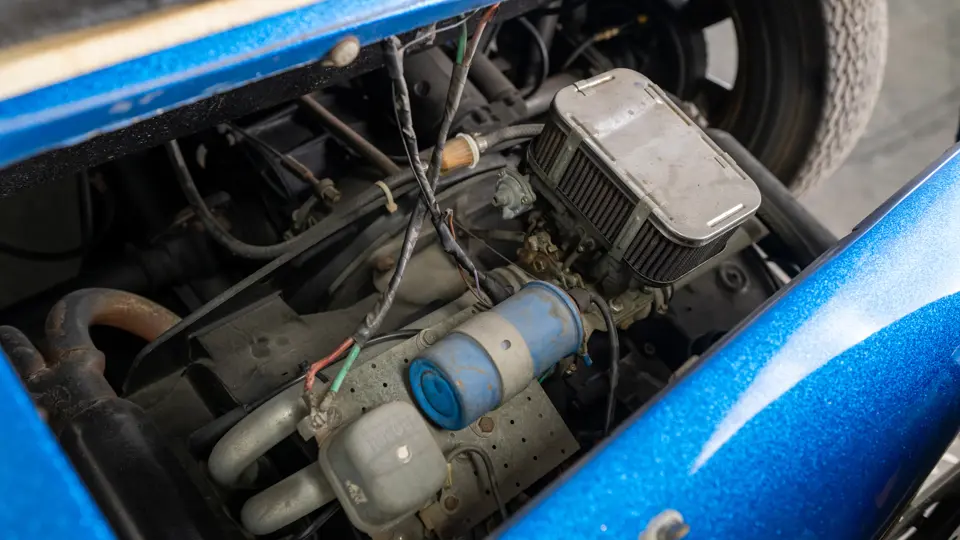
The T Buggy’s fiberglass bodywork is a wild caricature of Brass Era styling, even sporting a vintage-style faux radiator on the front topped by a winged cap. The headlights simulate the gas lamps of yore, and the taillights are modeled after the kerosene-burning lamps of the automobile’s earliest days; the removable soft top includes hexagonal windows. Like the Manx, Barris’ creation was based on a shortened Volkswagen Beetle chassis, with air-cooled VW power at the rear (in the case of this car offered here, a slightly more powerful VW Type 3 flat-four engine was installed).
It is understood that 12 T Buggies were ultimately made in several body styles; though this is a small run by any measure, it also represents a very unusual attempt by Barris Kustom, renowned for its one-off creations, to enter series-production. This example was featured on the cover of the September 1970 issue of Hot Rod magazine, and it was also the basis of a 1:25 scale model kit that could be built as a truck, a landau, or in this open buggy version. A prior registration copy on file indicates that, by 1974, the buggy was owned by a resident of Sylmar, California. Its next caretaker of record was a few hours east, in Palm Desert.
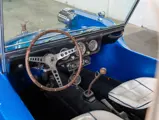
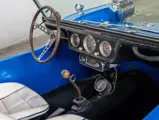
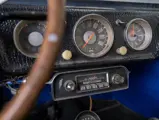
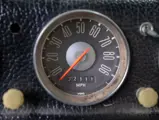
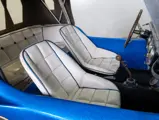
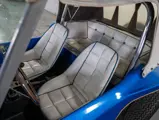
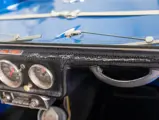
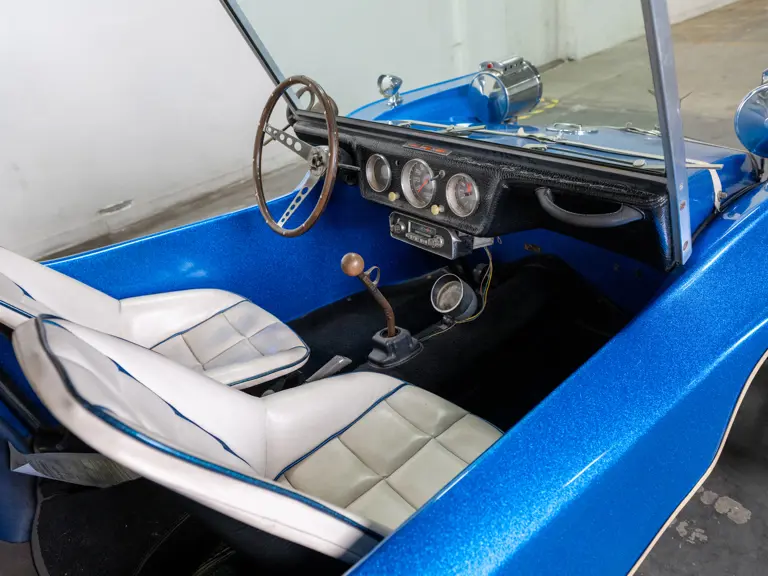
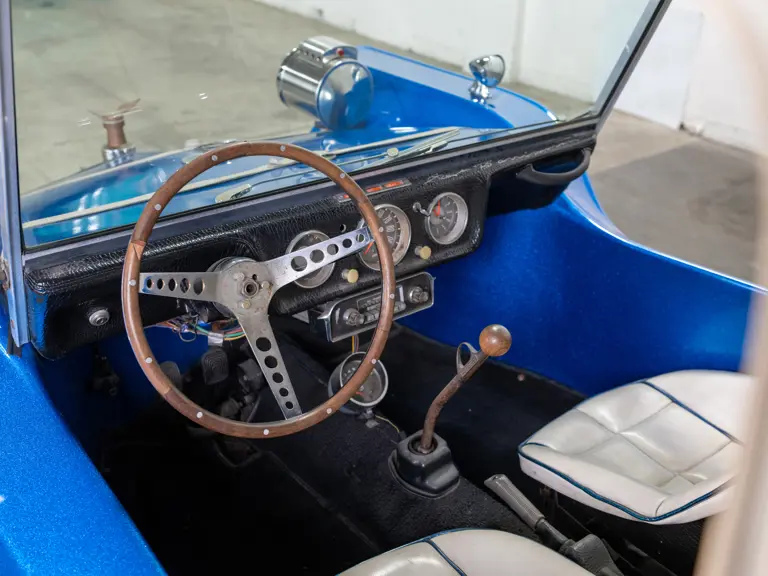
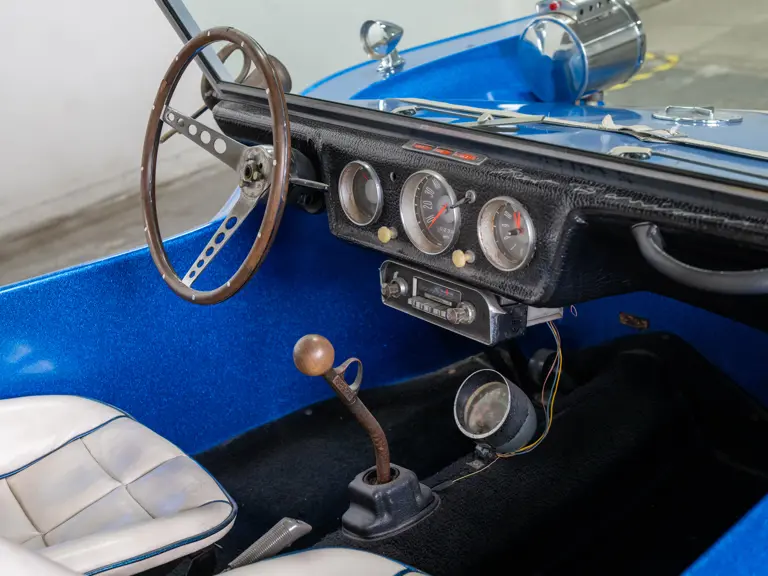
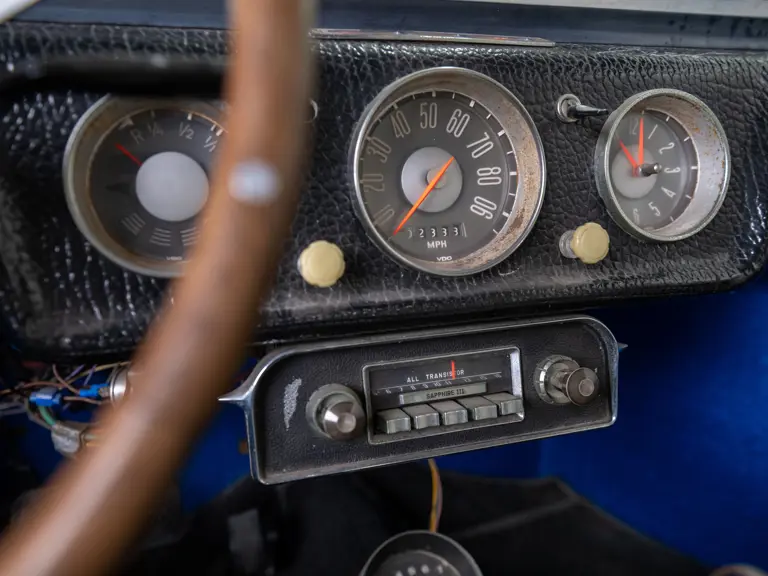
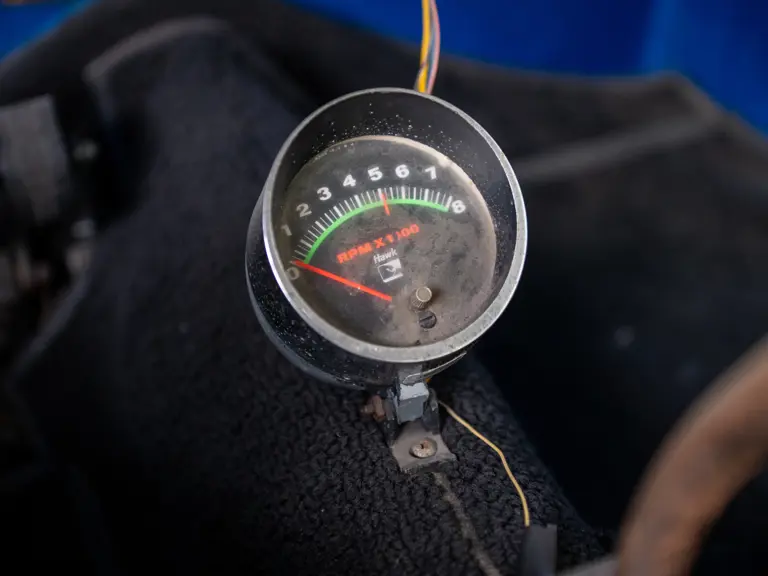
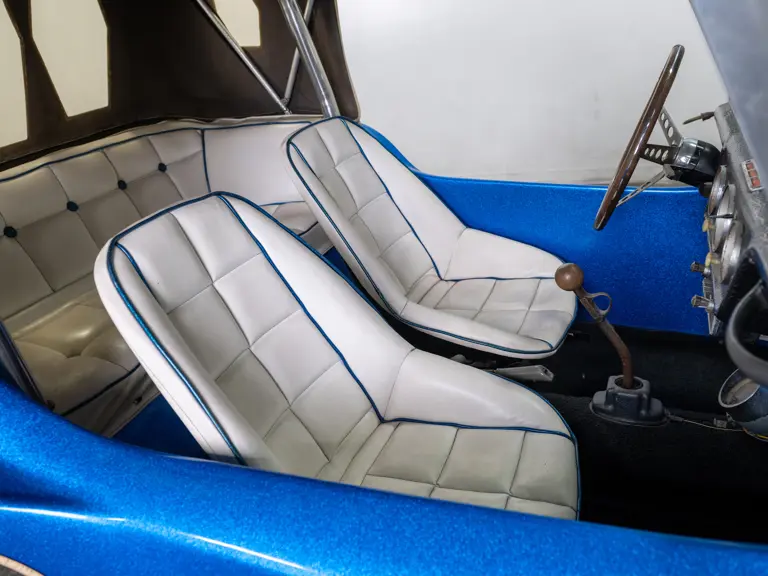
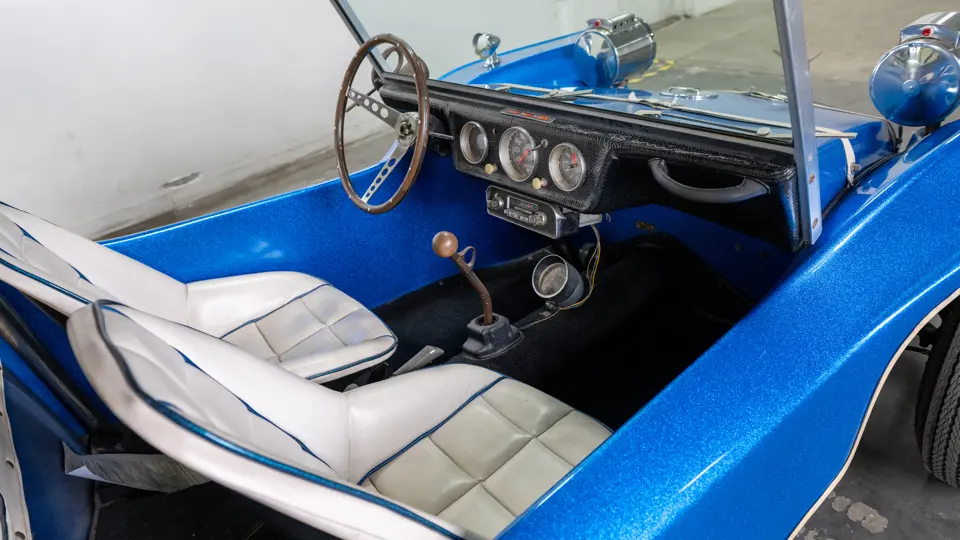
The T Buggy was acquired by Beau Boeckmann in 2003, notably becoming his first—though certainly not the last—significant Barris car to join his collection. In the collection’s care, the buggy has benefited from mechanical attention including a brake system overhaul, engine tune-up, replacement of seals and gaskets as needed, and electrical system work, as noted by invoices on file. Yet it has remained highly original cosmetically, including the blue metalflake paint, white interior and top, and charming Brass Era-inspired accessories. Even a handmade label on the dashboard commemorating its Hot Rod magazine appearance remains in place.
A seldom-seen and totally wild creation from the mind of the King of Kustomizers himself, this T Buggy was unlike anything else on the dunes when new and will no doubt continue to turn heads and drop jaws today. It would also make for a fine foundation for a new collection of period customs by Barris and his contemporaries—just as it did for Beau Boeckmann over two decades ago.
 | Los Angeles, California