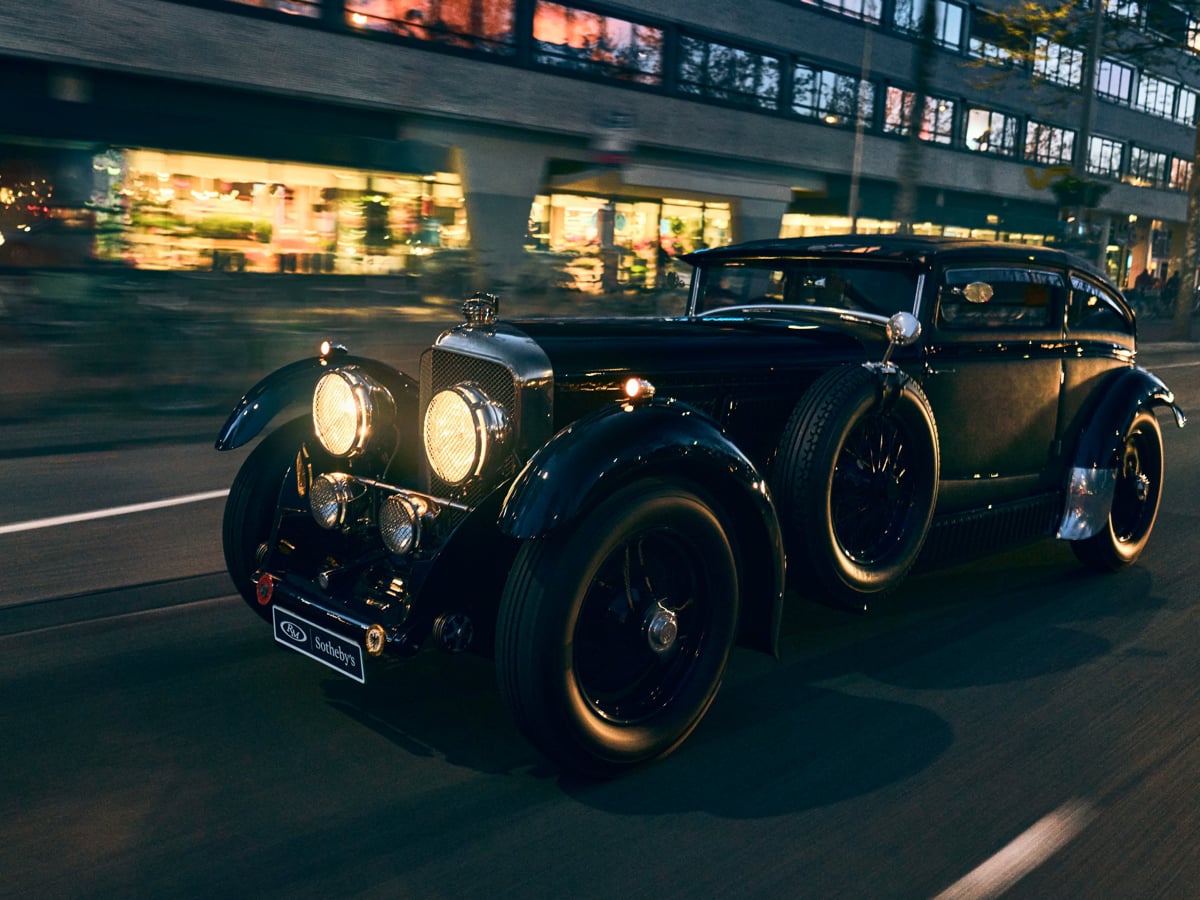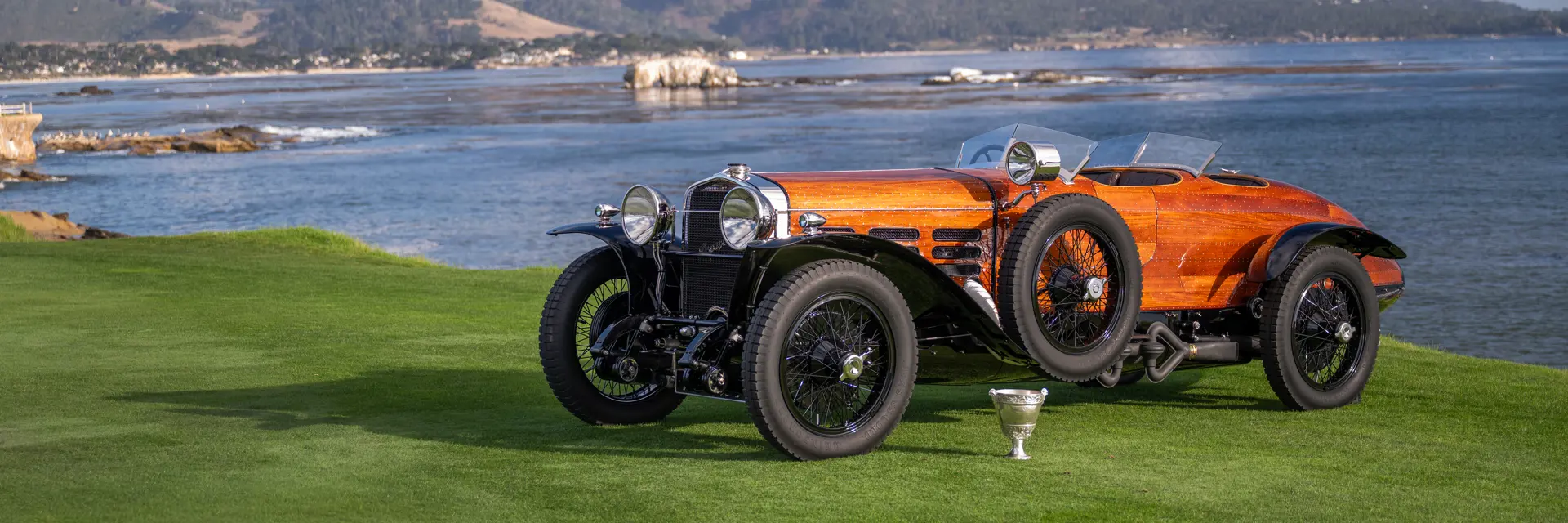
Chris Summers and Don McLellan tell the story of one of the most magnificent pre-war cars ever created—the unique Tulipwood Hispano-Suiza.
Aperitif scion André Dubonnet lived a life of excitement—six aerial victories as a young pilot during the Great War, development of a namesake automotive suspension he sold to General Motors, and a pioneer of solar energy. In between all these things he competed in Olympic bobsledding and loved fine, swift automobiles, racing Bugattis and Hispano-Suizas. It was the latter that would make his name immortal in motoring circles; he would commission a particularly fabulous streamlined coupé on an H6C chassis from Saoutchik, and create his own Hispano-Suiza-powered automobile, which failed to fledge. Both of these came after his most famous Hispano-Suiza, a car now known to enthusiasts as the “Tulipwood” Torpedo—a car that has been famous since virtually the moment of its birth.
Dubonnet’s machine began as an 8-litre overhead-cam Hispano-Suiza H6C chassis of the newly developed Type Sport. Only Hispano-Suiza co-founder Marc Birkigt himself took delivery of an H6C earlier, reflecting the aperitif heir’s importance to the firm. Dubonnet’s was one of three factory-built lowered surbaissé chassis, fitted with a lowered radiator and a 52 imperial gallon fuel tank, a necessity for long rallies. That the frame was originally surbaissé is seen in a surviving photograph of the engine compartment when new, depicting the lower angle of the water hoses between the top of the cylinder block and the radiator, as well as by comparison of period photographs with other, standard H6C chassis.
The true brilliance came in the coachwork. Some of Dubonnet’s competitors, many themselves aviators, had begun to figure out that aircraft construction methods could yield techniques useful in the construction of lightweight bodies; thus emerged the earliest fabric-bodied coachwork of the period. Dubonnet seemed to cut out the drawing board between aviation and automobile, commissioning aircraft manufacturer Nieuport-Astra of Argenteuil to body his car. Their creation was designed by their engineer Henri Chasseriaux and formed of delicate 1/8-inch-thick strips of mahogany—not actually tulipwood, but romantic legends and alliterative names both die hard—formed over an external layer that was in turn laid over inner 3/4-inch ribs of poplar, all secured together by many thousands of aluminium countersunk-head rivets, each hand-hammered with a tiny brass washer backing underneath, and varnished. Similar to the “skiff” bodies pioneered in the teens and twenties, most notably by French coachbuilder Labourdette, Nieuport-Astra's torpedo was a pioneer of composite construction that reportedly weighed only 160 pounds—featherweight by the standards of bodywork to be fitted to such a large automobile. By comparison, it added virtually nothing to the weight of its chassis and engine.
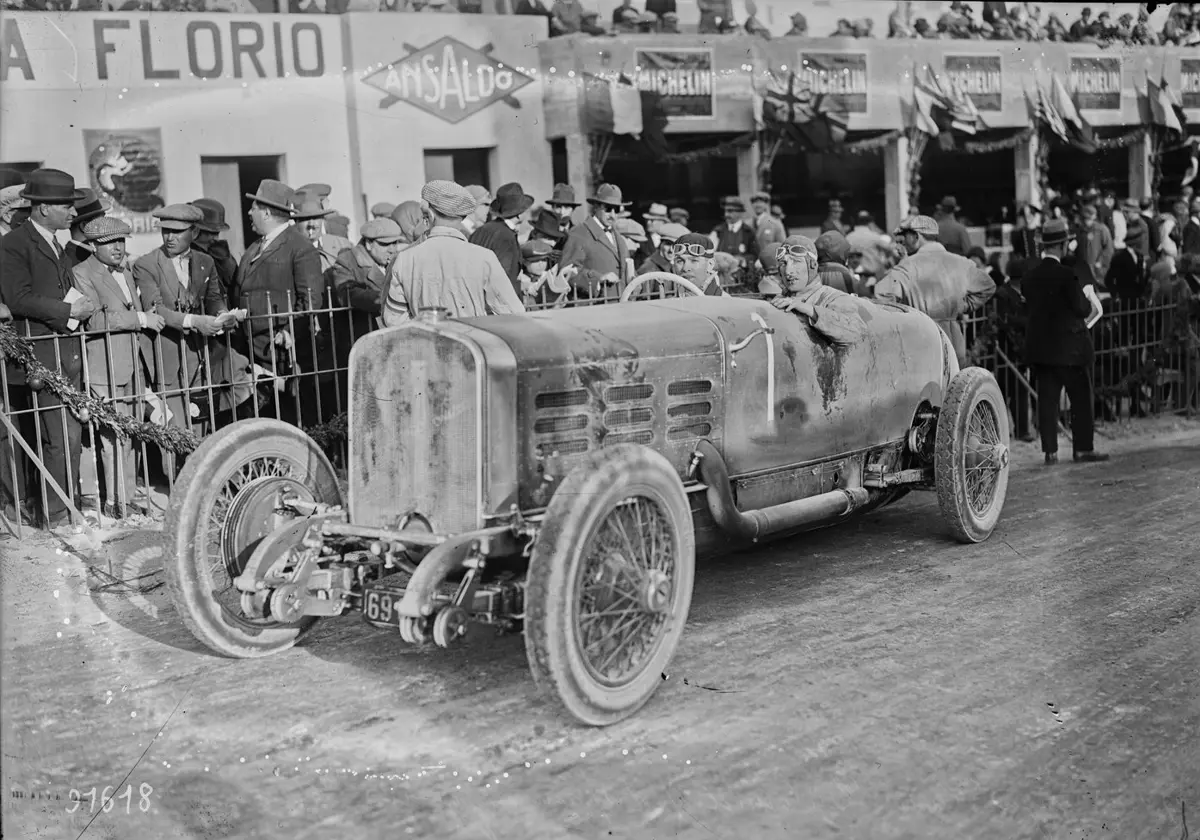
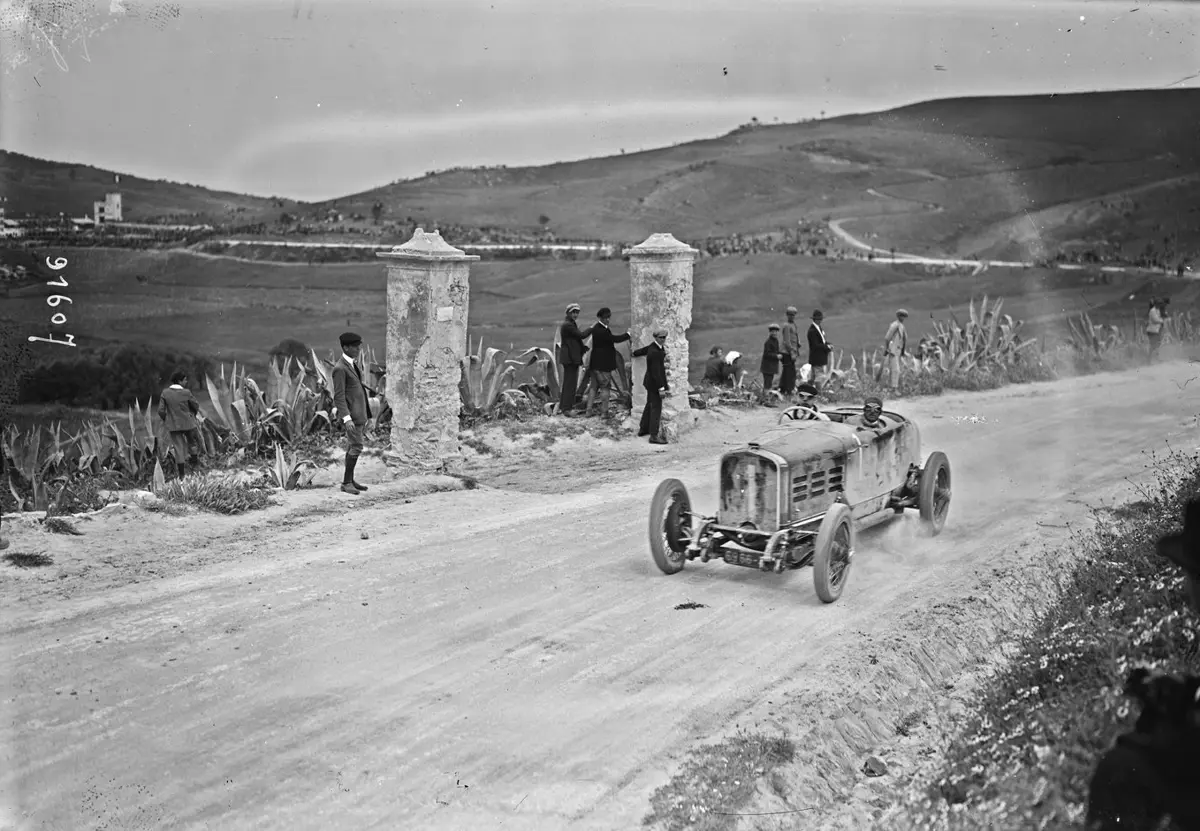
On 27 April 1924, Dubonnet drove the H6C, fitted with Paris registration 6966-I6, in the Targa Florio through the torturous Sicilian mountains, widely considered one of the most rigorous and dangerous performance tests of the era, and finished 6th overall. He then ran the additional lap to complete the Coppa Florio, running 8 1/2 hours on the Madonie circuit to finish 5th overall, despite his appalling luck with tyres. Both events demonstrated the practical success of Hispano-Suiza’s engineering and Nieuport-Astra’s innovation; Dubonnet’s driving skills and the fascinating wooden coachwork made a heavy brute—reportedly the largest car on the field—into a true competitor.
It is not an exaggeration to state that the "Tulipwood" Torpedo was as advanced and remarkable a performance automobile in 1924 as the Pagani or McLaren are held to be today; both employed their time’s most potent drivetrains and state-of-the-art lightweight materials to ensure maximum performance, with no regard to cost. The results were breathtaking in every regard.
THE MOST FAMOUS HISPANO-SUIZA IN THE WORLD
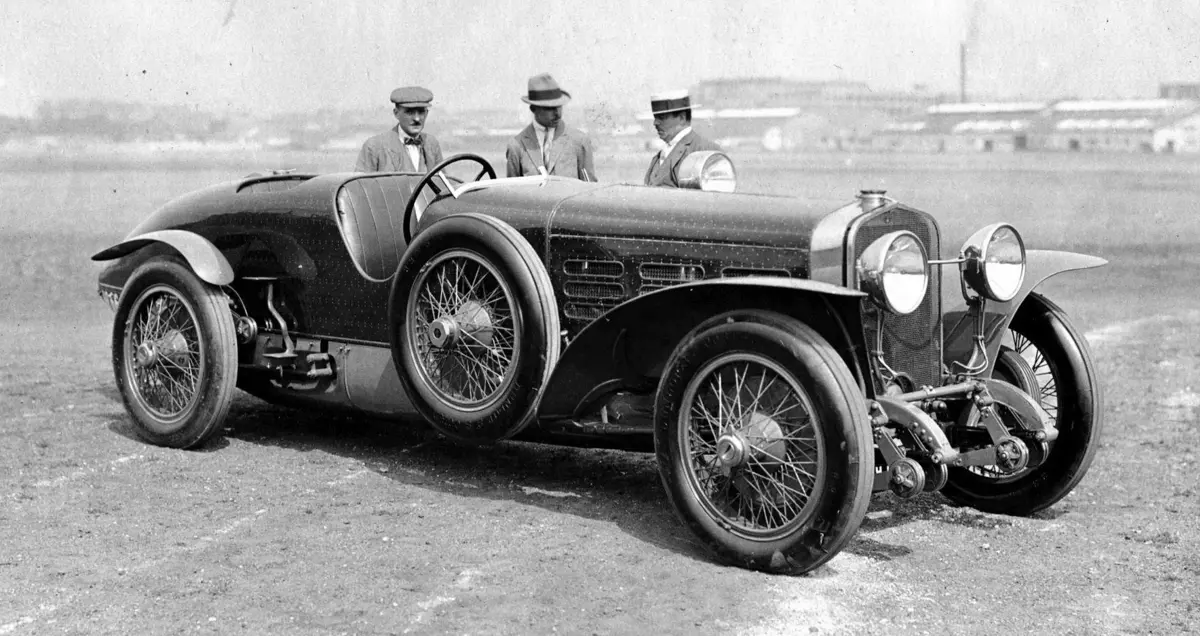
Following its brief but successful competition career, Dubonnet equipped his car for road use, with flat open fenders, a low windscreen, a small door, and a large searchlight added on the passenger’s side, headlights, etc., as shown in a photograph taken of him with the H6C. Subsequently the Hispano-Suiza was briefly owned by a Coty, believed to have been the noted Hispanophile Roland Coty, the perfume magnate’s son. According to the biography A Zest for Life, marmalade heir, archaeologist, and automobilist Alexander Keiller from Scotland acquired the car from Coty in early 1925. It was registered by him in London as XX 3883 soon thereafter.
During Keiller’s ownership the car was photographed in the parking field at Brooklands, with flowing open fenders and other touches likely added for Keiller by coachbuilder Barker, whose name appears on original photographs of the car in the Nethercutt Collection’s library; they are very similar to those on Barker-bodied Mercedes-Benzes and Rolls-Royces of the era.
Keiller eventually put the Hispano-Suiza away in the storage facilities of a coachbuilder, possibly Hooper, in Plymouth, and there it remained through the duration of World War II. According to the late, great British motoring journalist Bill Boddy in his article “White Elephantitis,” published in the September 1959 issue of Motor Sport, while in storage “a bomb splinter caused some damage to the tail but otherwise it remained in original trim.”
In 1950, Rodney Forestier-Walker discovered the car in storage, and after tea with Mr. Keiller, succeeded in its acquisition. After covering the war wounds in the tail with plywood, modifying front and rear windscreens, and replacing the original Blériot headlights with Lucidus lights, he kept and drove the Hispano-Suiza for six years.
Gerald Albertini, a Standard Oil heir and passionate automobile enthusiast living in London, spotted the car roadside in 1955, and in the age-old fashion left a note on the windscreen offering to buy it. Six months passed before a change in Forestier-Walker’s circumstances led to the consummation of the transaction, held at an appointed spot on a Welsh roadside, as the seller’s family was heartbroken and did not want to see the car go. The return trip home necessitated a pause for fuel, at which Mr. Albertini sat down for a leisurely cup of tea, emerged, and found the attendant still laboriously hand-pumping vast quantities of fuel into the tail’s 52-gallon tank! To add insult to injury, the wealthy owner found his wallet empty and was forced to pawn his watch to pay for the fuel.
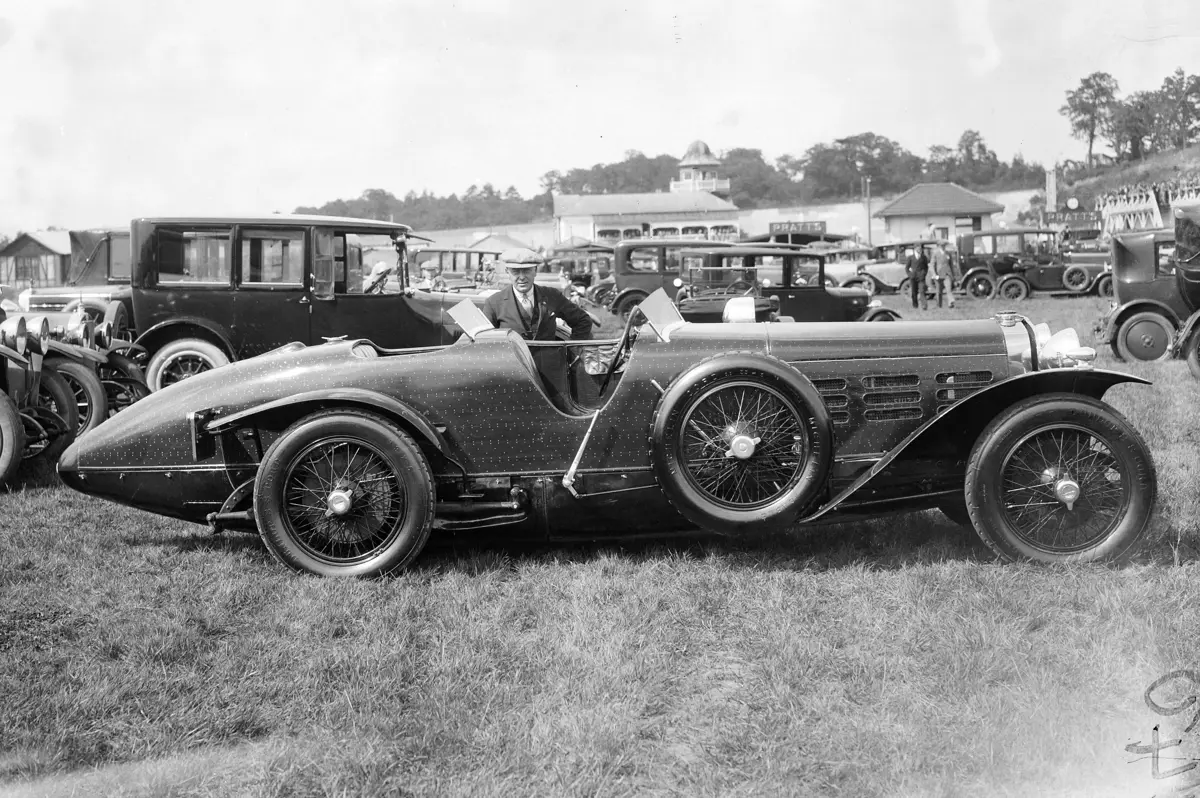
Albertini soon undertook a restoration of his new acquisition, with the mechanical components rebuilt under the supervision of the great Hispano-Suiza Technician, George Briand; reportedly the car had only a little over 17,000 miles and showed virtually no wear aside from the clutch. To suit Mr. Albertini’s build, a smaller steering wheel was mounted and the seat moved back, necessitating fitment of a longer outside cranked gear lever.
Coachwork restoration was handled by Panelcraft of Putney, with minor repairs made to the areas damaged in the war using new wood, numerous trim changes including copper plating throughout, and replacement of the cycle-style fenders, fitted by Mr. Keiller, with elegant wooden torpedoes.
In 1964 the Hispano-Suiza made its way Stateside courtesy of renowned Bentley collector E. Ann Klein. It was soon acquired by Richard E. “Jerry” Riegel Jr., with a letter in the file from Panelcraft describing to him work completed in Mr. Albertini’s care. In Mr. Riegel’s ownership the Hispano-Suiza was occasionally shown with pride during the 1960s. It appeared in the annual Sports Cars on Review exhibit at the Henry Ford Museum in 1965, and four years later at the New York Auto Show.
The Hispano-Suiza was bought from Mr. Riegel at Kirk F. White’s 1973 Philadelphia auction by the late John Warth, who, his son Richard fondly recalls, collected it thereafter and drove it from Pennsylvania into New York City to dine at Lutèce with the restaurant’s owner, fellow French coachwork partisan André Surmain. According to Richard Warth, his father subsequently sold the car to Anthony Bamford, later styled Lord Bamford, then again brokered its sale to wealthy racing driver Michel Poberejsky, also known by the nom de course “Mike Sparken,” who registered it in France in Hauts-de-Seine as 2396 EA 92. From Poberejsky the car is believed to have passed in 1982 to a Greek shipping executive, Ares Emmanuel, living in London. Around this time, it was also the basis for one of Gerald Wingrove’s elaborately detailed models.
In 1983, the car was acquired from Emmanuel by a new owner, and beginning in late 1985 subsequently underwent an eight-month restoration by Mike Fennel. It was debuted at the completion of the restoration at the 1986 Pebble Beach Concours d’Elegance, winning the Alec Ulmann Trophy for Most Significant Hispano-Suiza.
RESURRECTION
Following many years hidden away in a private museum collection, the Hispano-Suiza returned to public view and was acquired at the 2022 RM Sotheby’s Monterey auction by its present owners, Penny and Lee Anderson of Naples, Florida.
The Andersons entrusted the car’s restoration to RM Auto Restoration, which of course holds the record for the most Best of Show victories at Pebble Beach. RM’s craftsmen were elated at the opportunity to lay hands upon one of the most significant and famous Hispano-Suizas ever produced, as well as one of the great coachbuilding achievements of the Classic Era. The objective in the restoration was to return the car to its roadgoing form, as owned by Keiller and pictured at Brooklands in 1925.
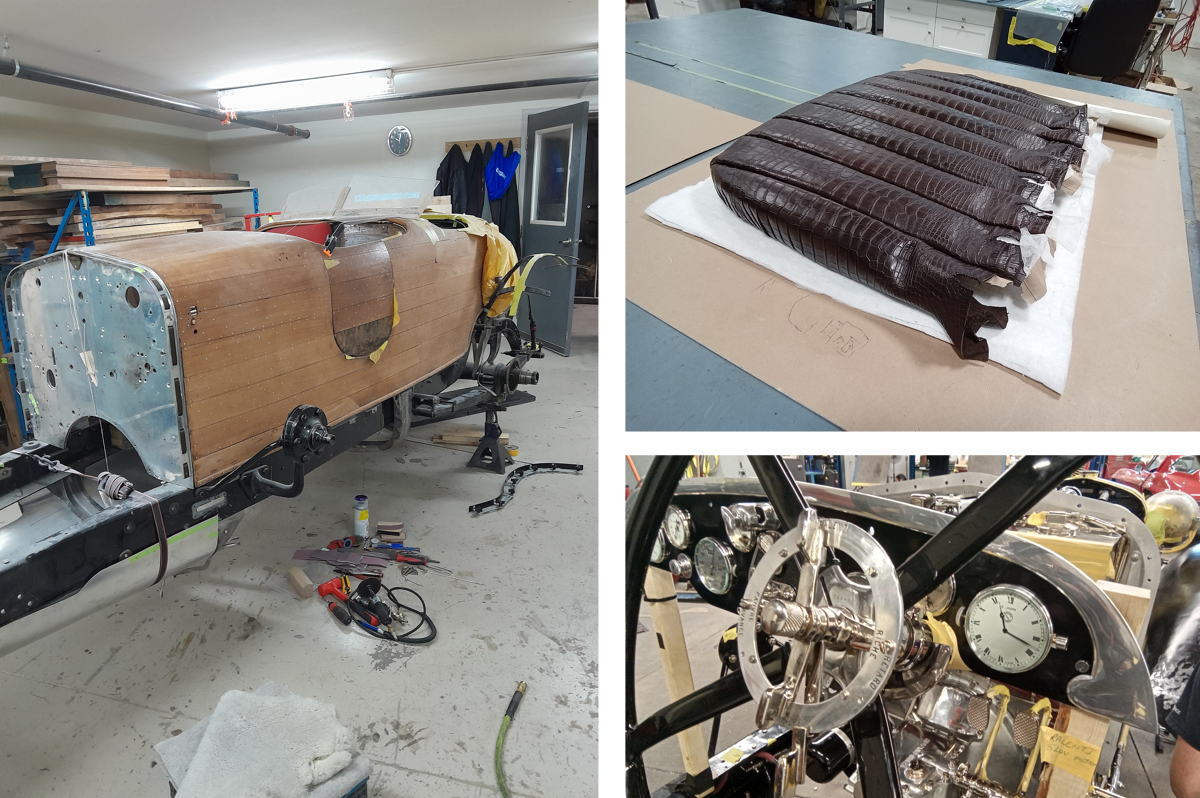
Fortunately, the original, old-growth Honduran mahogany woodwork fashioned by Nieuport-Astra remained largely original, and the work conducted to repair the shrapnel damage sustained during the war were fairly minimal. With the goal of preserving as much of the original timber as possible, the previous orange-tinted finish was stripped, the wood repaired as necessary, and rivets replaced only when over-sanded or missing. Dozens of cracks and voids in the wood remain today and are visible, as part of the car’s history; RM Auto Restoration’s craftsmen used shavings and sanding dust from original lower strips, which had to be replaced, to fill those cracks, while the new pieces used very old-growth Honduran mahogany found at a Canadian vintage wood supply firm.
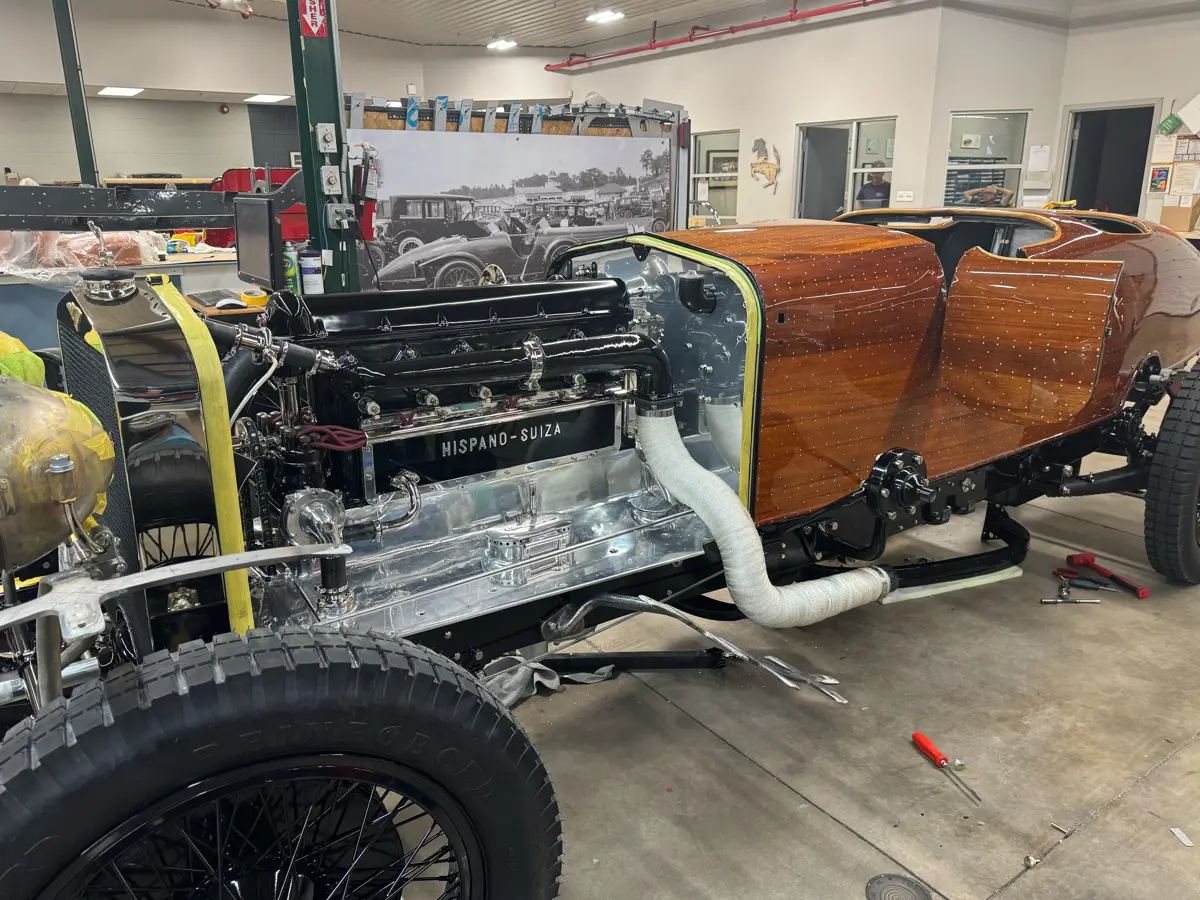
The wooden teardrop wings devised by Gerry Albertini were removed, and in their place, the flared open fenders were carefully reproduced—first in wire form, and then in metal, to faithfully recreate their original shape. This effort was aided by the presence of the original heavy wrought iron brackets and braces that supported the original wings. Correct RAF locking-ring 33 x 5 wire wheels replaced the more modern drop-centre wheels, installed during the Albertini modifications. Fortunately, the Brooklands photograph gave a clear view into the cockpit via the cut-down driver’s side, with close examination of the door panels revealing them to have been upholstered in alligator hide—as they soon were once again.
In keeping with the car’s aviation heritage, its original electric lighting, starting, and charging system was designed and supplied by Blériot, the namesake of Louis Blériot, the first aviator to cross the English Channel. The starter, generator, and switch box remained original and correct; close study of the photos revealed that the road lighting was by Blériot. The correct models for both the headlights and fenders were installed, and the dual raked, vee’d windscreens were returned to their original shape and appearance.
The chassis, suspension, and complete original drivetrain—with engine block serial number 1!—were all fully restored, utilising reference material gathered from both factory documentation and careful in-person inspections of other 8-litre Hispanos. With tuning conducted on RM’s own dynamometer, the car was ensured to have the legendary fine driving character for which the model is known.
Less obvious technical details were also exhaustively researched and repaired or corrected as necessary. These included restoration of the complex Nivex fuel system, which was repaired and calibrated for the huge fuel tank. The correct Jaeger gauges and faces were also restored as-original, using reference from period advertisements.
Diving deeper into the car’s authenticity, it was discovered that the spark plugs were originally of the Pognon brand; being unobtainable, these were painstakingly recreated using proper glazed and fired porcelain insulators, as was the remarkably complex original-style “scavenging” performance exhaust as originally sourced from the German firm Steigboy. “We hand-formed the intricate exhaust piping in-house, and hand-welded it all together, as of course nothing is available elsewhere,” explains RM Auto Restoration’s Don McLellan. “The flat plate between the two sections is a very warm footstep.” RM staff even travelled to the Czech Republic in order to acquire original parts!
Simply put, the restoration of the "Tulipwood" Torpedo required a level of precision and historical accuracy that few restorations demand—but resulted in a faithful return to form for one of the world’s most celebrated automobiles…in only 20 months, thanks to RM’s dedication to the job at hand.
VICTORY
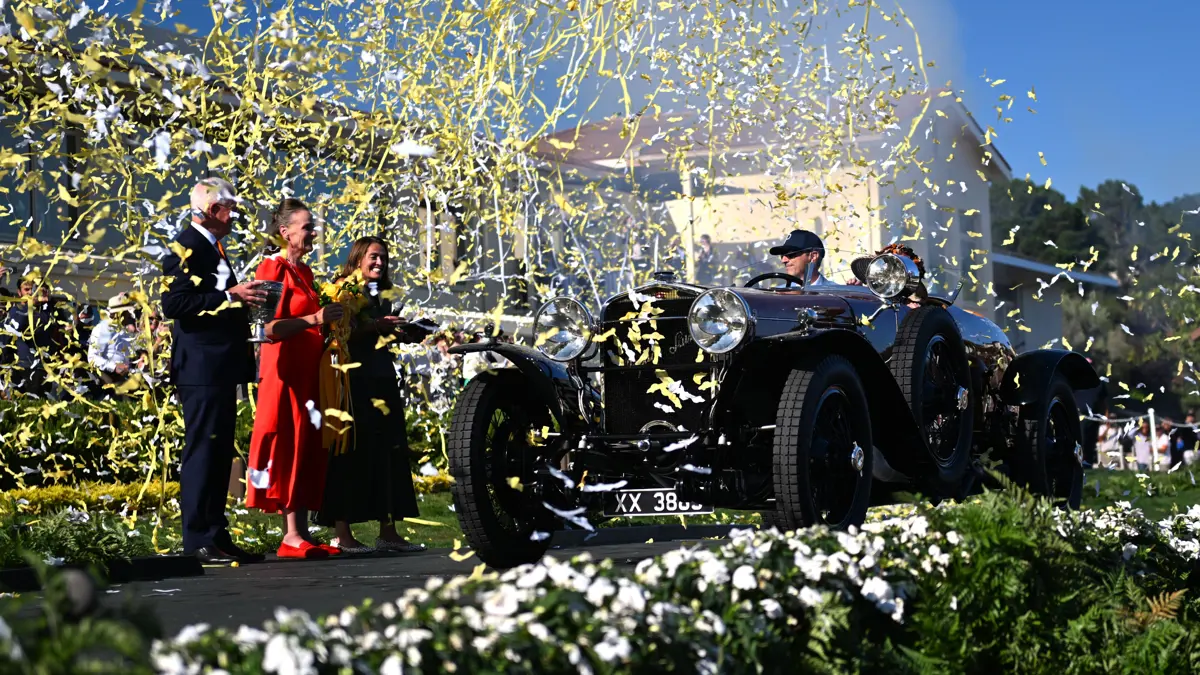
Following over 12,000 hours of meticulous craftsmanship, the finished Hispano-Suiza was presented anew at the 2025 Pebble Beach Concours d’Elegance. It was the subject of considerable attention, both as it completed the Tour d’Elegance and when on the field Sunday. It went on to be judged First in Class and, finally, amidst a shower of confetti and the blowing of trumpets, Best of Show—the most significant honour in vintage automobile collecting, and the second such honour for the Andersons…both with cars restored by RM Auto Restoration.
Not just a winner, the car functions as-new; McLellan notes that it “is a thrill to drive, and fast, with incredible torque and power. Steering is easy; shifting with double-clutching is simple. Once warmed up, it starts immediately by only turning on the ignition and swinging the ignition timing lever left and right a couple times—there is no need for the starter motor!”
That the car was victorious both when new and now is testament to their respective era’s craftsmen, and to the dedication and passion of Penny and Lee Anderson.