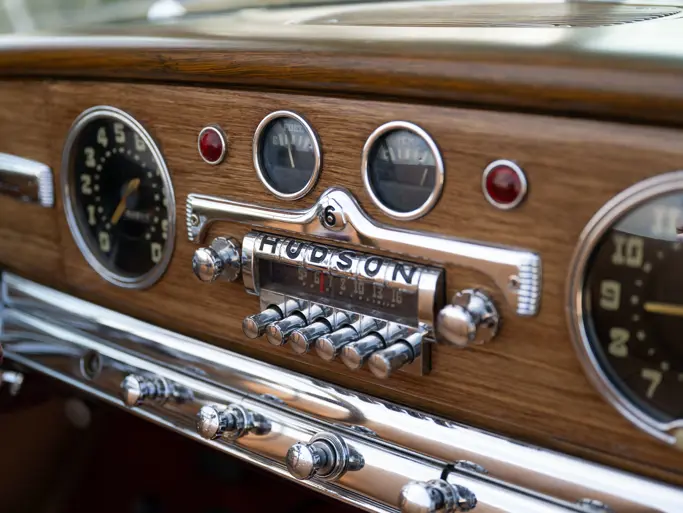
The fascinating rise and fall of the little American carmaker that refused to play by the “Big Three’s” rules.
An innovator. Indianapolis royalty. And, at one time, the third-largest American car manufacturer.
Yet, for generations of car enthusiasts, Hudson is perhaps best known for its starring role in a Disney film. Despite its innovations and race wins, the company’s downfall would be relatively sudden, its name progressing from straight-eight-engined luxury cars with “Step-Down” technology to 1,200cc subcompact vehicles made in the West Midlands of England.
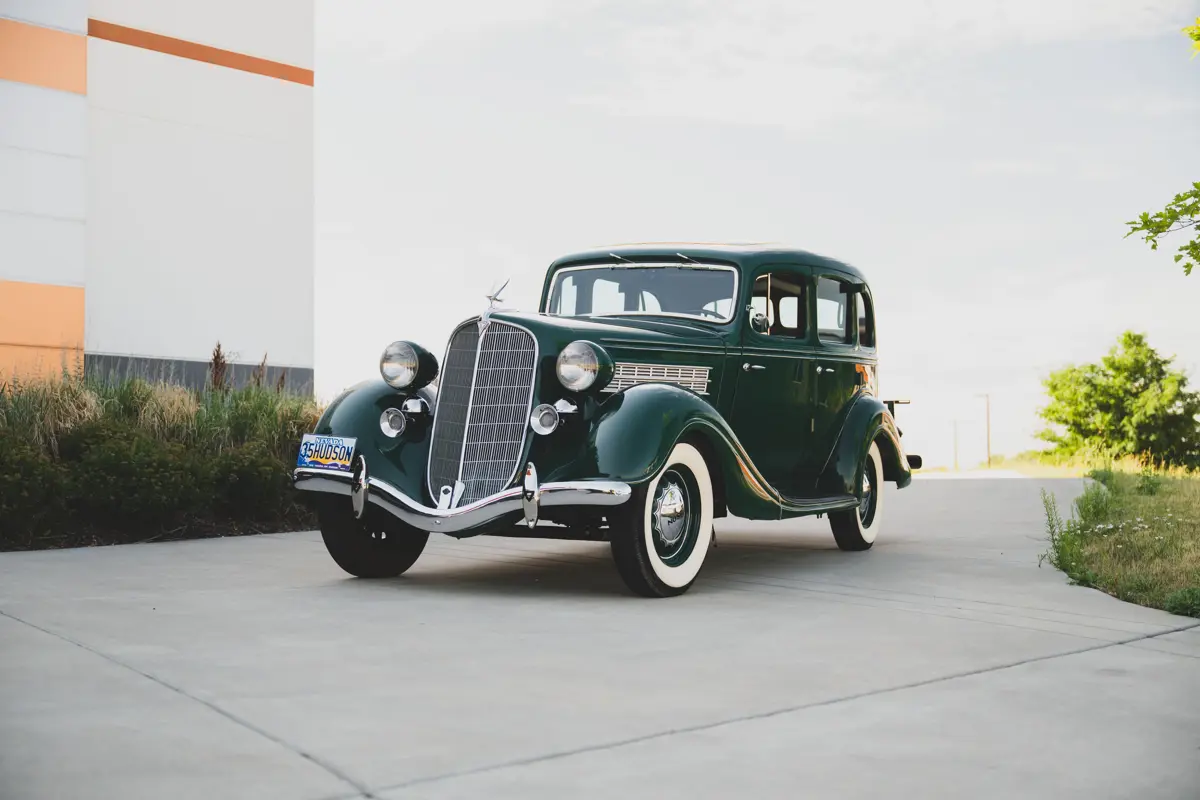
The firm’s raison d’être was affordable luxury. This meant big, powerful engines and build quality more akin to that of expensive carmakers. It was designed to fill a niche: more premium than Ford and Chevrolet, but less luxurious than Packard. Its aim was to combine something approaching the luxury of the top end with something approaching the prices of the lower end. Quality and affordability, in harmony.
Innovation and motorsport would become its marketing strategy. This was a carmaker that did things differently, born from a group of people who were different. It was established by dedicated young men with little more than a goal: to establish their own car company.

The Young Men Who Wanted Their Own Car Company
The founding of Hudson Motor Car Company was driven by Roy D. Chapin, an automotive enthusiast who believed the motor car would become one of America’s great industries, and Howard E. Coffin, a visionary engineer who would become known as the “Father of Standardization” for his initiative in standardizing material and design specifications.
While studying at the University of Michigan, Chapin formed a friendship with Coffin, and in 1906 the pair partnered with several others to form the Thomas-Detroit Company. The venture proved highly profitable, but left the young entrepreneurs effectively as employees.
They subsequently brought in Hugh Chalmers, creating Chalmers-Detroit in 1908. But their ambition to own a fully independent automobile company remained.
That year, Chapin and Coffin began developing new models, and the project gained crucial financial backing from department store magnate Joseph L. Hudson. With his investment, the Hudson Motor Car Company was formally established in February 1909 and named in his honor. In its first year, Hudson sold 4,000 cars, representing the highest number of first-year sales achieved by an American car company to that point.
Hudson Finds Its Formula
The company introduced a new engine, the Super Six, in 1916. This straight six offered significantly more power than the four-cylinder configurations common at the time and established Hudson as a serious engineering player, helped by its innovative balanced crankshaft, which allowed inline-sixes to run more smoothly at higher RPMs. In 1916, Hudson broke records for the first two-way transcontinental trip and the Pikes Peak International Hillclimb.
The popularity of Hudson grew throughout the 1920s, and production peaked at 300,000 cars in 1929, no doubt helped by its continued stream of innovations. For instance, during this period the company developed a dual-braking system in which the mechanical brakes engaged when the pedal traveled beyond the normal operating point of the hydraulic brakes.
At this stage, Hudson was ranked as the third-largest American car manufacturer, although it remained far behind its contemporaries: Ford sold 1.5 million vehicles and Chevrolet 1.3 million that same year.
Innovations Beyond Technology
In 1930, the automaker decided to move upmarket and launched a line of cars named Great Eight, featuring straight-eight engines. At the 1931 Indianapolis 500, Buddy Marr’s No. 27 Hudson Special, complete with its 3.8-liter eight-cylinder engine, finished the 200-lap race in 10th place.
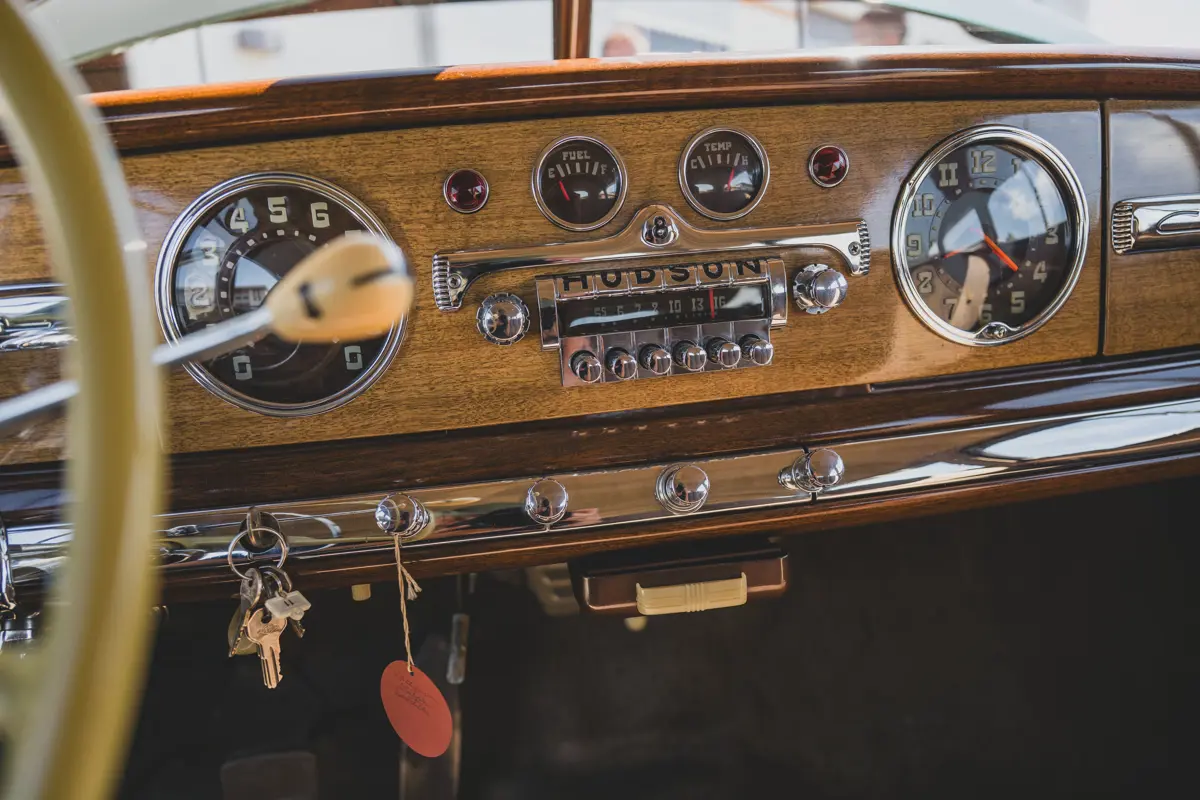
Not long after, the company pioneered yet another first, becoming among the earliest manufacturers to offer warning lights for generator issues and low oil pressure. By 1935, Hudson’s offerings included the Terraplane sub-brand, which received only six-cylinder models. The main Hudson brand also offered the Big Six as an entry model.
Standard output for Hudson’s 212-cubic-inch inline-six was 93 horsepower, just a few horses shy of Ford’s flathead V-8. A higher compression cylinder head, which cost just $18.50, helped boost this to an even 100 horsepower.
Later in 1935, Hudson introduced the Electric Hand, a revolutionary device that employed a button to shift gears instead of the usual stick shift, as well as all-steel bodywork, beating General Motors to the punch by a year. In 1936, the company introduced a newly developed independent front suspension called the “Rhythmic Ride.” Hudson would once again pioneer and innovate, but not in a mechanical or sporting way. This time, it was in the realm of automotive design.
The company recognized that women were often the matriarchs of the family and performed a significant proportion of the driving. It therefore sought a female designer who could better connect with its customers. Betty Oros was employed in 1939, becoming the first full-time female designer in the US auto industry.
A Radical Step Forward
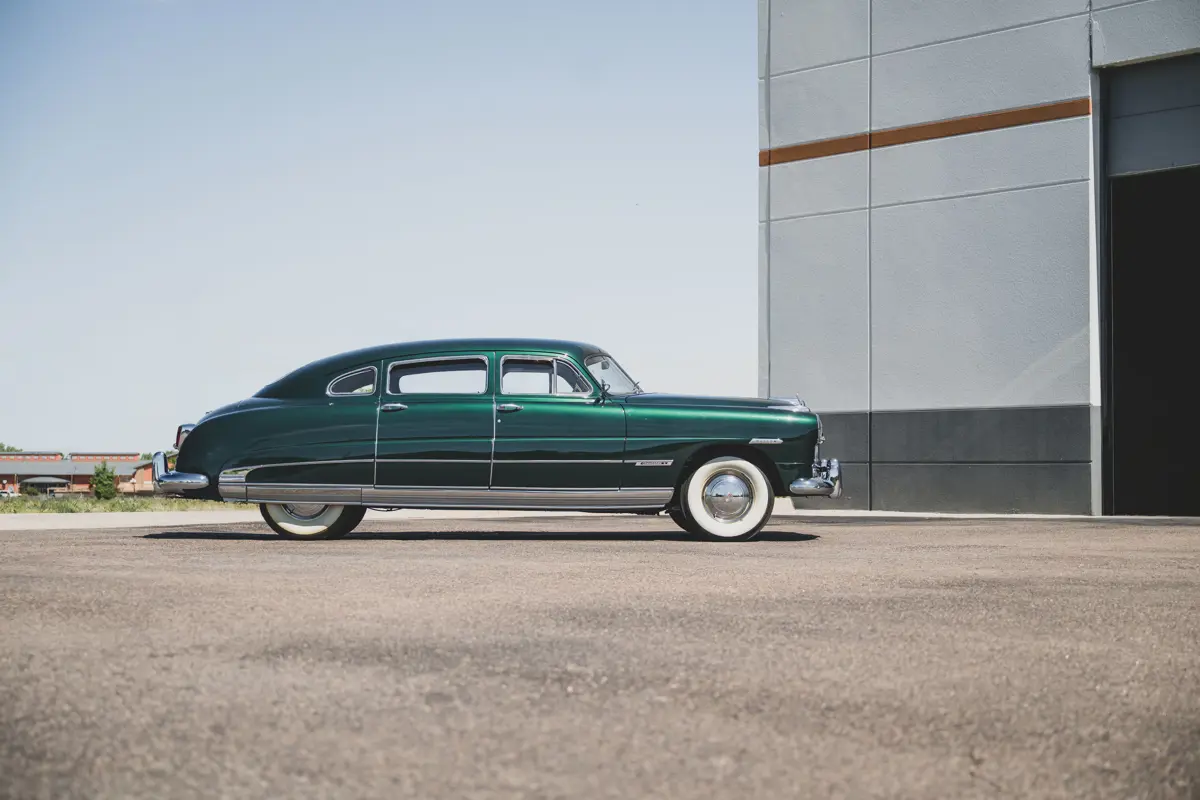
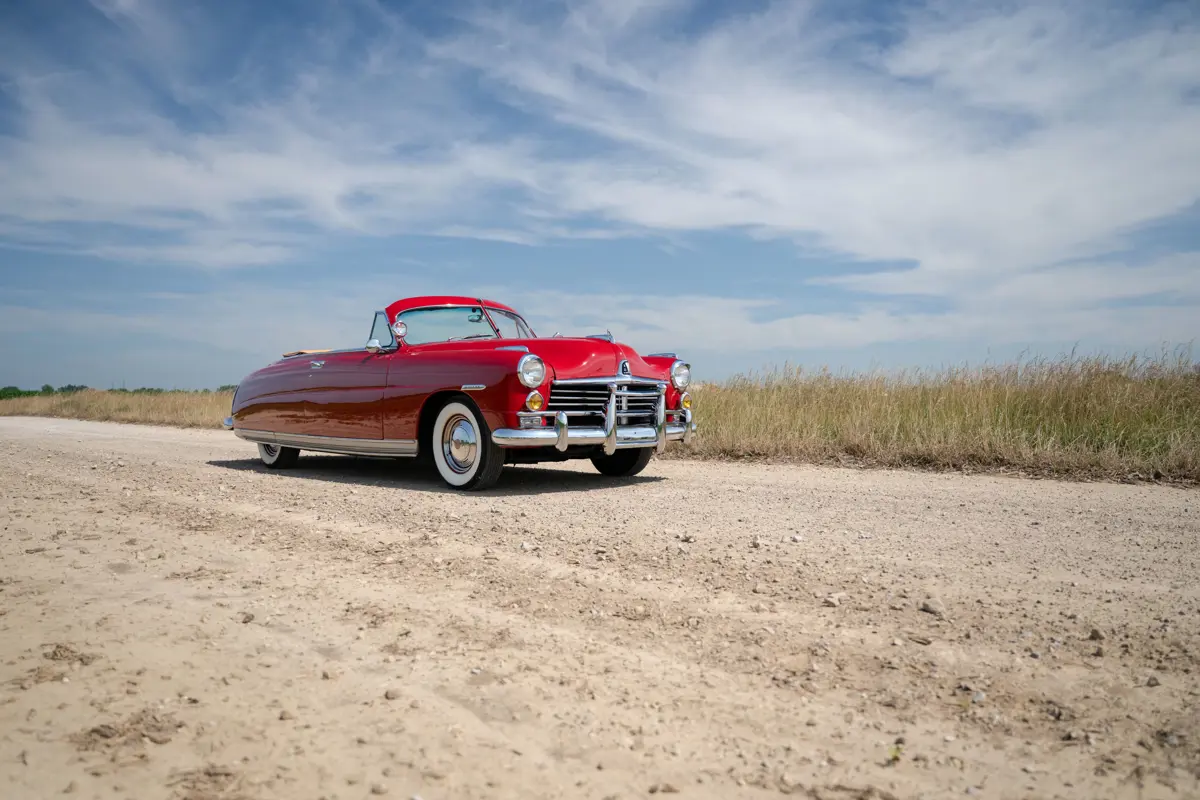
After a multi-year hiatus spent fueling the Allied war effort, Hudson roared back to civilian production with the 1948 "Step-Down" series, a sleek, futuristic gamble that completely rewrote the automotive design playbook. Dropping the high-riding running boards of the past, the revolutionary, slab-sided body sat so low that passengers literally stepped down into a deeply recessed floor pan nested within a protective perimeter frame.
This innovative unibody construction featured a partially unitary design that lowered the floor pan to the bottom of the frame. In a radical departure from other contemporary chassis designs, the Hudson’s frame rails passed outboard of the rear wheels, producing a tank-like structure that enveloped passengers and lowered the center of gravity—aiding safety and performance alike, as NASCAR racers would soon discover.
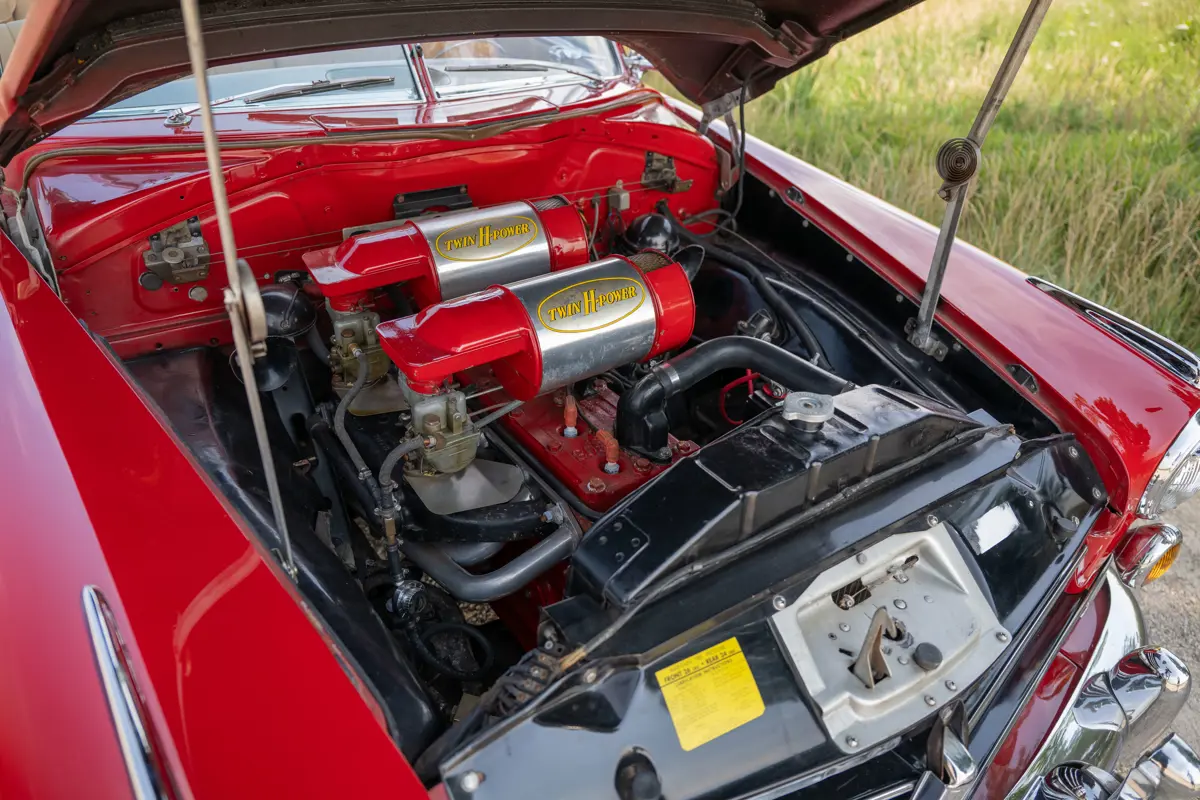
The “Fabulous Hudson Hornets” began dominating the burgeoning stock-car racing circuit in 1951. Thanks to class-leading handling from the “Step-Down” unibody chassis and the talent of top drivers, the Fabulous Hudson Hornets captured 81 NASCAR race wins and multiple championships from 1951 to 1955. The car was immortalized by Disney Pixar’s Cars in 2006 in the form of “Doc Hudson,” voiced by Paul Newman.
The Beginning of the End
But the slow decline had begun with the Great Depression, and Hudson Motors fought to innovate and adjust to a changing market. A. E. Barit was its president, having started at the company as a stenographer in 1910. Under Barit’s management, Hudson managed a small turnaround in profits, but ultimately continued to lose market share.
In 1954, Hudson Motor Car Company merged with Nash-Kelvinator Corporation, resulting in the formation of American Motors Corporation, the biggest corporate merger ever at the time. Nash Metropolitans—three-door subcompacts designed in America but built at the British Motor Corporation factory at its Longbridge plant in England using existing BMC parts—were hastily rebadged as Hudsons. The last-ever car to carry the Hudson name would be the Hudson Rambler, essentially a rebadged Rambler Six.
The merger was intended to create Detroit’s “Big Four,” but AMC never achieved that feat. By the 1930s, the “Big Three” collectively supplied three-quarters of the American motor-vehicle market. GM, Ford, and Chrysler could pour profits into annual styling changes and offer customers a clear path up the automotive ladder. A Chevrolet owner could move into a Cadillac, for instance. Hudson could not offer the same progression. Its “Step-Down” design was structurally integrated, making the kind of yearly aesthetic changes pursued by the “Big Three” far more difficult and expensive. Then came the Ford-Chevrolet price war of 1953, which put further pressure on the mid-size Hudson Jet. The costs of developing the car would set off a domino effect that led to the Nash merger and, ultimately, the end of Hudson.
In 1957, Hudson achieved just 3,876 sales, and the marque was put out of its misery. By 1960, even Hudson’s manufacturing plant in Detroit had been demolished. It lived for less than 50 years, but its innovations left a lasting mark on the American automotive industry. Hudson was not simply the car immortalized by Disney. It was a company that pioneered new technology, challenged established manufacturers, embraced motorsport, and helped define the idea of affordable American luxury. For a brief, remarkable period, Hudson did things its own way.