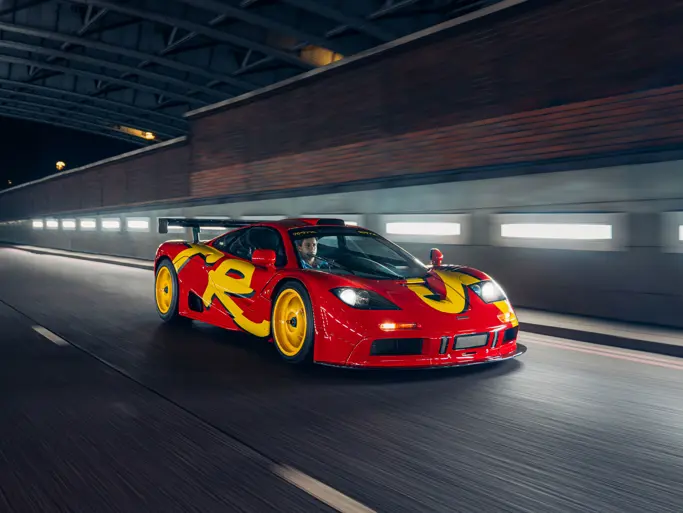
Estimated in excess of $35 million, “The Pop Art F1” is the first McLaren F1 GTR built to 1996 specification, one of only two Short-Tail factory “XP” prototypes, and has had just one private owner, Pink Floyd drummer Nick Mason, who cared for it for more than 25 years.
“The Pop-Art F1,” a Factory “XP” Prototype McLaren F1 GTR, to Headline RM Sotheby’s Monterey Sale with a Value in Excess of $35 Million
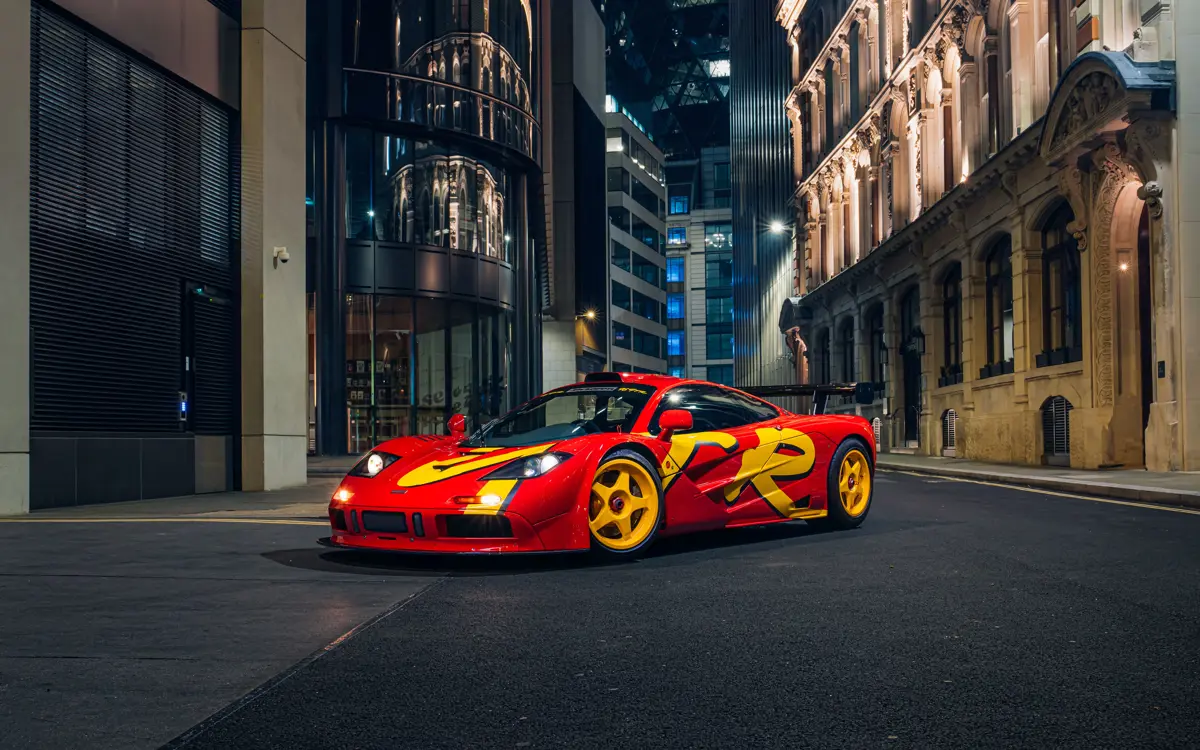
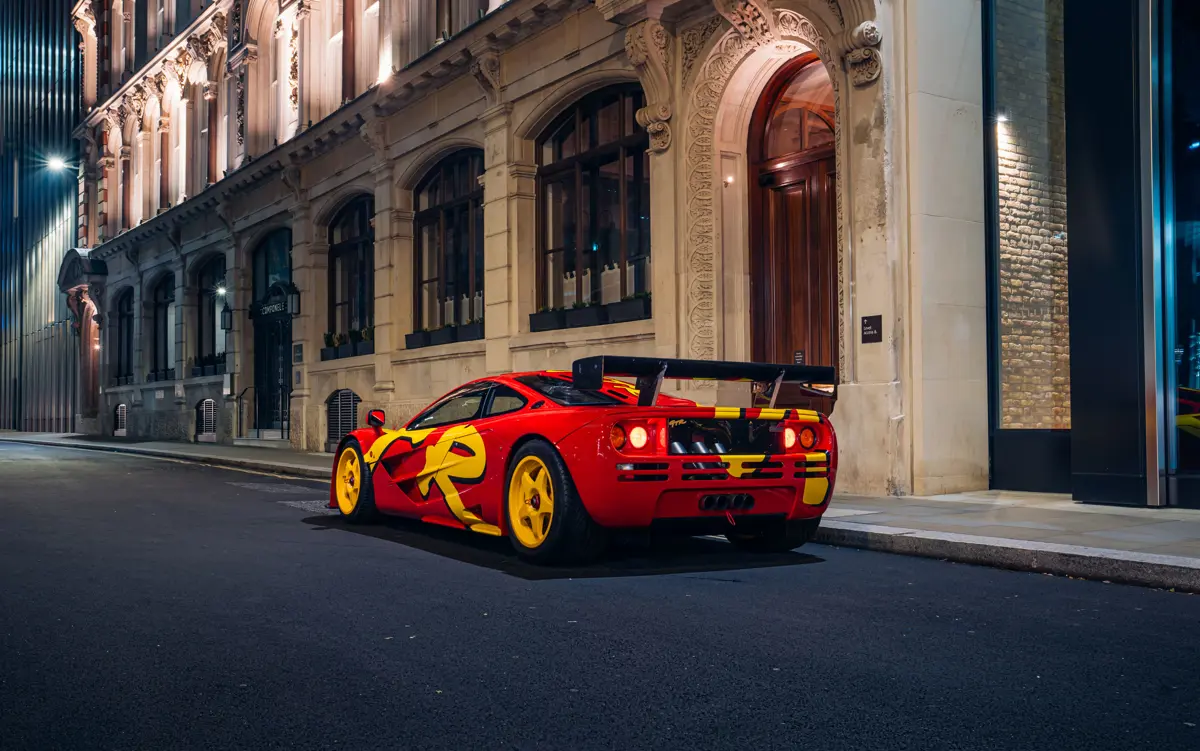
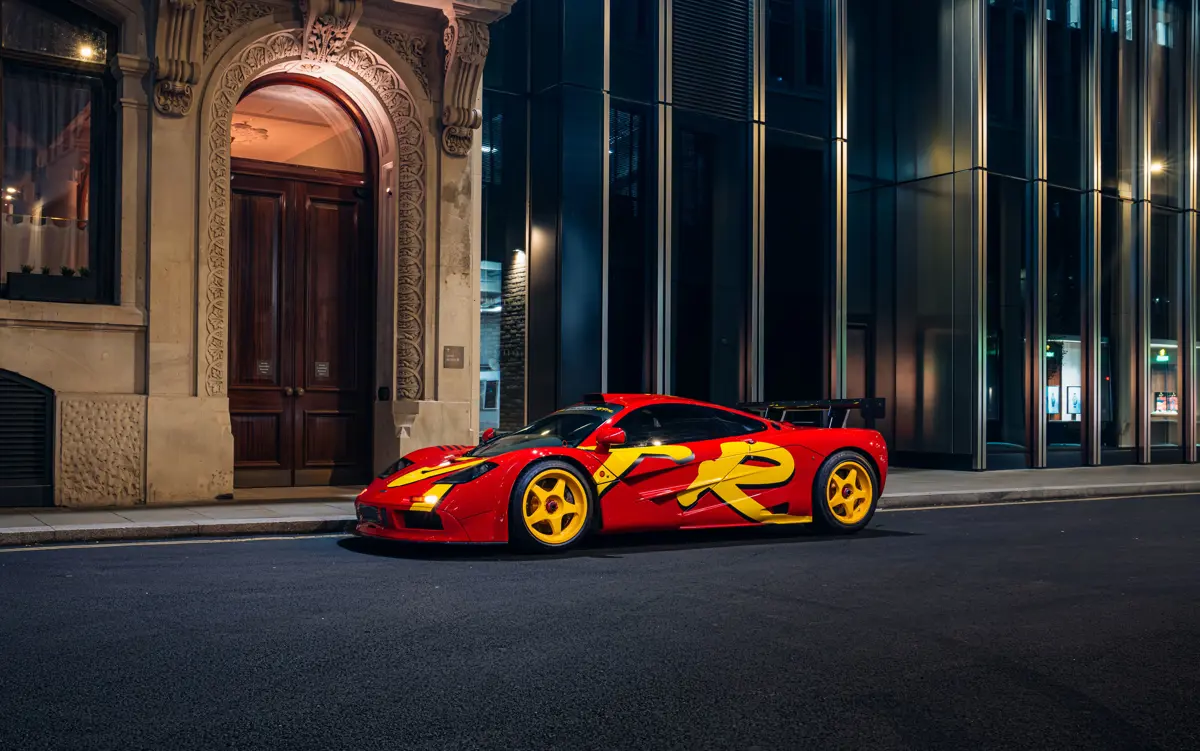
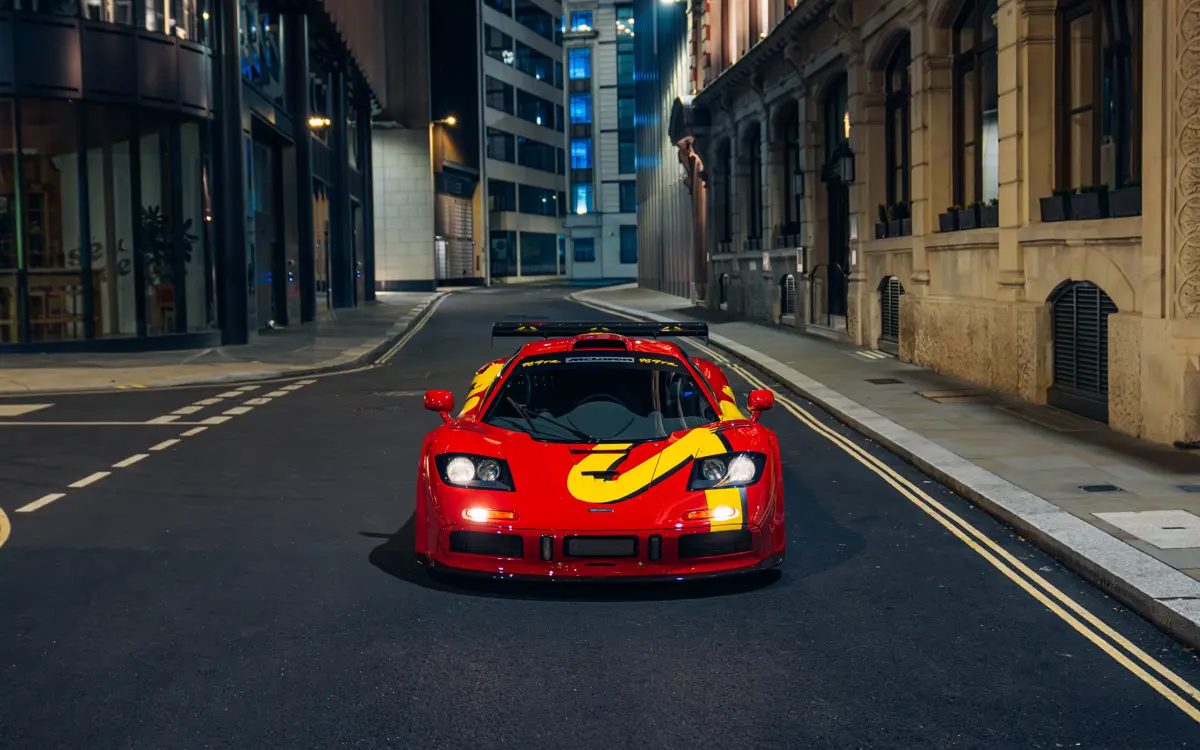
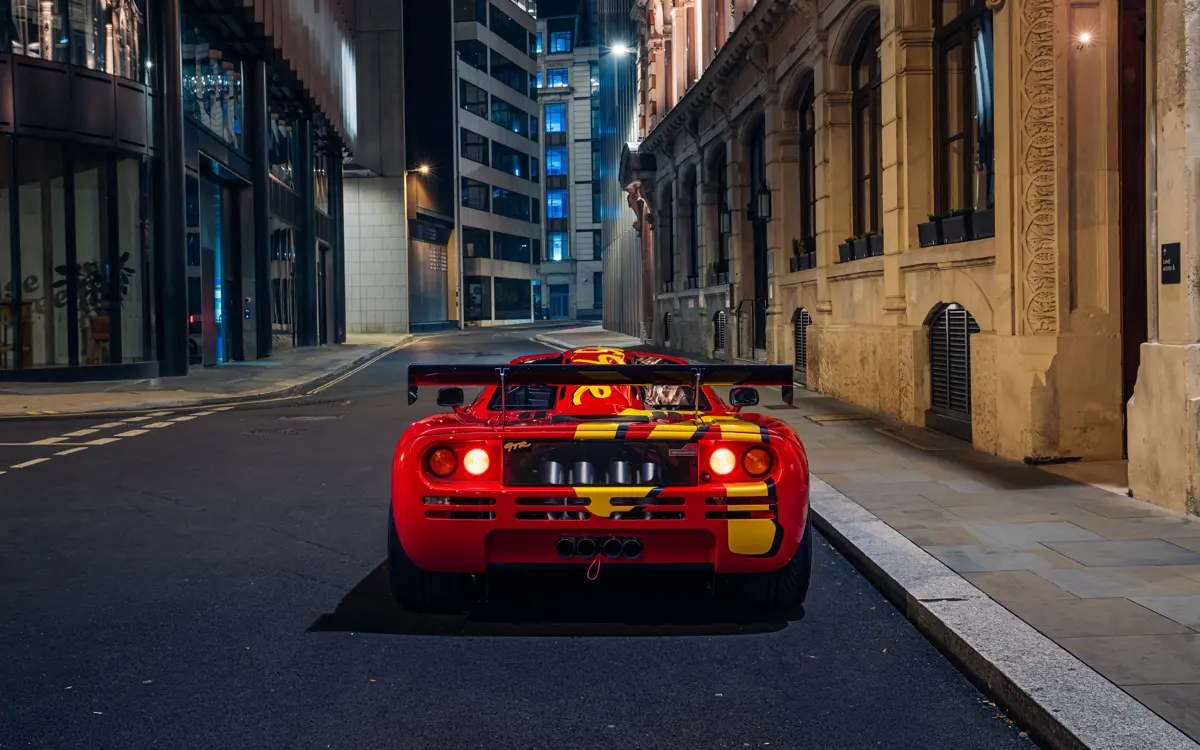
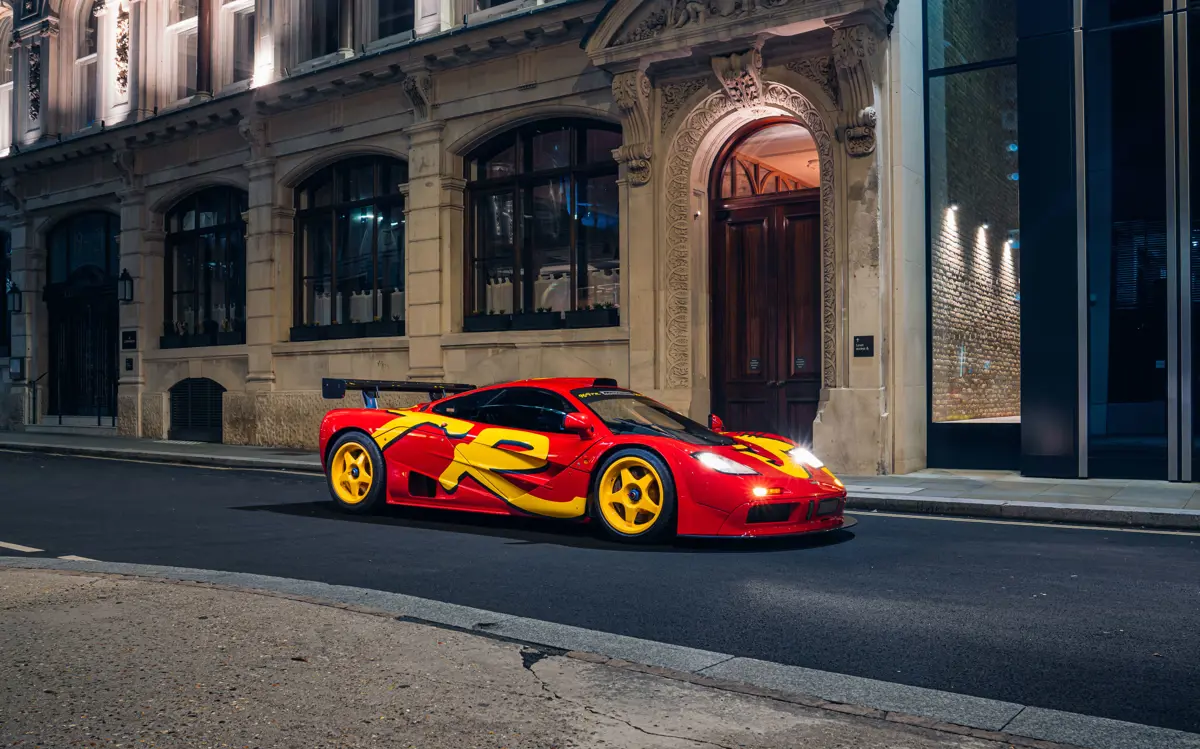
- “The Pop Art F1” - The only McLaren F1 GTR with factory livery; crafted with its 1990s pop art-influenced design in scarlet and yellow making 10R instantly the most recognizable of all McLaren F1s.
- Retained by the McLaren factory until its one private owner, rock and roll legend Nick Mason of Pink Floyd, acquired the car in 1999 directly from McLaren.
- One of only two McLaren F1 GTR Short-Tail prototypes along with the 1995 24 Hour Le Mans winner chassis 01R.
- The first of only nine McLaren F1 GTRs built to 1996 specification; the fastest and most desirable variant of the McLaren F1 GTR.
- Converted by the McLaren factory for road use.
- The end of an era with the F1 GTR being the last Le Mans-winning racecar developed directly from a GT hypercar.
- An unrepeatable opportunity to acquire one of the most iconic McLaren F1s ever built, and a true artifact of 1990s British pop and automotive culture.
- To view photos, click here.
BLENHEIM, Ontario, July 17, 2026 - Estimated in excess of $35 million, chassis 10R is the first McLaren F1 GTR built to the highly developed 1996 specification and one of only two Short-Tail factory “XP” prototypes, alongside chassis 01R, the car that won the 1995 24 Hours of Le Mans outright. Finished in Blood Red with bold yellow “96 GTR” graphics, 10R is the only McLaren F1 GTR to wear this factory-created design. Graphic, unmistakable, and entirely of its era, it remains one of the most recognizable McLarens ever built.
Retained by McLaren from new, tested in preparation for the 1996 24 Hours of Le Mans, and later converted for road use by the factory, chassis 10R was acquired directly from McLaren by Pink Floyd drummer and celebrated collector Nick Mason in 1999. It remained in his personal collection for over a quarter of a century. More than a competition car, chassis 10R represents a rare intersection of British motorsport, engineering, design, music, and popular culture.
GORDON MURRAY ON 10R
Asked directly about his description of the GTR as an “art car,” Gordon Murray confirmed that its appearance was intentional and conceived as something more meaningful than a conventional racing livery.
“Indeed, yeah, because it was… a conscious decision to do something that wasn’t just choosing a color—something that the spectator, or the onlooker, if you like, would appreciate that was very different, not just a nice color,” Murray said.
The car’s vivid red finish was a characteristically independent choice. Murray recalled Ron Dennis saying that he never wanted to see a red McLaren because the color belonged to Ferrari. “I don’t think anybody owns red,” Murray responded. “It’s a primary color… it’s a lovely color.”
Asked about the significance of prototypes—and where 10R sits within the history of the McLaren F1—Murray emphasized that these cars represent the earliest physical realization of a designer’s original idea. “For me, [prototypes are] very important motor cars—and, in a way, almost more collectible than the production cars,” Murray said. “The first bit that’s in carbon and metal, the very first… that’s number one, if you like. So the prototypes are always number one… That pop art sort of thing makes it a very important motor car.”
Discussing 10R’s rarity, Murray distinguished it even from the other exceptionally limited McLaren F1 GTRs: “There’s only a handful of these GTRs, but there’s only one—that’s my point—there’s only one like that.”
Reflecting on the car’s place at the intersection of British motorsport, music, and art, Murray said: “And then, of course, the art side—the fact that we did something quite different from what other people were doing… The combination of all that makes me feel really proud.”
Unlike the sponsored team cars, whose liveries were largely determined by commercial graphics and logos, 10R offered Murray and his team complete creative freedom. “We didn’t have those constraints, you see,” Murray explained. “The prototype belonged to us, so we could do anything. And I thought, well, if you’re going to do something, go mad.”
Finally, when asked how he felt about 10R passing to its next owner, Murray described that person’s role as something greater than ownership alone: “It’s not just a motor car. It’s a one-off, basically, and it has a very important history… Anyone who ends up being the lucky owner is going to be the owner and custodian of something truly unique.”
ACHIEVING THE IMPOSSIBLE
The McLaren F1 is widely regarded as the defining supercar of the 20th century, but its mythology was forged on the circuit. Although never originally intended for competition, its carbon fiber construction, central driving position, BMW V-12, and race-derived engineering made the F1 a natural contender. Developed for the BPR Global GT Series, the F1 GTR retained much of the road car’s architecture while adding revised aerodynamics, reduced weight, and competition equipment.
On its debut at the 1995 24 Hours of Le Mans, chassis 01R, entered by Kokusai Kaihatsu Racing and prepared by Paul Lanzante, won outright against purpose-built prototypes. That victory transformed the McLaren F1 from an extraordinary road car into a Le Mans legend. For 1996, McLaren further developed the GTR to meet the challenge of more specialized machinery, including the Porsche 911 GT1. Revised bodywork, improved aerodynamics, a more aggressive splitter, and a lightweight magnesium gearbox casing made the new version faster and more focused. The first example was chassis 10R.
NICK MASON AND BRITISH MOTORING CULTURE
It was fitting that one of the most visually distinctive McLaren F1 GTRs would eventually pass to Nick Mason, drummer for Pink Floyd and one of the world’s most respected automotive collectors. A dedicated enthusiast long before achieving global fame, Mason assembled a collection that includes a Ferrari 250 GTO, Maserati 250F, Bugatti Type 35, Jaguar D-Type, and Porsche 962.
Converted for road use by McLaren and registered as “K40 MCL” in 1999, chassis 10R became one of the earliest F1 GTRs adapted for use beyond the circuit. Additional work was completed by Paul Lanzante, whose connection to the model dates to McLaren’s 1995 Le Mans victory. The conversion brought the F1 GTR full circle: a road car transformed into a Le Mans-winning racer had returned to the open road.
MAINTAINED BY LANZANTE
Throughout Mason’s ownership, chassis 10R has been maintained by Paul and later Dean Lanzante and the team at Lanzante Limited. The car underwent a no-expense-spared restoration in 2009 and was restored again following an incident at Goodwood in 2017. It has since appeared at Rétromobile, the Goodwood Members’ Meeting, the Goodwood Festival of Speed, and gatherings organized by the 106 Drivers Club.
Mason is understood to have maintained an open-checkbook approach to the car’s maintenance, returning it to Lanzante following significant use and ensuring it remained in exceptional cosmetic and mechanical condition. A recent inspection completed by Lanzante Limited is available for review.
THE ULTIMATE 1996 McLAREN F1 GTR
The McLaren F1 GTR represents the end of an era in which a racecar developed directly from a roadgoing GT hypercar could win Le Mans outright. Among the three generations of F1 GTR, the 1996 Short-Tail occupies a compelling middle ground, combining the elegance of the original design with the most important performance developments introduced before the Long-Tail appeared in 1997.
Chassis 10R stands apart even within that rarefied group. It is the first 1996-specification F1 GTR, one of only two Short-Tail factory prototypes, and the only example to wear its distinctive red-and-yellow factory livery. It was retained and developed by McLaren, tested at Le Mans, converted for road use by the factory, and transferred directly to its first and only private owner.
Its combination of factory history, technical significance, visual identity, and Nick Mason provenance makes chassis 10R one of the most important and recognizable McLaren F1s ever built. An opportunity of this significance is unlikely to be repeated.