Chassis No.
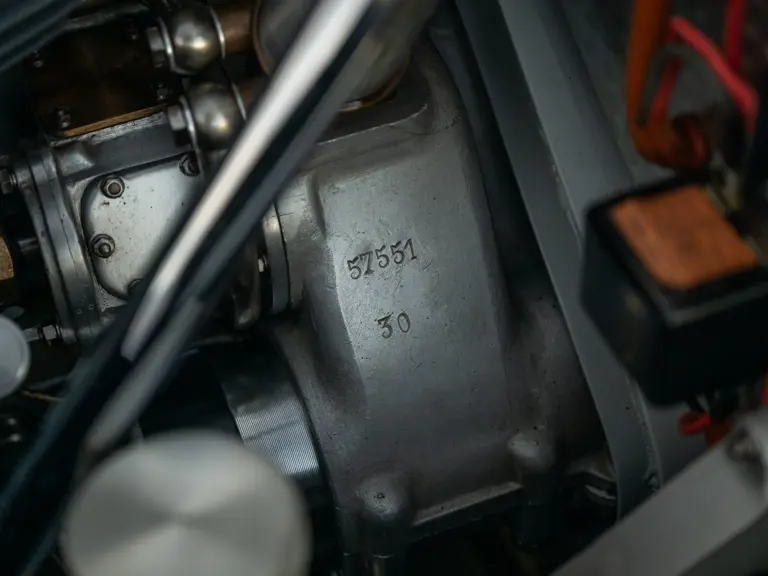
57551
$4,955,000 USD | Sold
Offered from The Jim Patterson Collection
{{bidding.lot.reserveStatusFormatted}}
THE INCOMPARABLE TYPE 57S: BUGATTI’S MASTERPIECE
The Paris Auto Salon of October 1936 saw the introduction of a revised second-series version of Bugatti’s elegant Type 57, but also, more significantly, uprated sporting variants, the 57C and the 57S. While the former featured a supercharged engine, the latter was a true purpose-built, high-performance, competition-oriented automobile, with so many differences from the stock 57 that it was, in effect, an entirely distinct model.
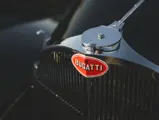
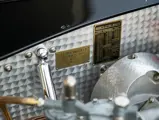
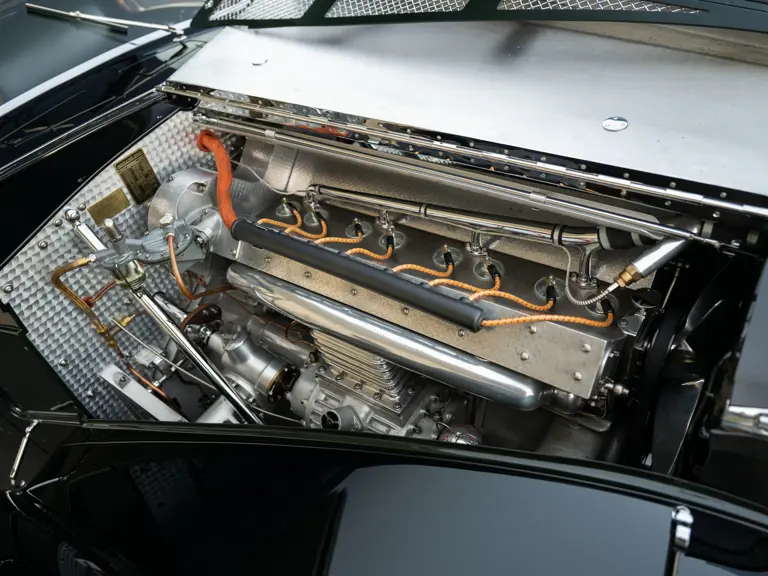
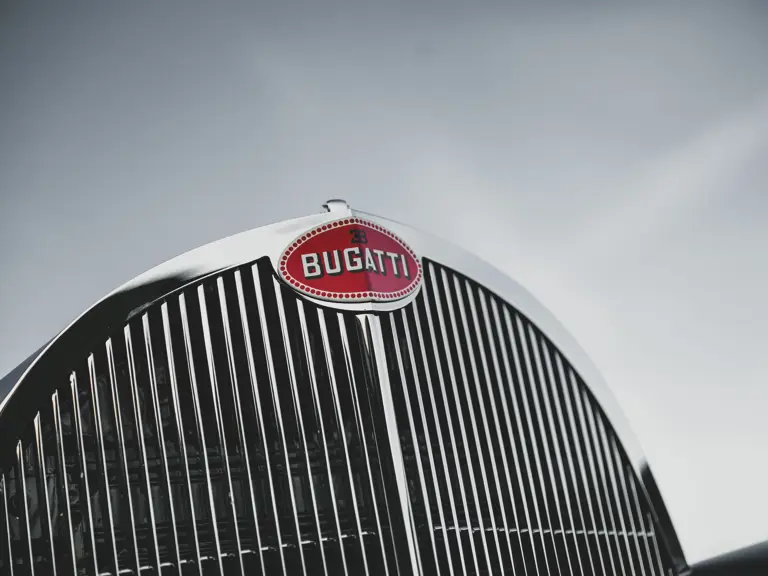
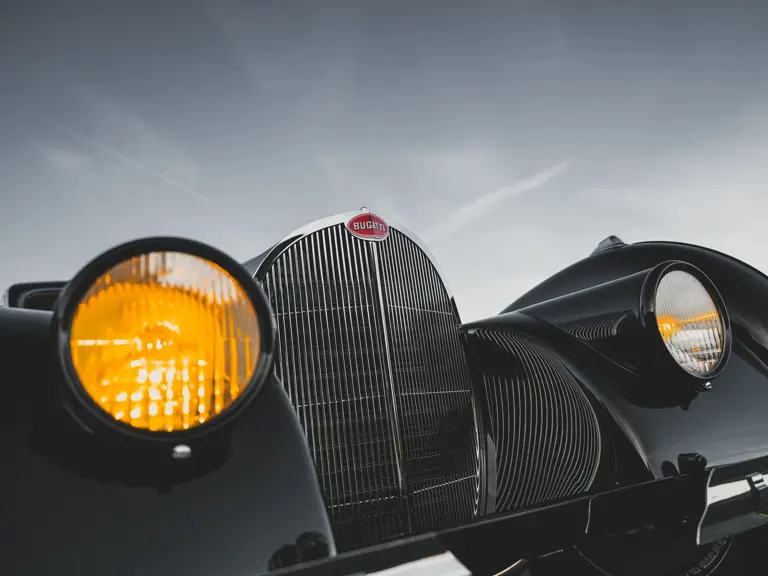
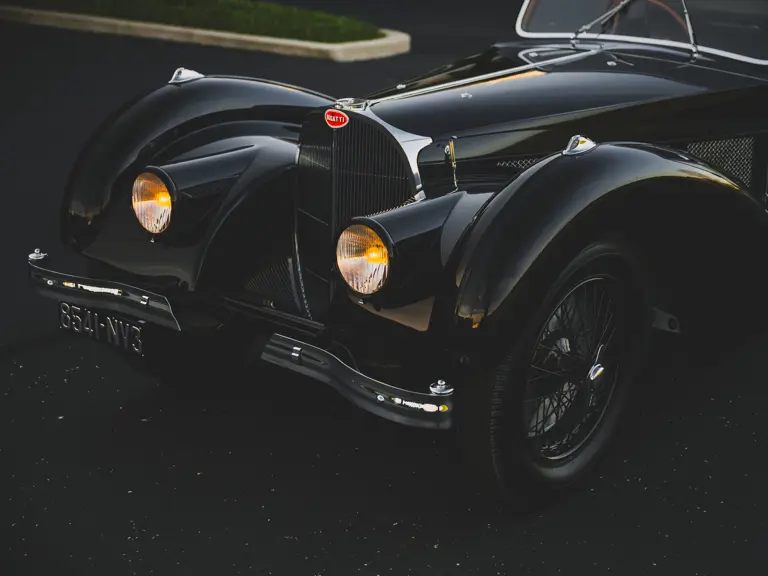
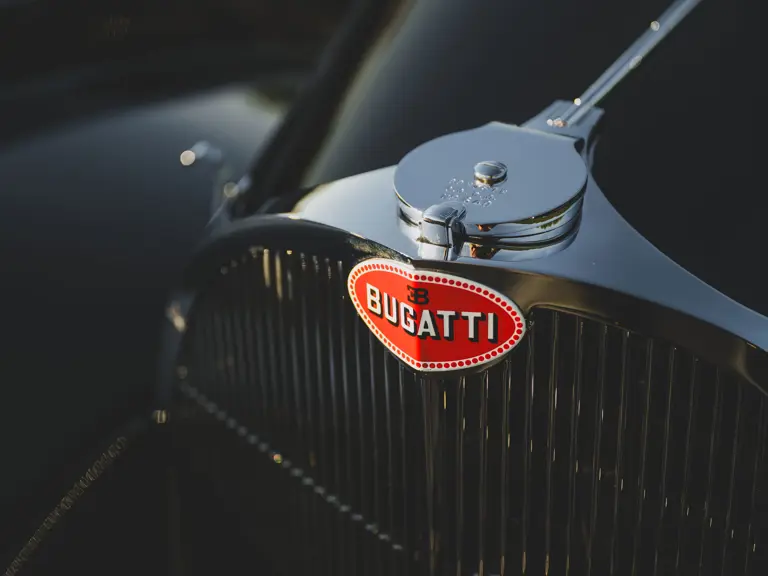
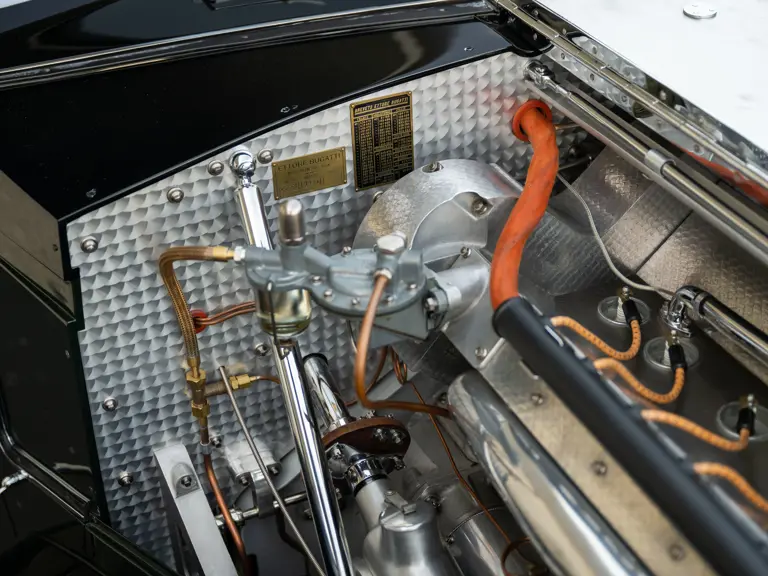
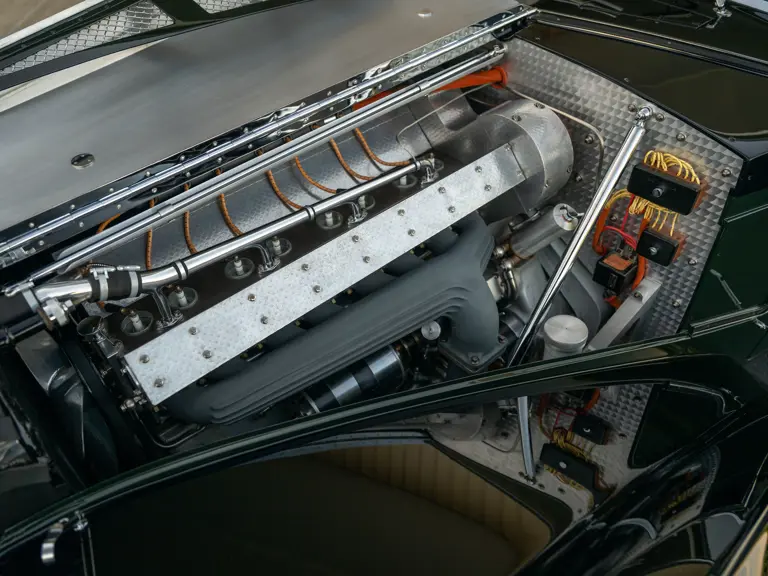
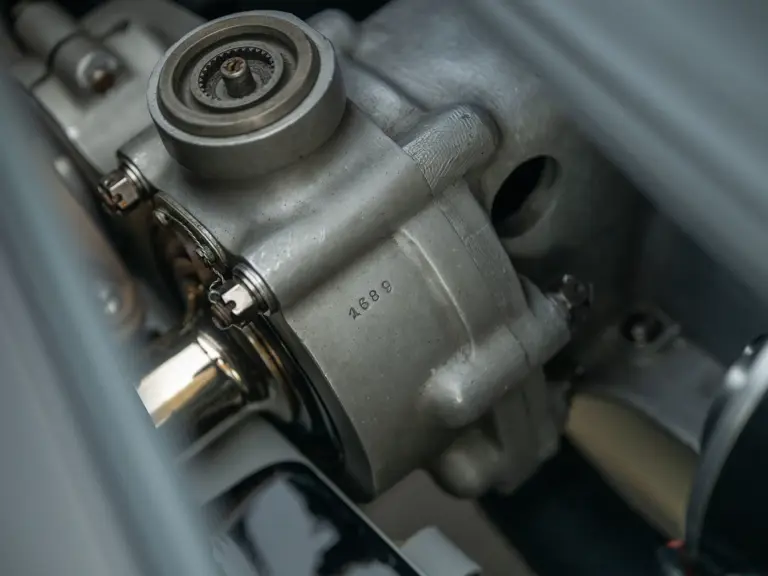
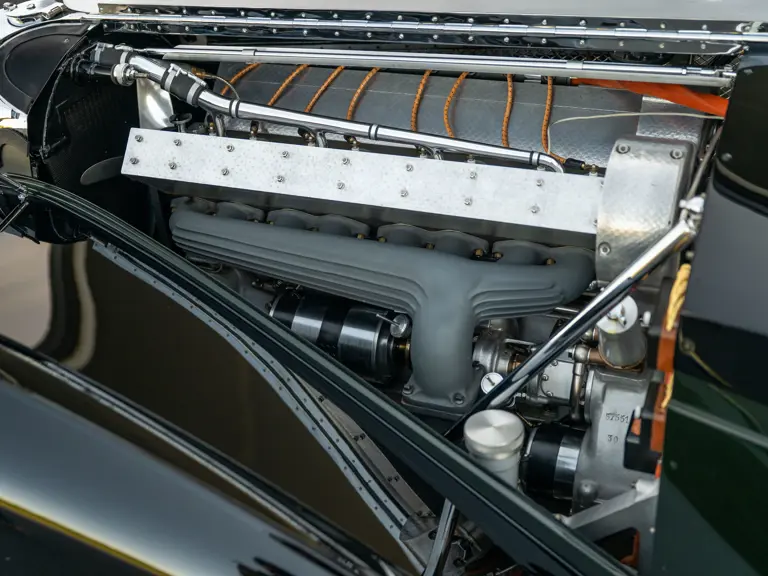
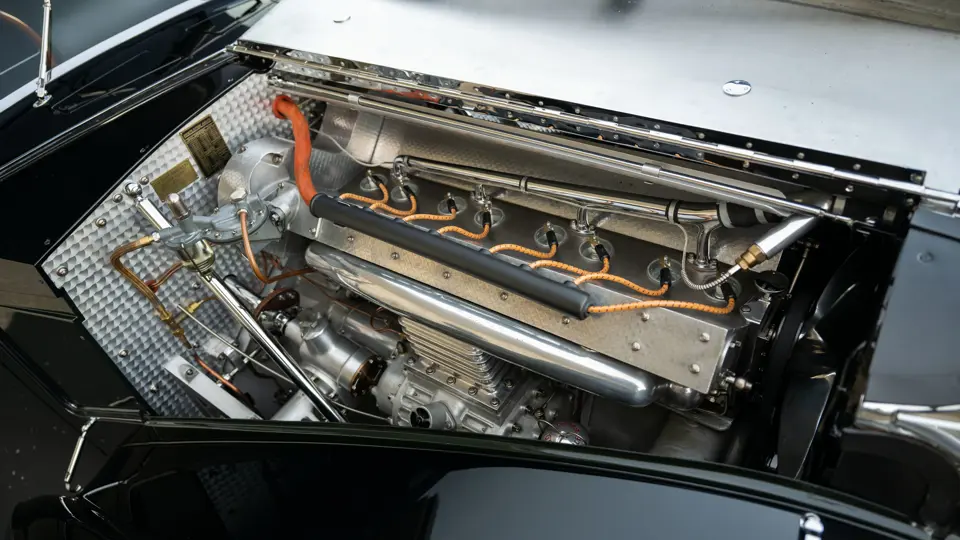
Each Type 57S was constructed upon a chassis that was wholly re-engineered to be both shorter and lower—hence S, for surbaissé or “lowered.” The front axle was articulated in halves, and the rear axle passed through the frame rather than under it, creating a lower overall stance. Carried on this sophisticated drivetrain was a specially tuned version of the 3.3-liter eight-cylinder engine, with a higher 8.5:1 compression ratio, a dry sump accommodating the car’s lowered center of gravity, and magneto-driven ignition, as well as a low radiator with a handsome vee’d grille shell in the classic Bugatti motif.
In an era when every automaker sought to make their cars look fast and sleek beyond their performance capabilities, the Type 57S delivered on its appearance in every regard. In the model’s first 12 months of existence in 1936, examples won the French Grand Prix, La Marne Grand Prix, and Comminges Grand Prix, followed the subsequent year by a quartet of victories at Pau, Bone, La Marne, and Le Mans. Type 57S chassis set records in no fewer than 14 different events, including a speed average of 85.07 mph at Le Mans. It was, by no exaggeration, a supercar of its era.
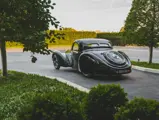
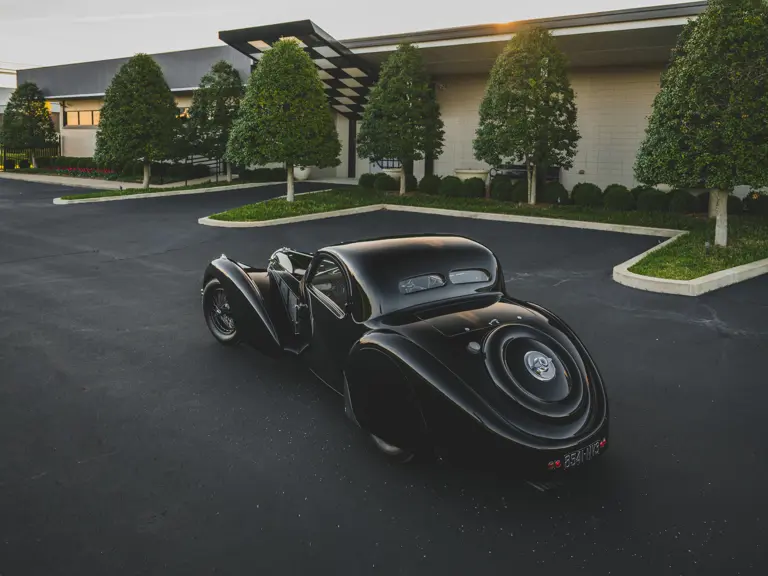
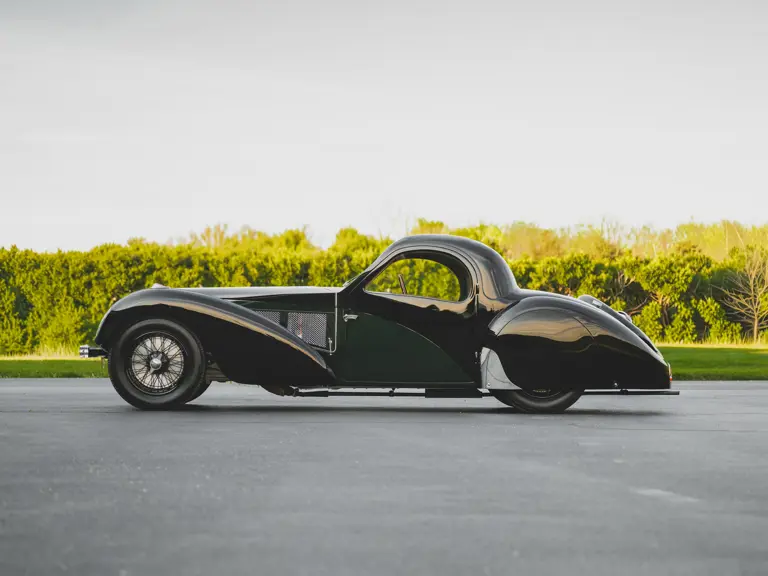
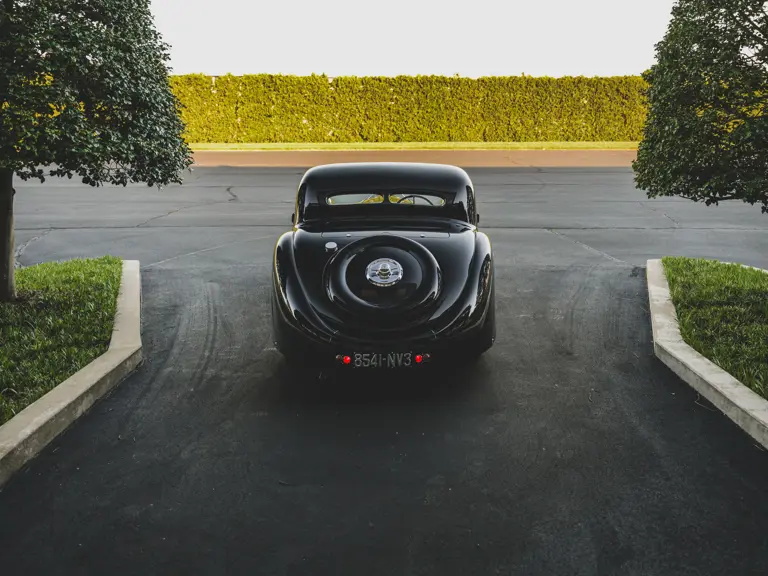
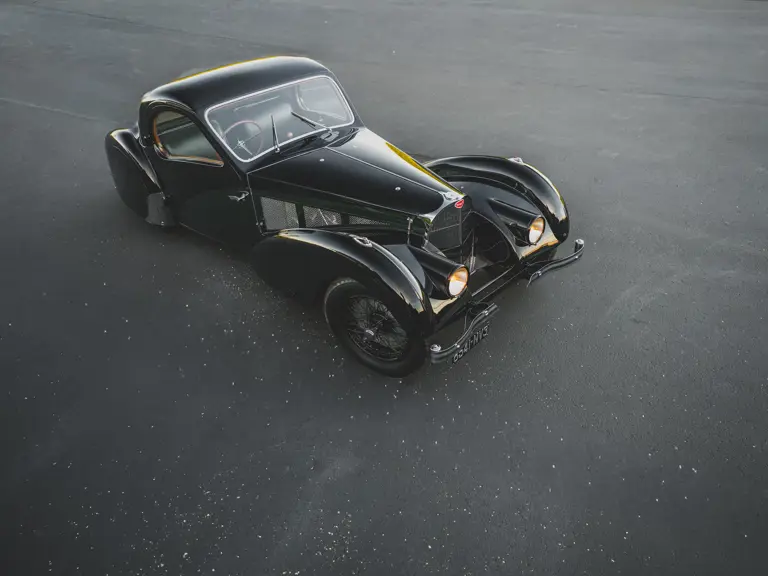
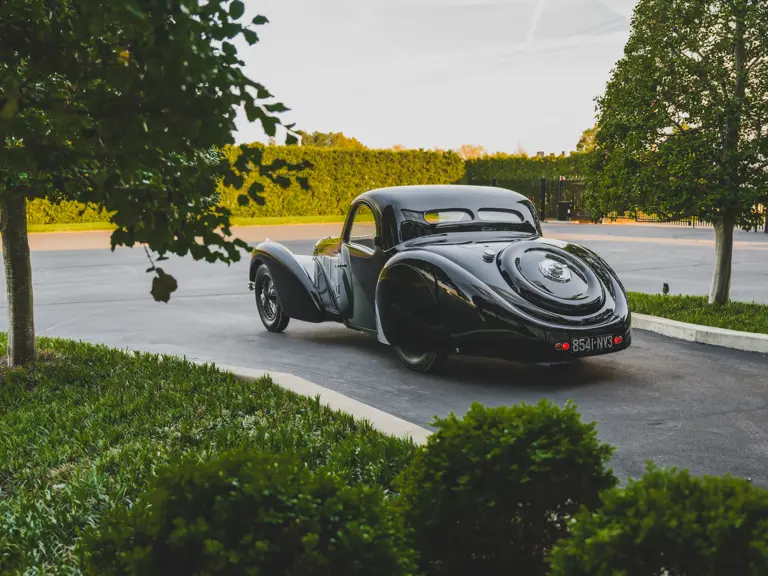
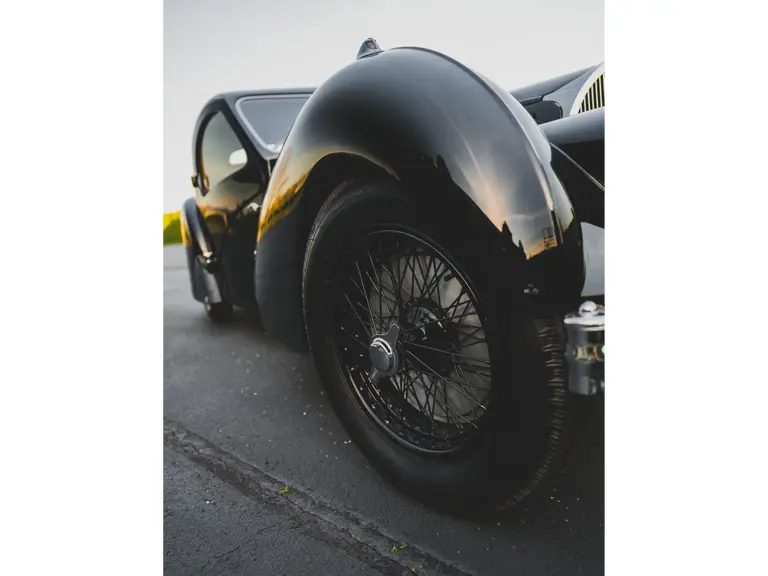
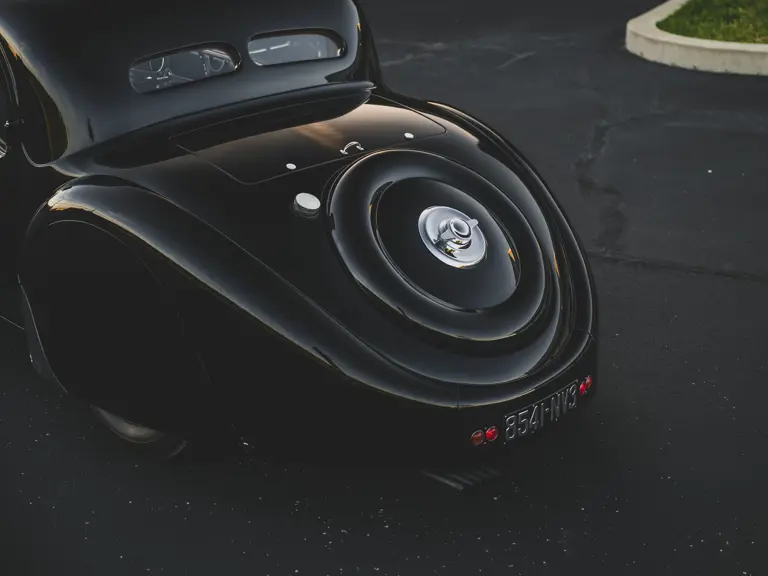
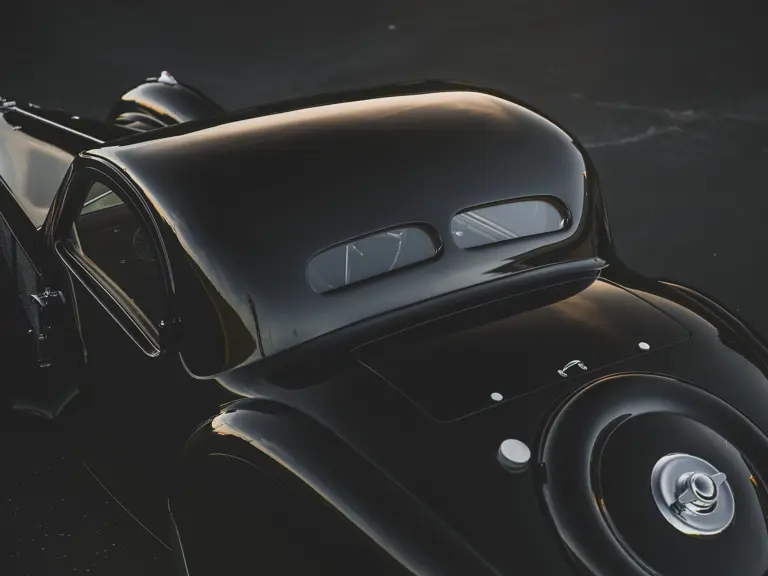
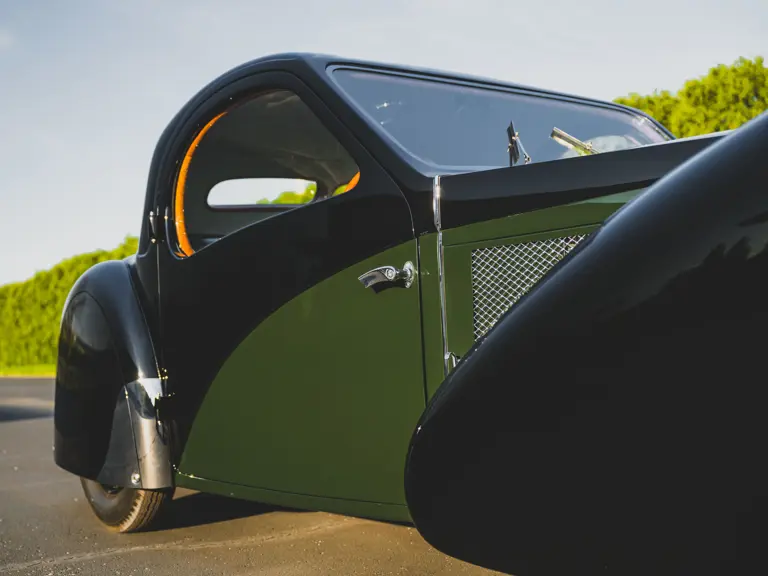
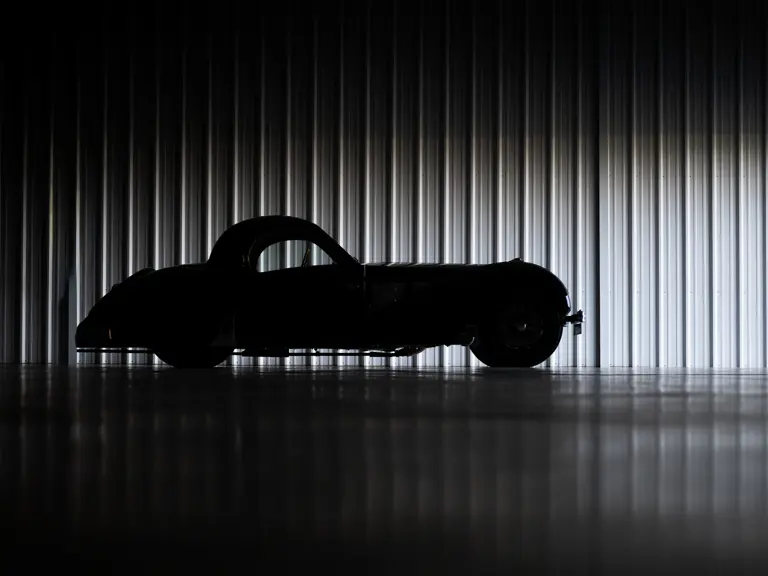
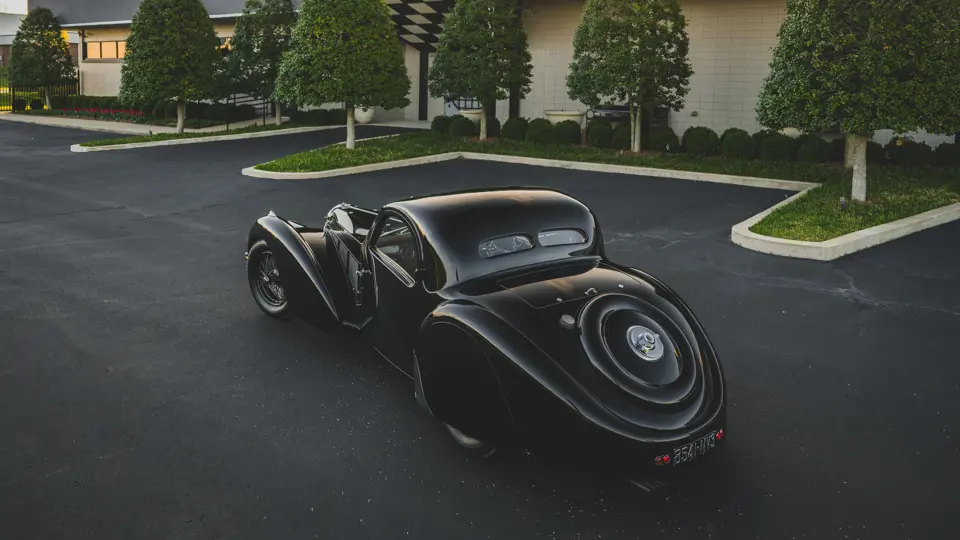
With the sales of the more “stock” 57 and 57C chassis flourishing in the late 1930s, Bugatti eventually came to view the Type 57S as surplus to their needs, and quietly discontinued the model in May of 1938. Only 42 examples were built to this ultimate specification, with 17 bodied as Jean Bugatti’s Atalante, with its distinctive rounded roofline and “notchback” tail. On a stock Type 57 the Atalante was aggressively beautiful; on the 57S, slinkily lowered to the ground with its fenders thrust nearly level with its beating heart, it was almost wicked.
For beauty, for power, for sheer glory—nothing could quite compare.
CHASSIS NUMBER 57551: THE MILLER’S ATALANTE
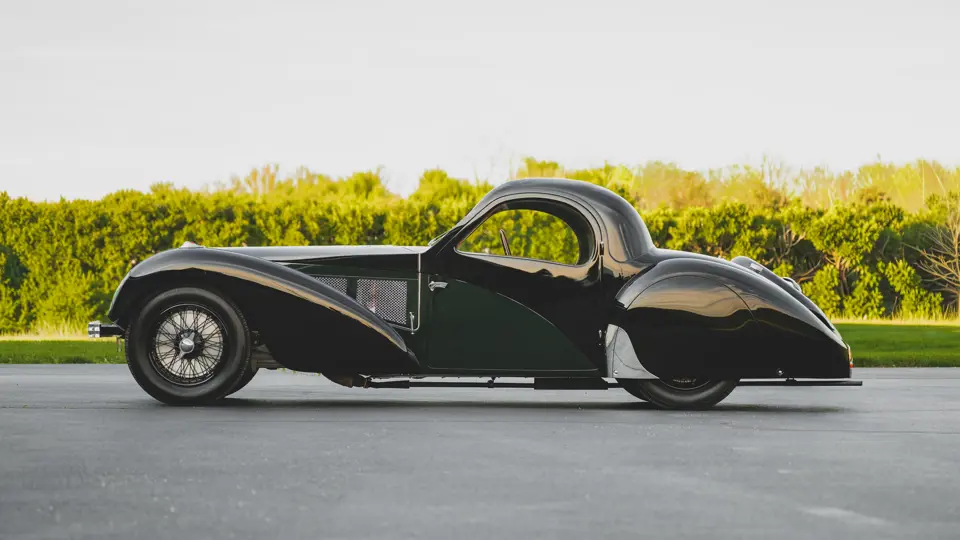
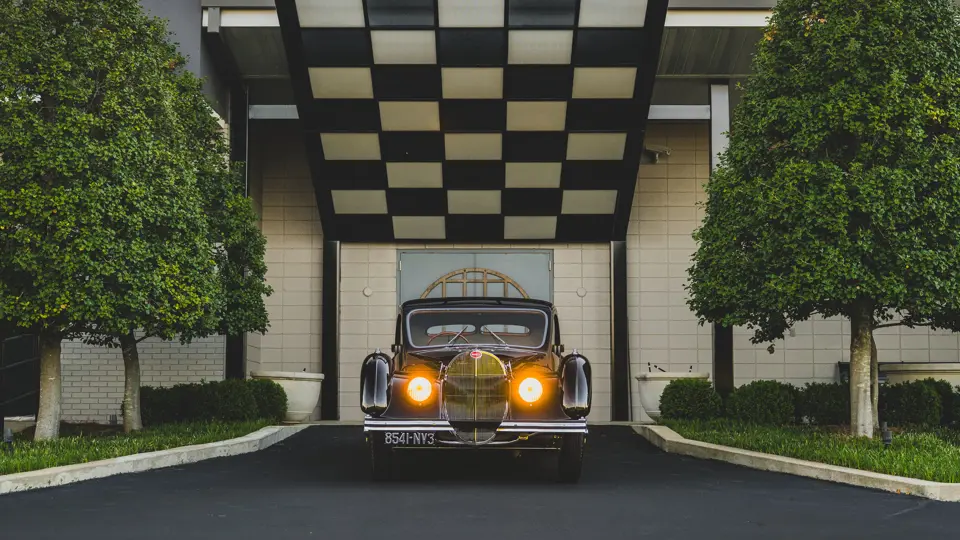
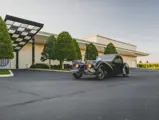
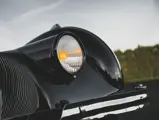
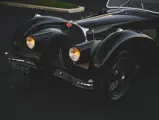
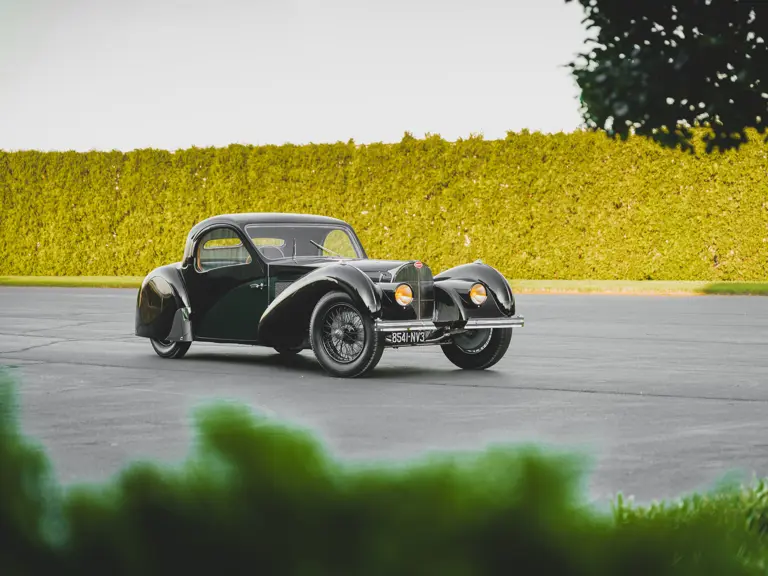
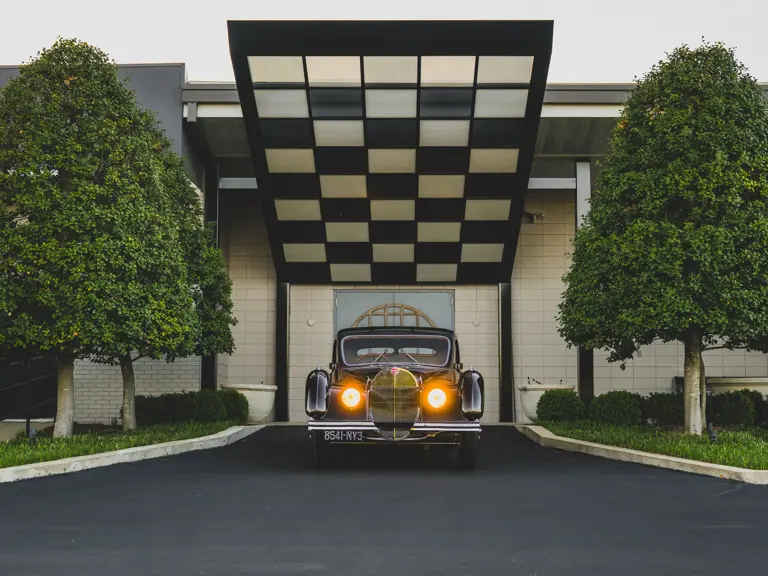
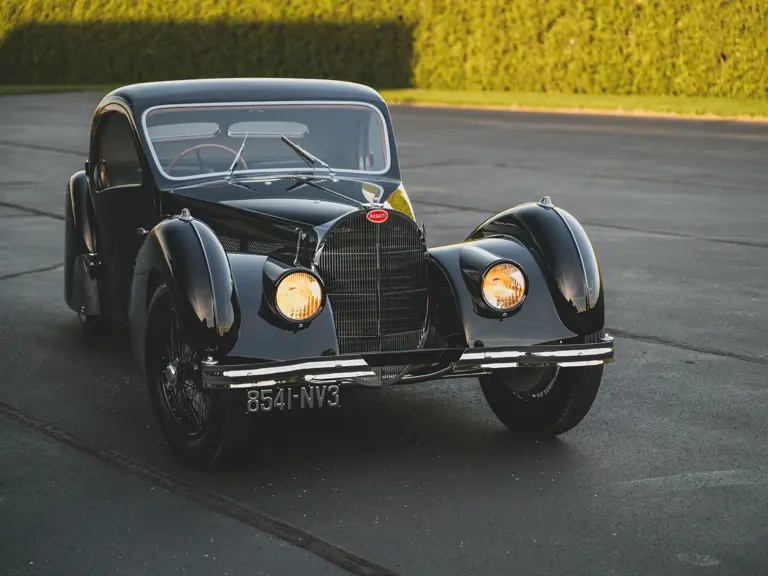
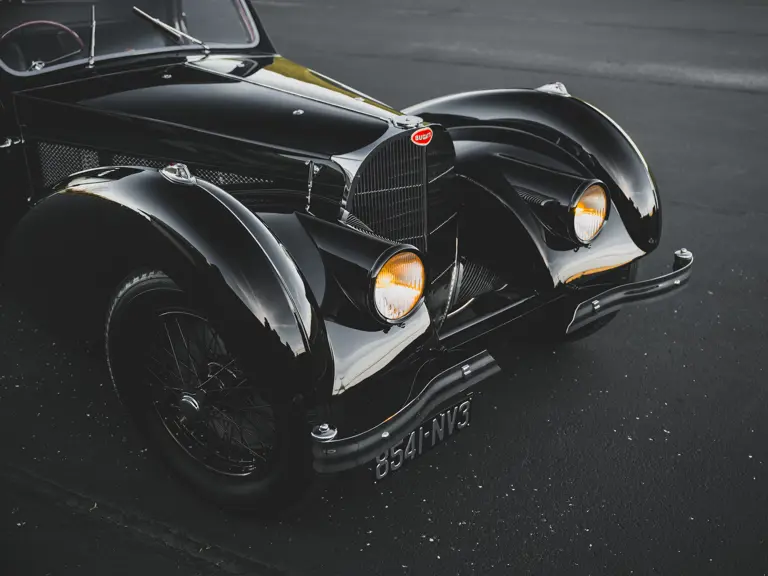
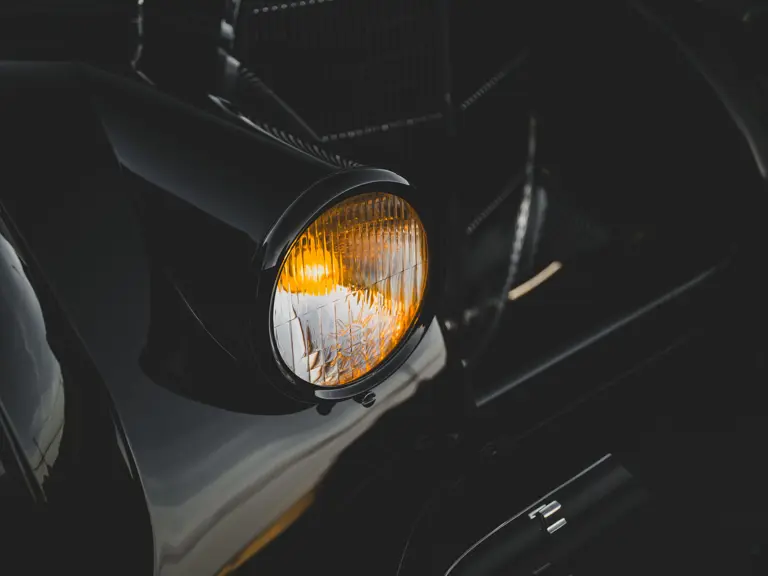
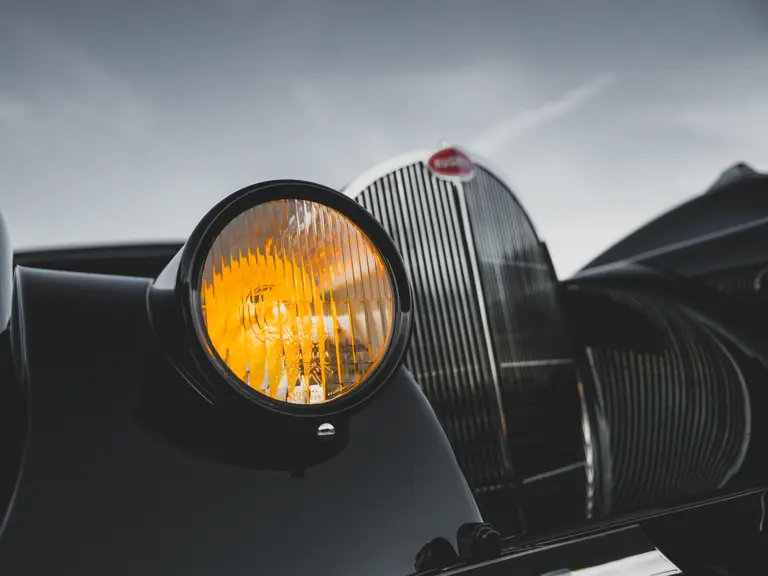
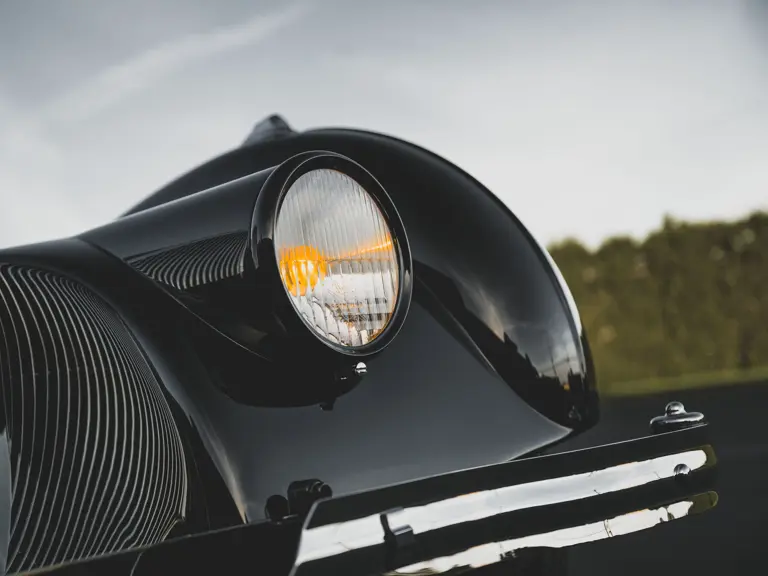
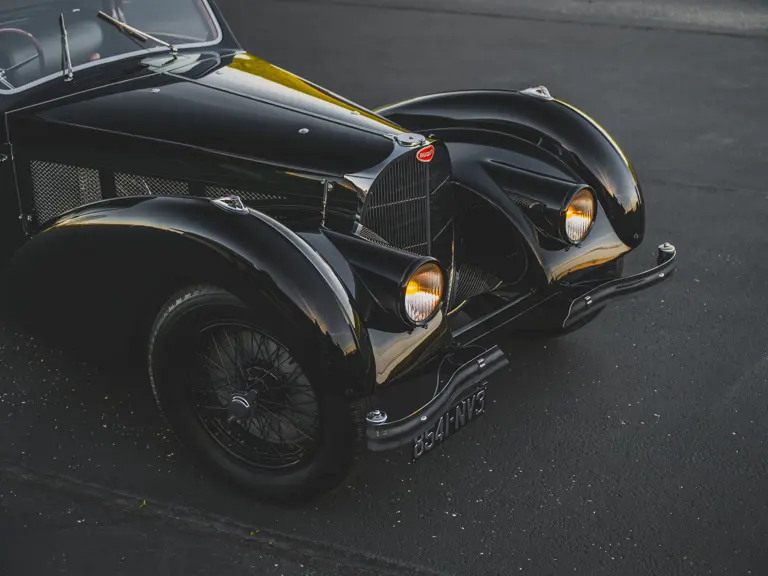
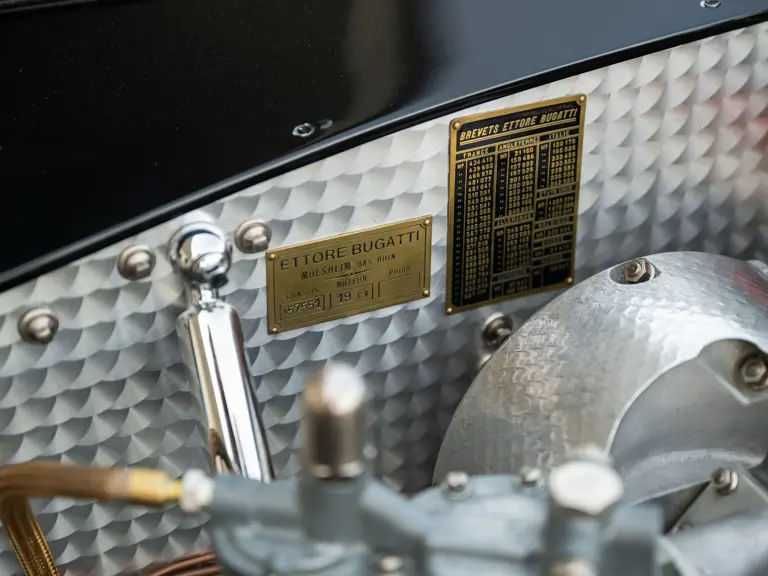
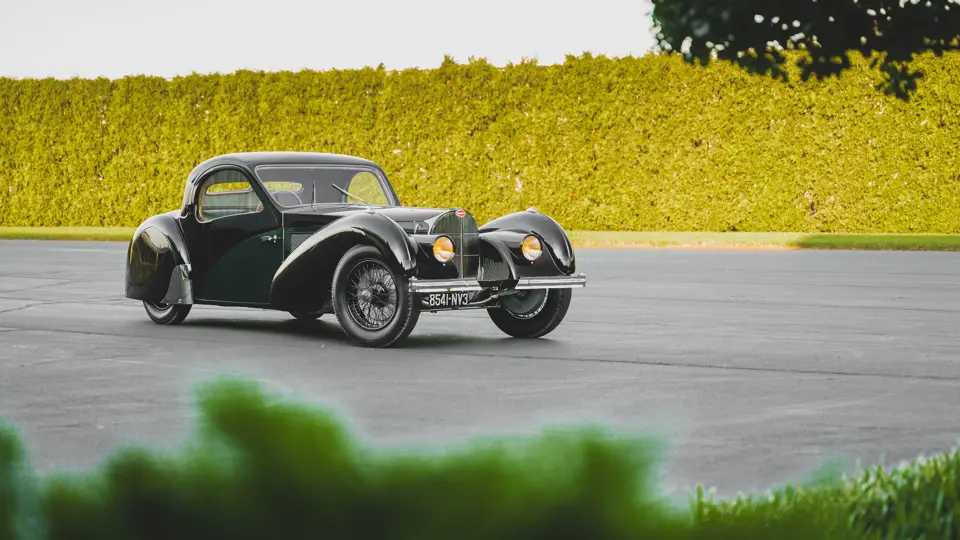
Type 57S chassis number 57551 was built as an Atalante with the distinctive lowered headlights, akin to the Paris show car, and delivered to Jean Lévy, scion of a prominent Strasbourg family that owned one of the area’s largest mills. Lévy took delivery of his 57S directly from the factory, both because he lived very near the Bugatti compound in Molsheim, and because he was already an established customer; his Type 57 Stelvio was exchanged for the new car in July of 1937.
The Atalante was still with its original owner and, it can be presumed, scarcely used, when World War II arrived. Lévy fled to the United States, where he had wisely acquired a few mills to continue his business, with the Bugatti remaining behind at his farm in the Dordogne. It was re-registered to his friend Maurice Weber, manager of the livestock feed operation at the Lévy mill, in 1941. Following the war’s conclusion, the car was brought to Paris and sold there to Pierre Pruvost of Bezons; in the process the original engine was exchanged for 15 S, from car number 57492, restamped 30 S as original for this chassis. In this form, according to Bernhard Simon and Julius Kruta’s book, The Bugatti Type 57S, the car was sold in 1948 to the noted artist and Bugattiste, André Derain. In 1952 it passed to Monique Weyemer of Nice, and finally through that city’s Bugatti dealer Ernest Friderich to Jean Louis Fatio of Switzerland in 1957.
In 1959 the car was sold by the auspices of musician and amateur Bugatti broker Robert “Bob” Baer to Colin Doane, a US Air Force Officer. Doane brought the Atalante across the Atlantic and drove it 3,000 miles over two years, including a 500-mile trip from Boston to Watkins Glen, before selling it in 1961 to Harrah’s Automobile Collection of Nevada. Harrah’s was at the time fully flowering into what it eventually became, the largest and most complete collection of vintage cars in the United States, renowned for the standards set by its in-house restoration facility. Recognizing that longtime friend O.A. “Bunny” Phillips’s Rosemead, California, shop was more of a specialist at these cars than his own shop, however, Bill Harrah commissioned Phillips to begin the Atalante’s mechanical restoration. Work had not progressed far when the car was moved out of the way of other Harrah projects that took priority.
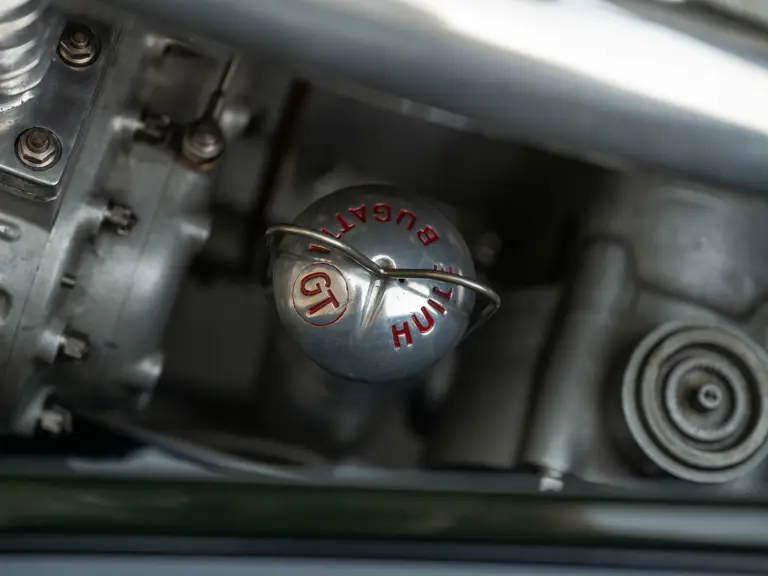
In the early 1970s, work resumed anew, and the car was completed with a supercharger added to its engine, bringing it to the ultimate 57SC specification, and in a rather bold combination of hues dubbed Patrol Cream and Lemon Oxide. The result was a showstopper, in a very literal sense. In 1976 it was awarded Best of Show at the Pebble Beach Concours d’Elegance, Bill Harrah’s fourth and final victory at the August event, only a year before his passing. Early in the next decade it was prominently featured in Dean Batchelor’s book, Harrah’s Automobile Collection, which pictures it both in the process of restoration and as completed, and further details Harrah’s history with the Bugatti.
The Atalante remained in Harrah’s Automobile Collection until 1987, when it was sold to biotechnology pioneer Dr. Herbert Boyer of California, then building a small but impressive collection of his own. It remained with Dr. Boyer until 2000, when it was acquired by Jim Patterson for his own burgeoning stable.
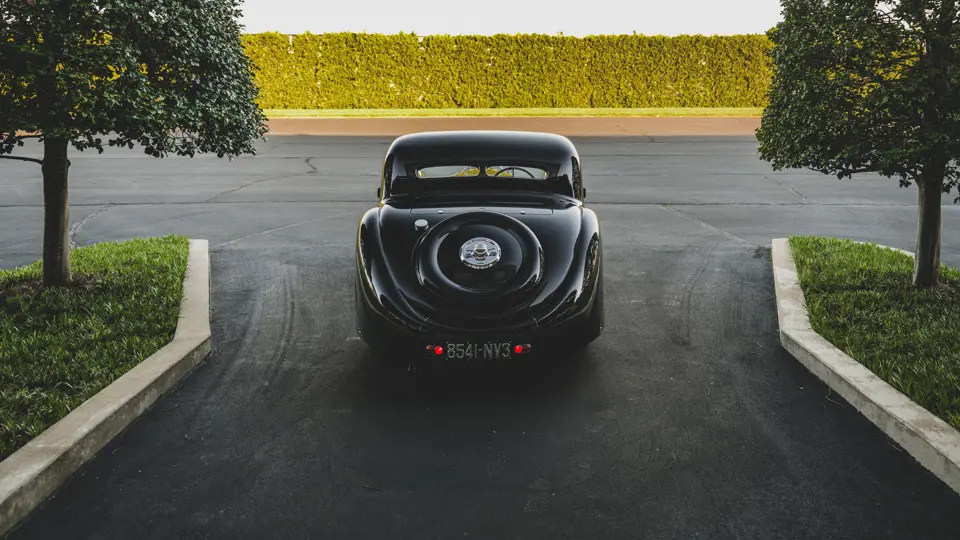
Mr. Patterson exhibited the car in his collection for over a decade, occasionally displaying it at concours, still in its striking Harrah’s restoration. However, it eventually became clear that the restoration, while always a crowd-pleaser and very high-quality for its time, was not quite to the evolved modern standards that such an extraordinary automobile demanded. Modifications had been made to the tail in early ownership, and these had been preserved by Harrah’s; similarly, the headlights had been modified several times from their original configuration. Inspection of photographs of the car, published in Kruta’s book and in other sources, showed how the car had originally appeared and should be configured, including a photo from Lévy’s ownership with the proper headlight design.
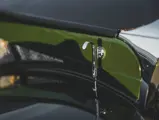
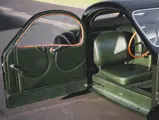
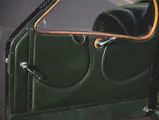
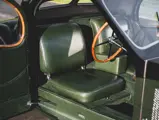
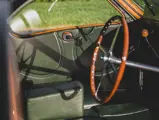
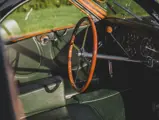
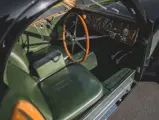
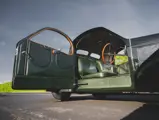
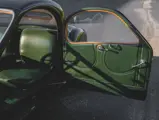
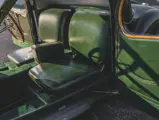
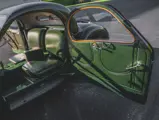
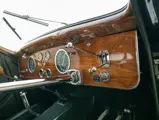
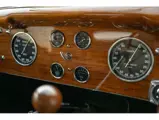
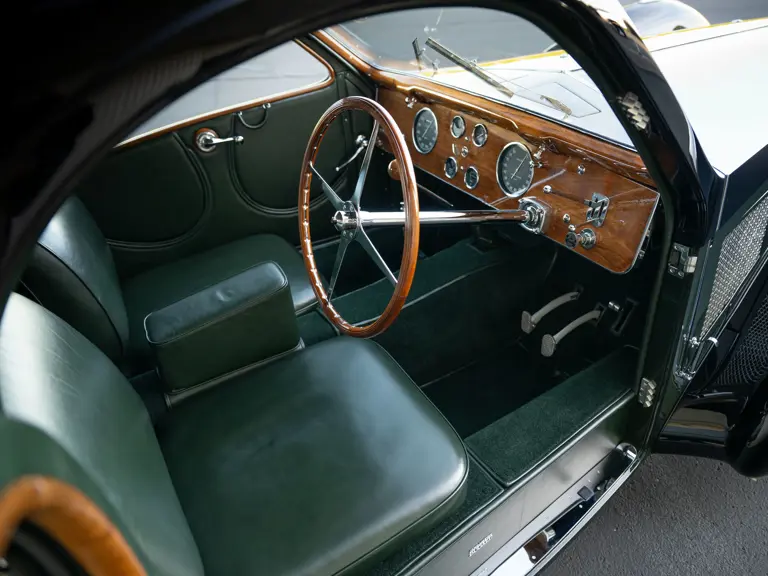
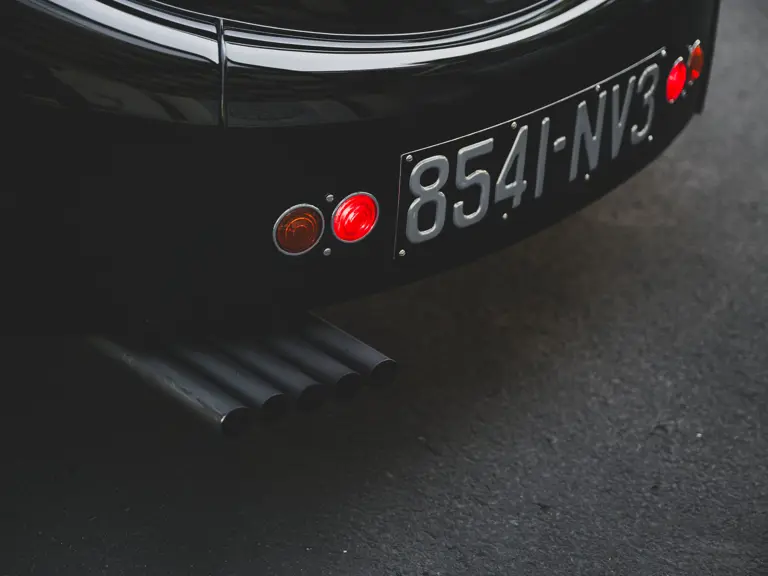
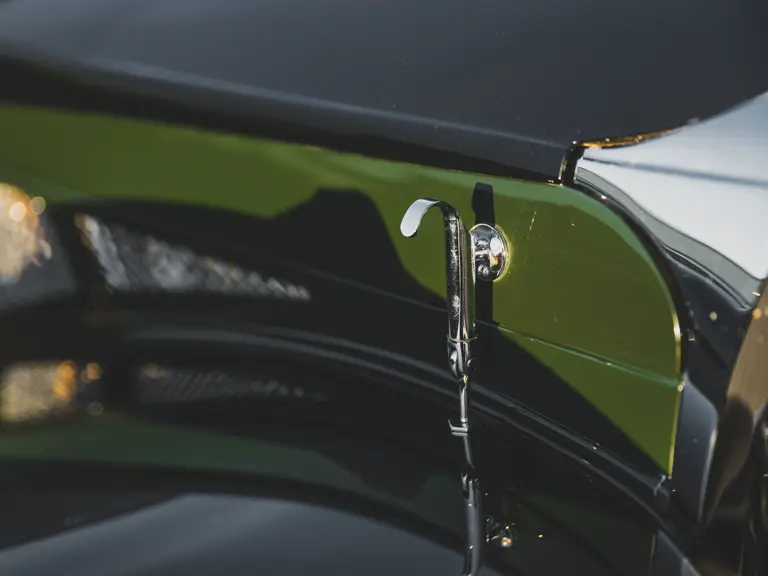
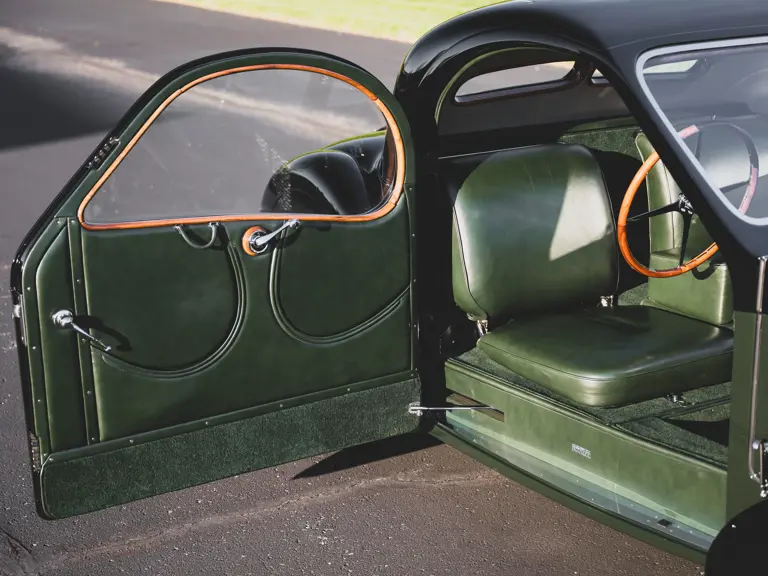
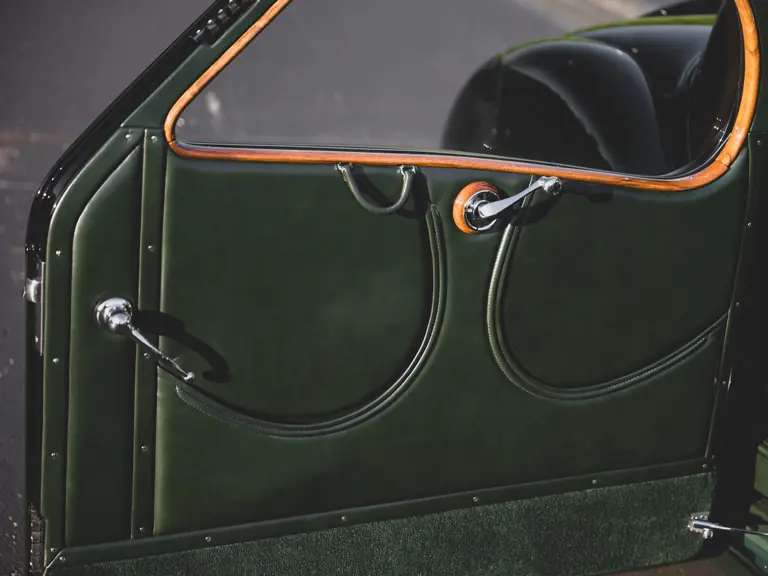
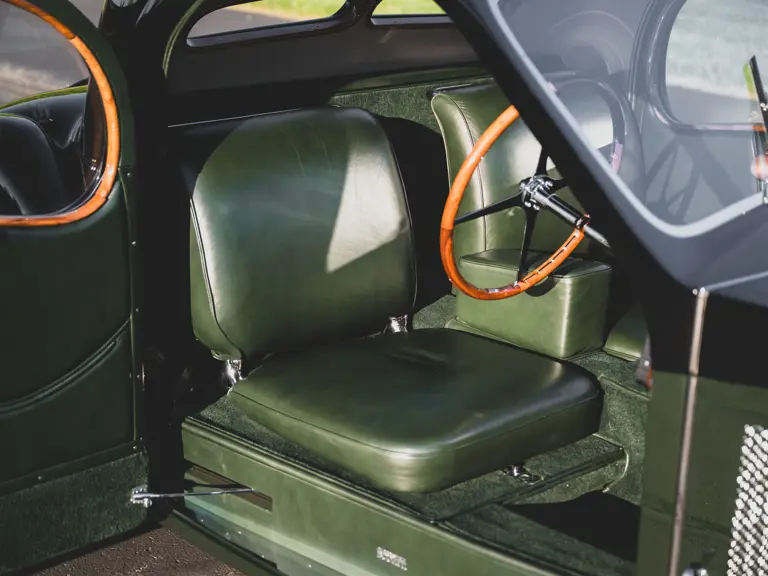
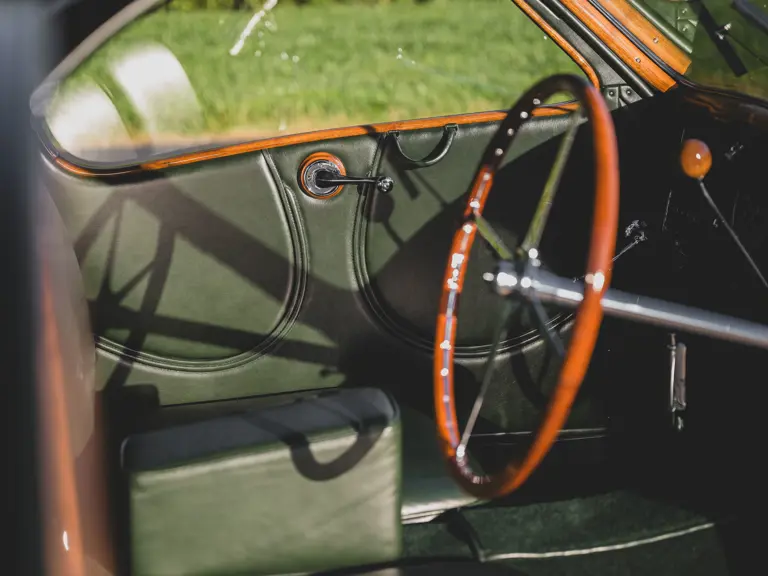
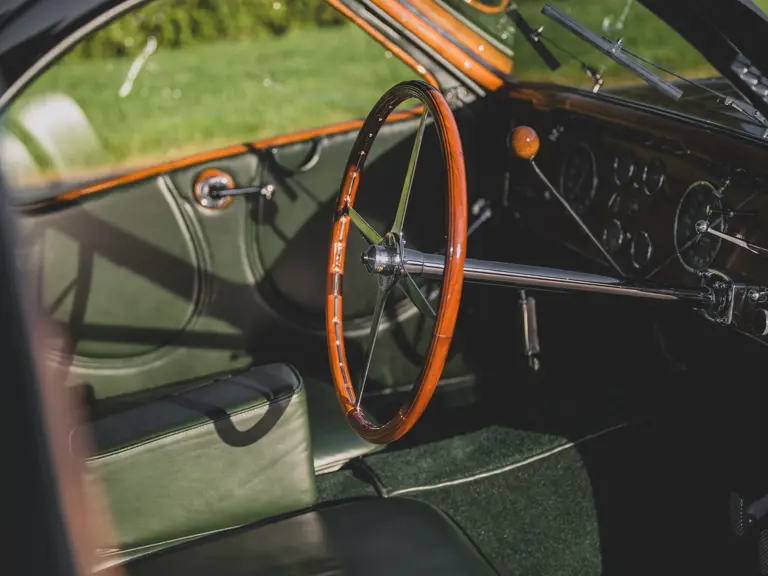
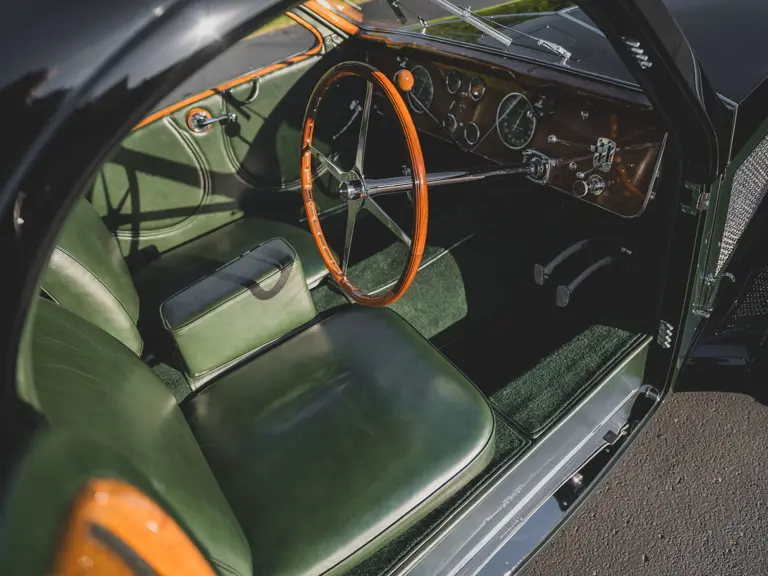
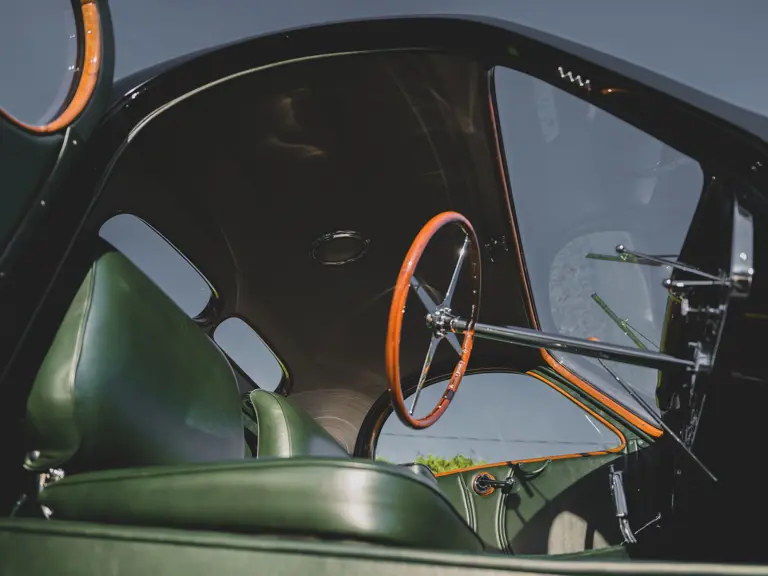
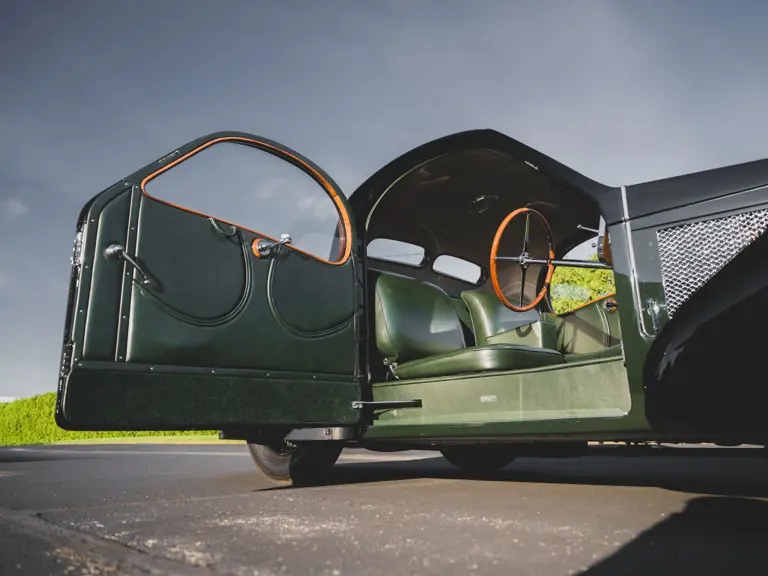
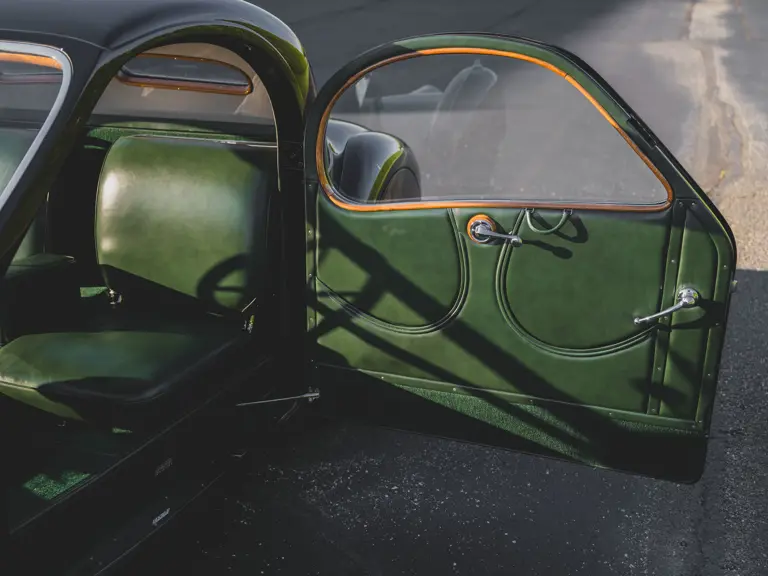
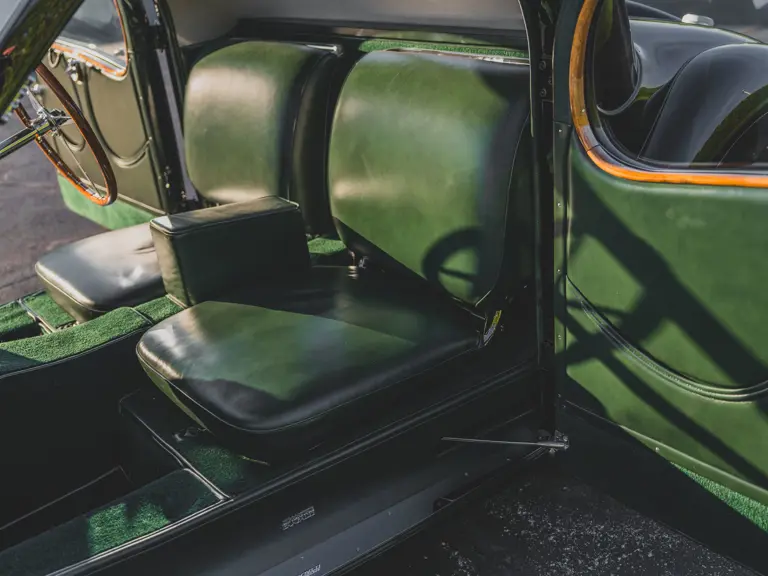
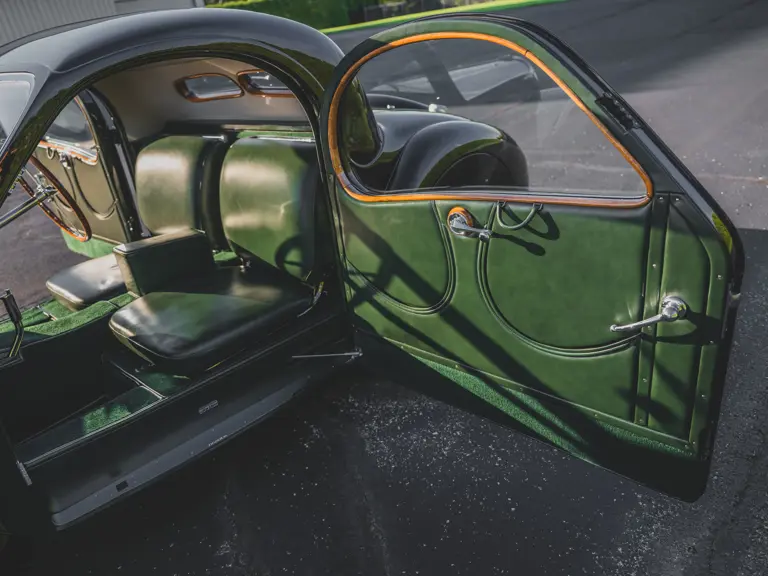
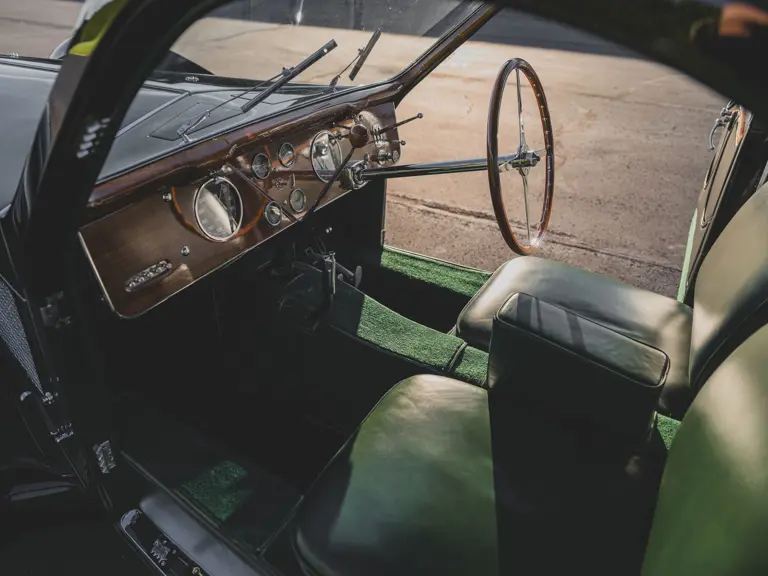
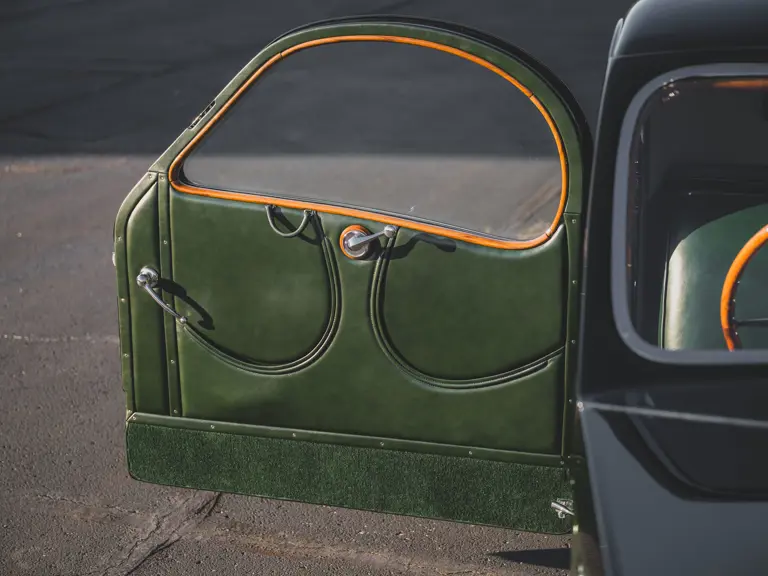
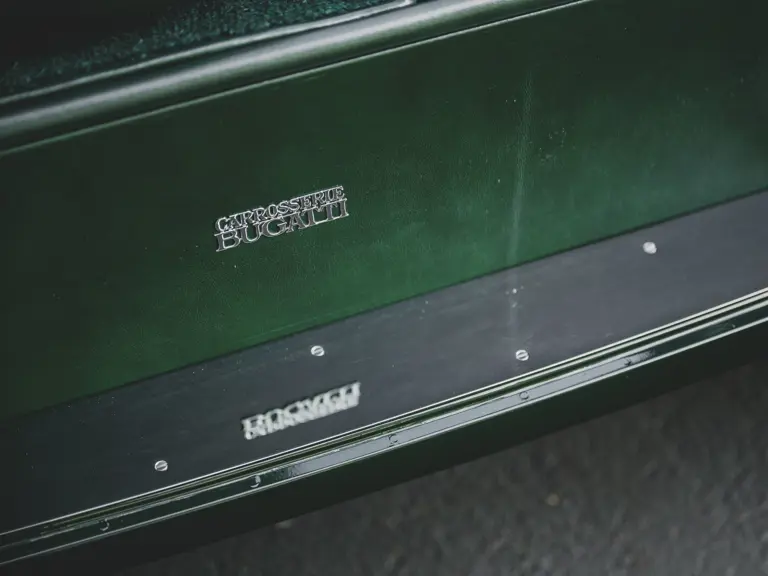
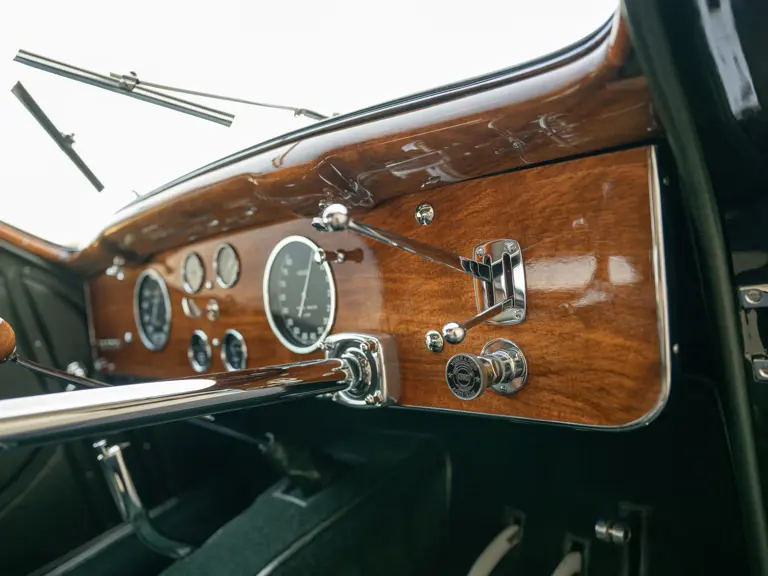
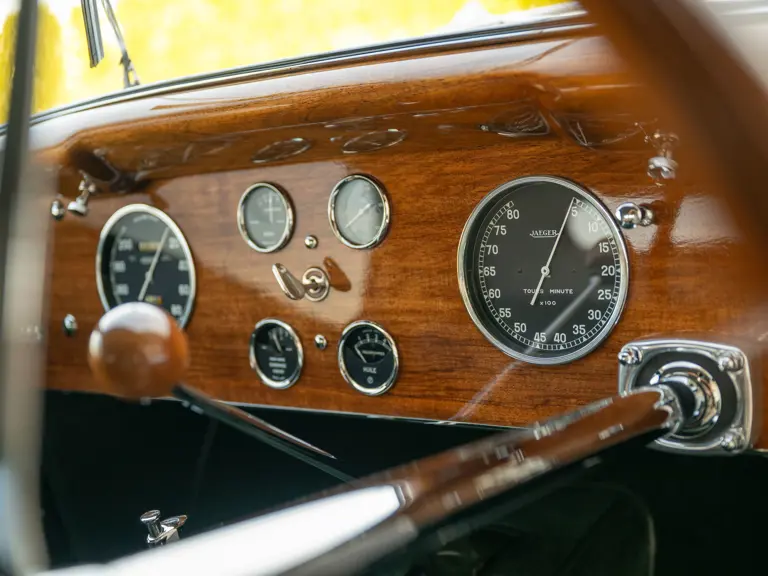
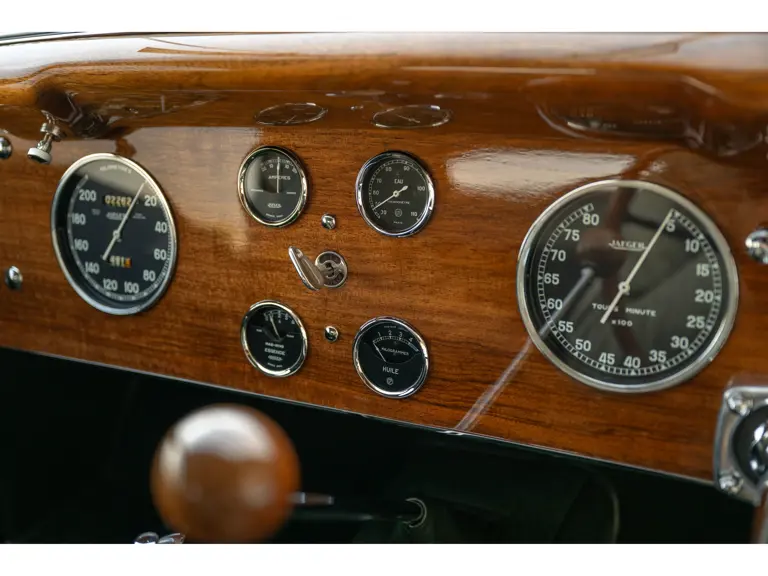
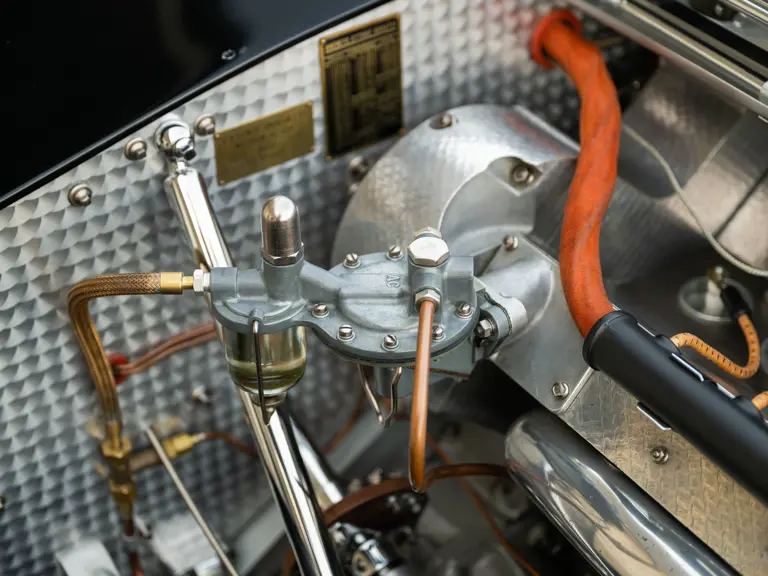
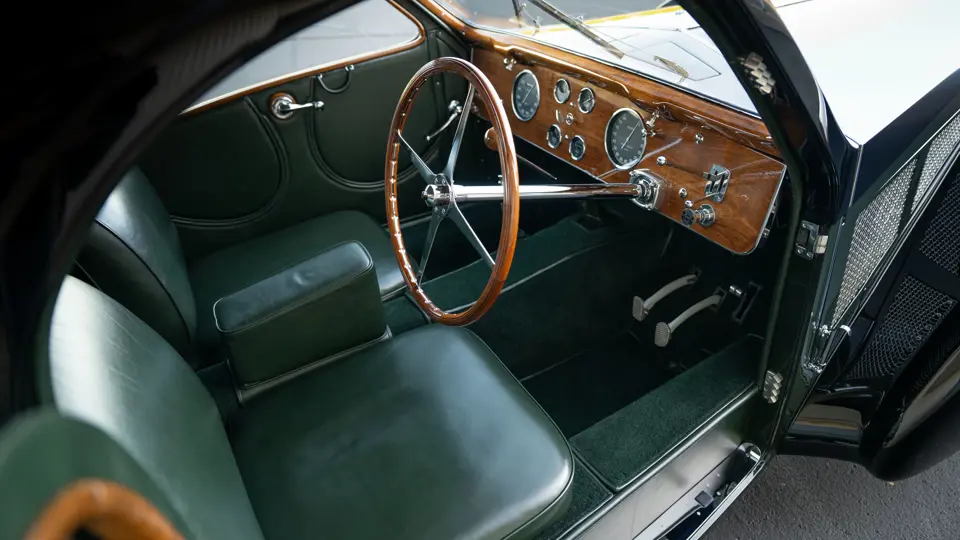
With these in hand, RM Auto Restoration of Blenheim, Ontario, took on a fresh restoration of the Atalante to a modern standard of correctness and authenticity. Having restored other examples of this significant chassis, RM was well-equipped to handle the job in a sensitive manner. As much originality as possible was preserved, including, significantly, much of the original body wood, including the entire framework of the tail section. The body was carefully returned to the original configuration and design throughout, matching period photographs, and finished in a very subtle livery of black and deep green with pigskin interior. At completion, the car was debuted at the Pebble Beach Concours d’Elegance in 2014, and, 38 years after its original victory, received the J.B. Nethercutt Trophy as Most Elegant Closed Car.
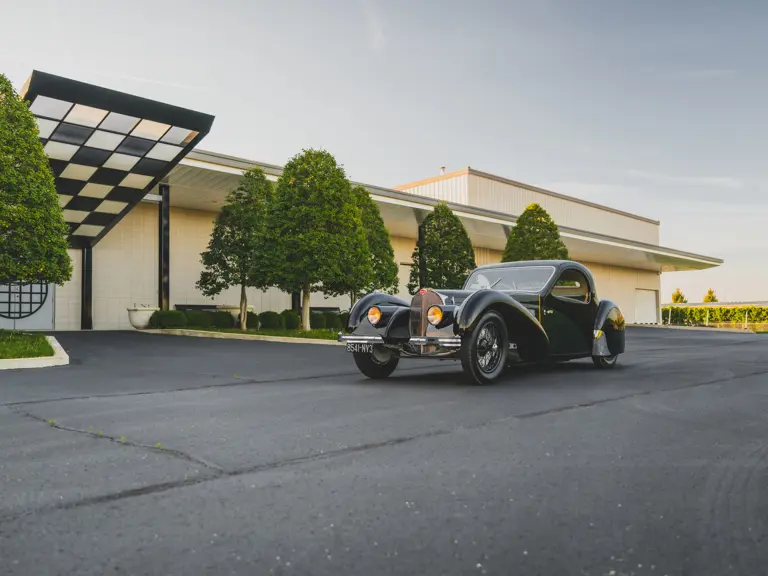
The Type 57SC Atalante is presented today still in concours condition, carefully maintained within The Jim Patterson Collection to the standards it deserves. It is accompanied by a thoroughly impressive history file, including copies of its features in several prominent Bugatti books and registers over the years, photographs of the RM restoration, and a copy of its Harrah’s Automobile Collection acquisition and restoration file—enormously detailed and well worth reviewing.
It can be inarguably said that the Type 57S was, from a development standpoint, the ultimate Bugatti—and chassis number 57551, through its carefully documented history, meticulous conservation, and careful restoration, has been, for every moment of its life, appreciated for exactly that. It is an exquisite creation.
 | Monterey, California