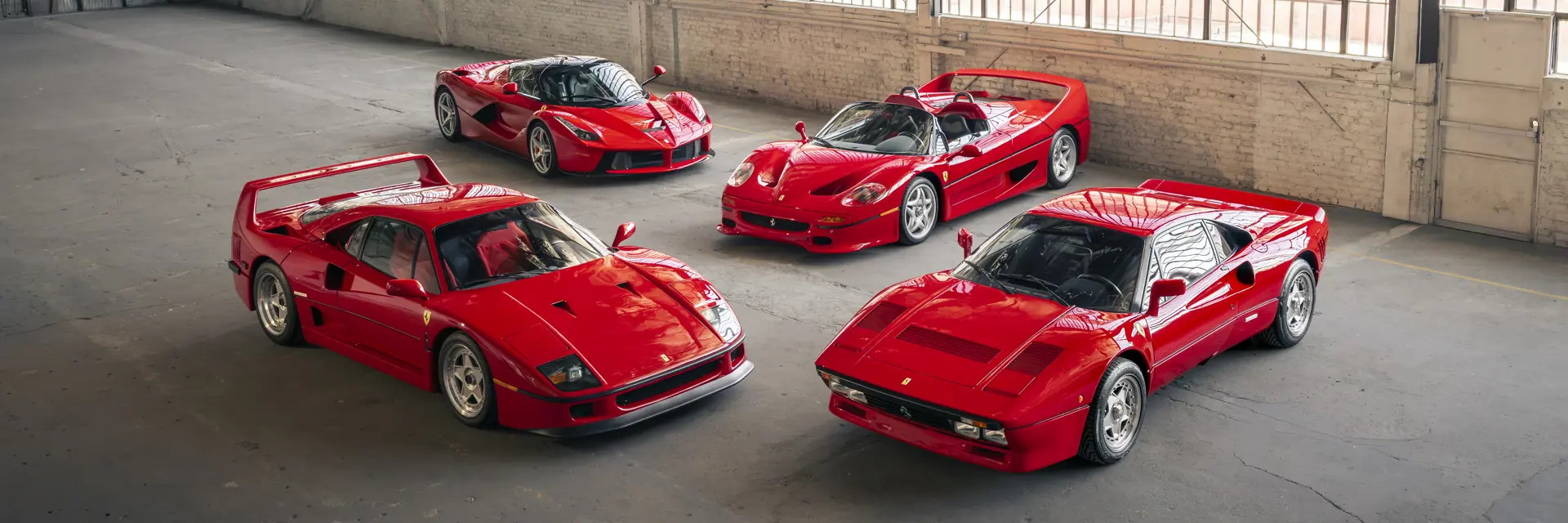
The (nearly) complete Ferrari supercar bloodline is coming to Monterey, offering collectors the chance to bid on three decades of Maranello’s greatest performance cars.
Etymologically speaking, supercar isn’t the hardest word to define. And while Ferrari didn’t invent the class, few manufacturers have defined it as convincingly.
Beginning with the 288 GTO in the mid-1980s, each generation of Maranello’s flagship has pushed the boundaries of performance, technology, and desirability.
Now every halo model up until the 2020s is set to cross the block at RM Sotheby’s Monterey auction, offering collectors a chance to bid on more than three decades of Maranello’s greatest performance cars.
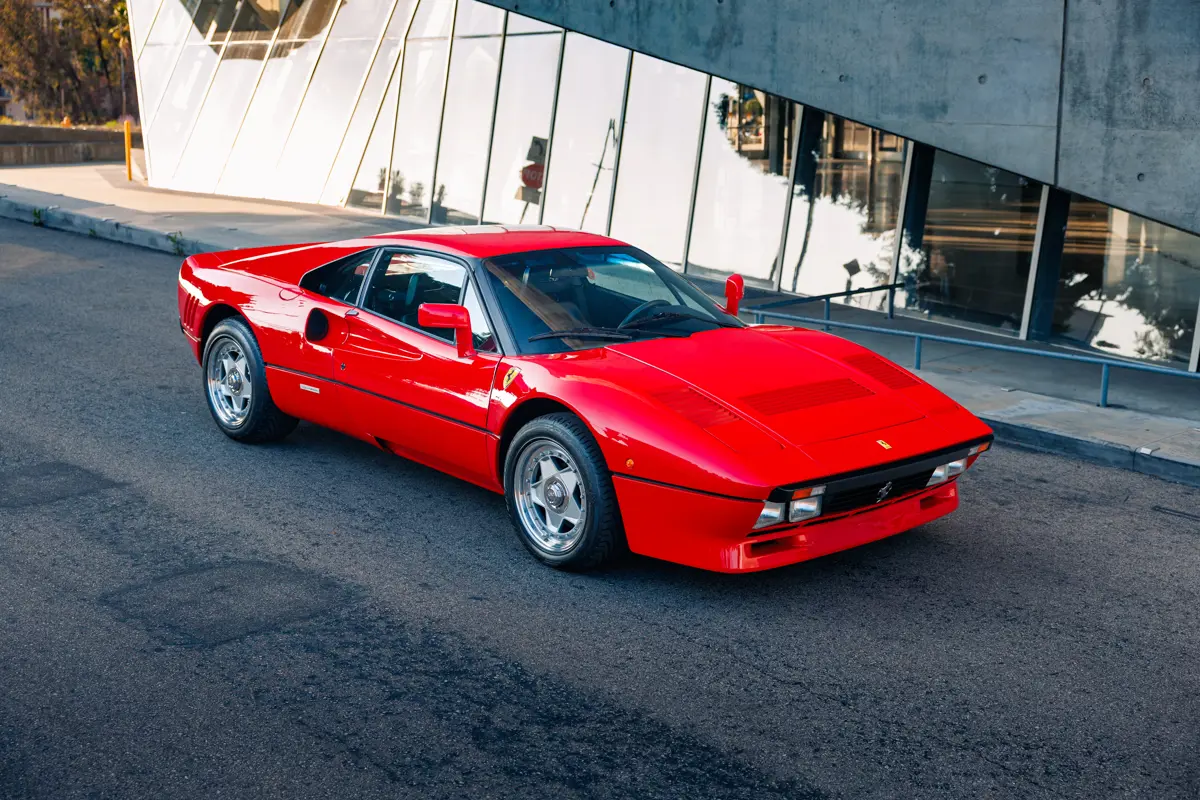
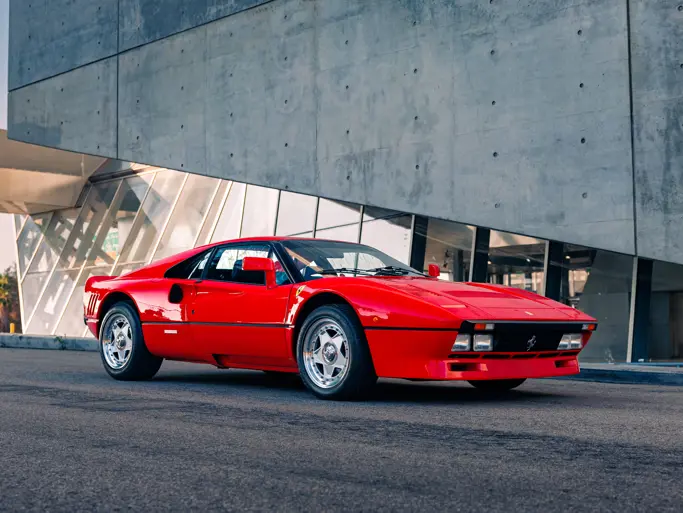
1985 Ferrari 288 GTO
Widely regarded as the genesis of Ferrari’s modern halo car lineage, the 288 GTO was born from Maranello’s ambition to compete in Group B rallying. Ferrari planned to build the required homologation cars (200), but before the programme could fully develop, the category was cancelled following a series of fatal accidents.
Fortunately, demand for the 288 GTO was so strong that Ferrari proceeded with production, ultimately building just shy of 300 examples, making it the rarest of the marque’s halo cars.
The 99th production example seen here is finished in Rosso Corsa over a Nero interior and was specified with the desirable options of electric windows and air conditioning before being delivered to the owner of a German furniture manufacturer in 1985. By 2000 it formed part of an exceptional Ferrari collection alongside an F40, F50, and Enzo.
Exported to the United States in 2021, it has covered just 1,541 km from new. Recently awarded Ferrari Classiche Red Book certification, it retains its original, matching-numbers engine, gearbox, and chassis.
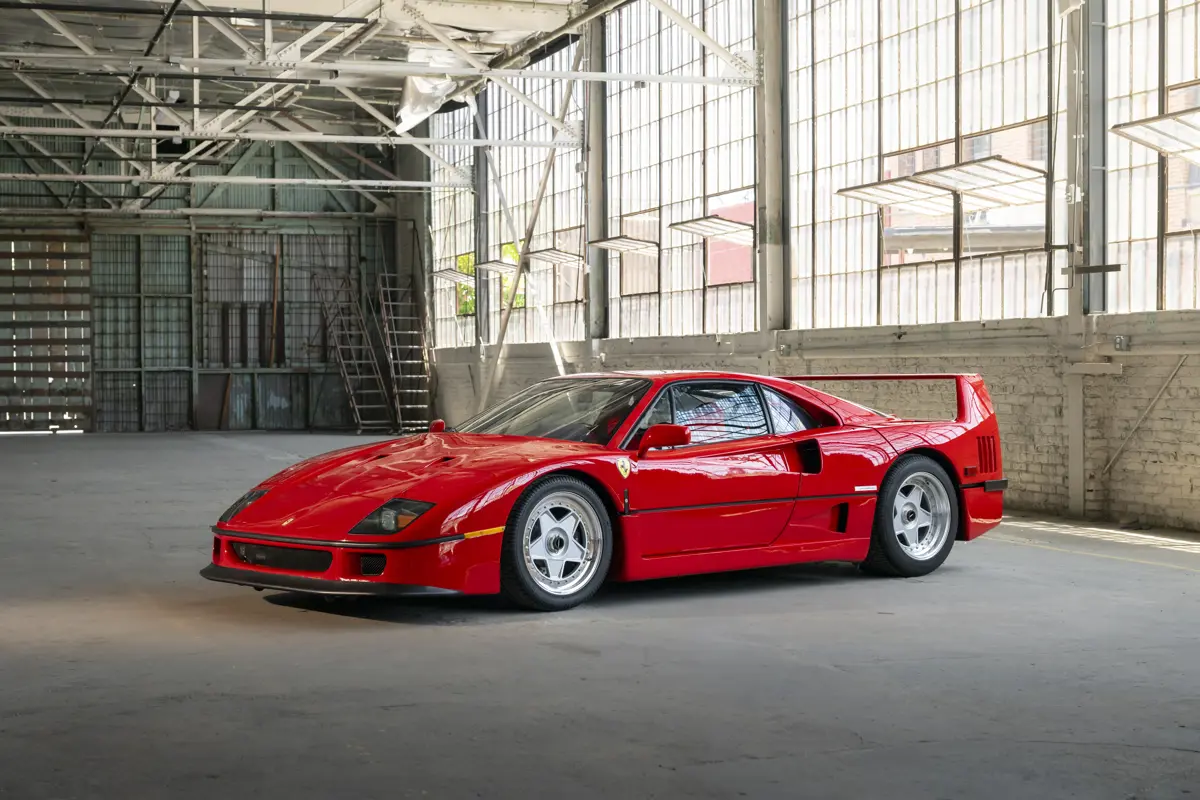
1991 Ferrari F40
Built to celebrate Ferrari’s 40th anniversary, the F40 has gone down in Ferrari folklore as the origin of extremely bare bones Prancing Horses, as well as for being the final model to be signed off by Enzo himself.
Like the 288 GTO before it, the F40’s beginnings lay in competition, this time around the FIA’s Group B Circuit Racing championship. Development work carried out on the 288 GTO Evoluzione programme ultimately formed the basis of what would become one of the world’s most celebrated supercars.
With 471 horsepower and a kerb weight of around 1,100 kilograms, the F40 could reach 201 mph, making it the first production car to reach more than 200 mph.
Finished in signature Rosso Corsa over a Stoffa Vigogna interior, this example has covered an astonishingly low 320 miles. Its first owner was Lee Iacocca, the legendary American automotive executive widely credited with helping create the Ford Mustang.
The car has recently benefitted from a $40,000 service that included new spark plugs, a battery, and a fresh set of Pirelli P Zero tyres.
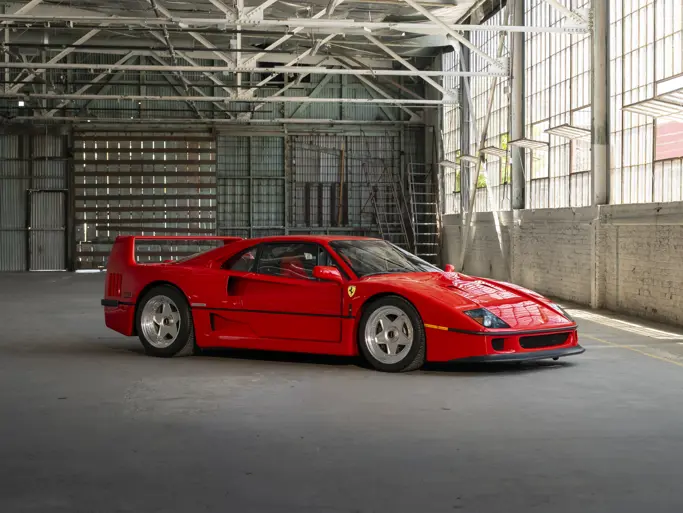
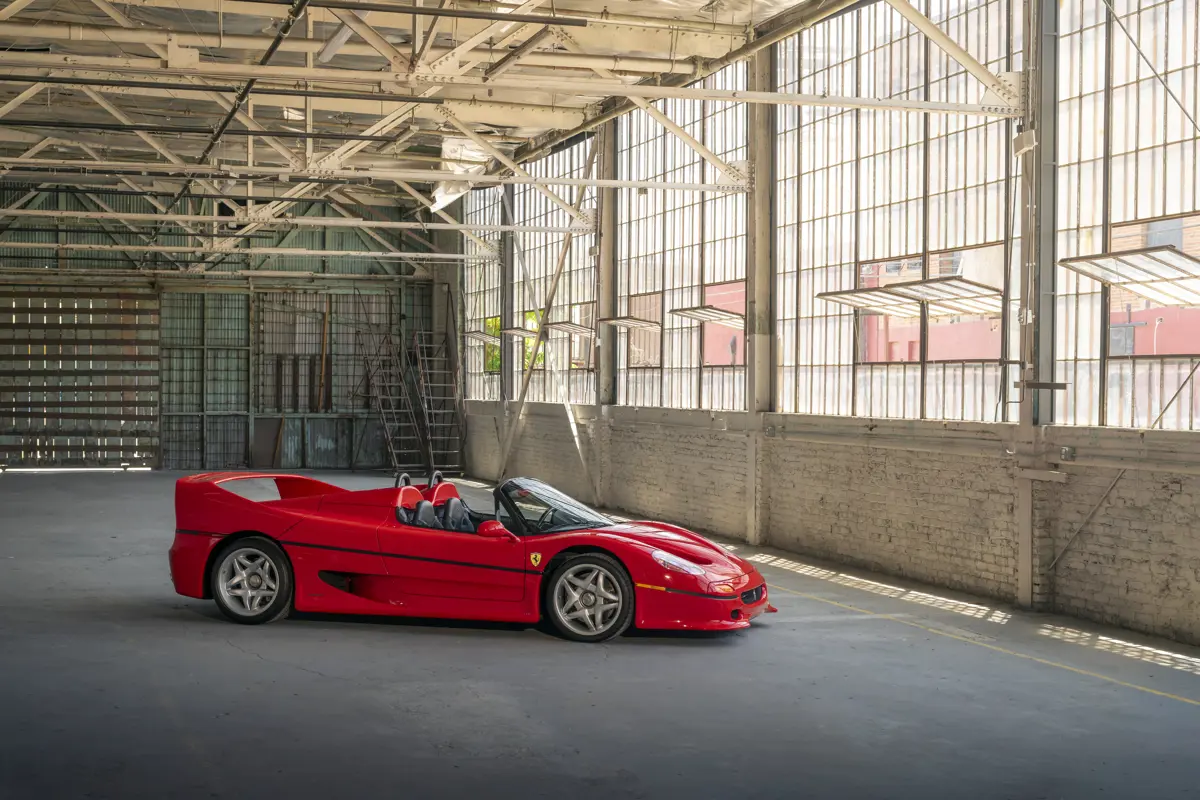
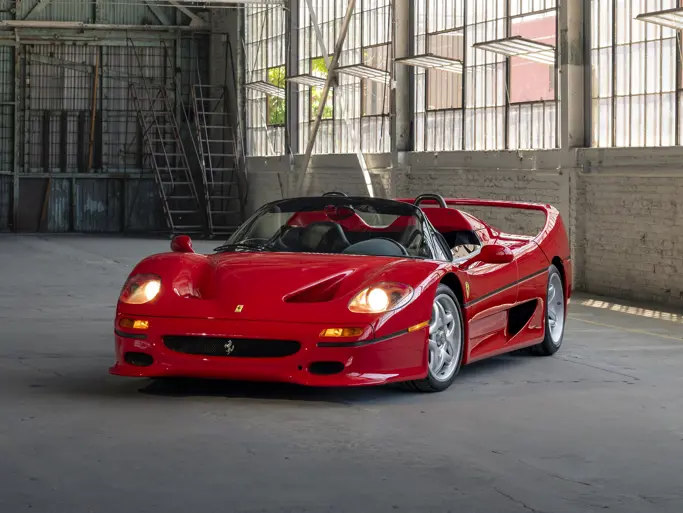
1995 Ferrari F50
Following the phenomenal success of the F40, Ferrari’s engineers knew its successor would need to be even more ambitious to commemorate the company’s 50th anniversary.
The result was the F50, a faster, more technologically advanced and even more audacious flagship that brought genuine Formula 1 engineering to the road.
Its naturally aspirated F130B V-12 traced its origins to Ferrari’s 1992 Formula 1 programme before being further developed for the 333 SP sports prototype, which claimed numerous IMSA GT and FIA Sports Car Championship victories. Enlarged to 4.7 litres and tuned for road use, the engine produced 513 horsepower and 347 lb-ft of torque, enrolling it firmly into the 200 mph club.
Chassis 104220 was completed in November 1995 for the US market, finished in Rosso Corsa over a Nero interior with Rosso seat inserts. Delivered to Beverly Hills, its first private owner was heavyweight boxing champion Mike Tyson.
Beautifully preserved, the car is accompanied by its fitted luggage, commemorative Ferrari F50 book, and a pair of Everlast boxing gloves signed by Tyson.
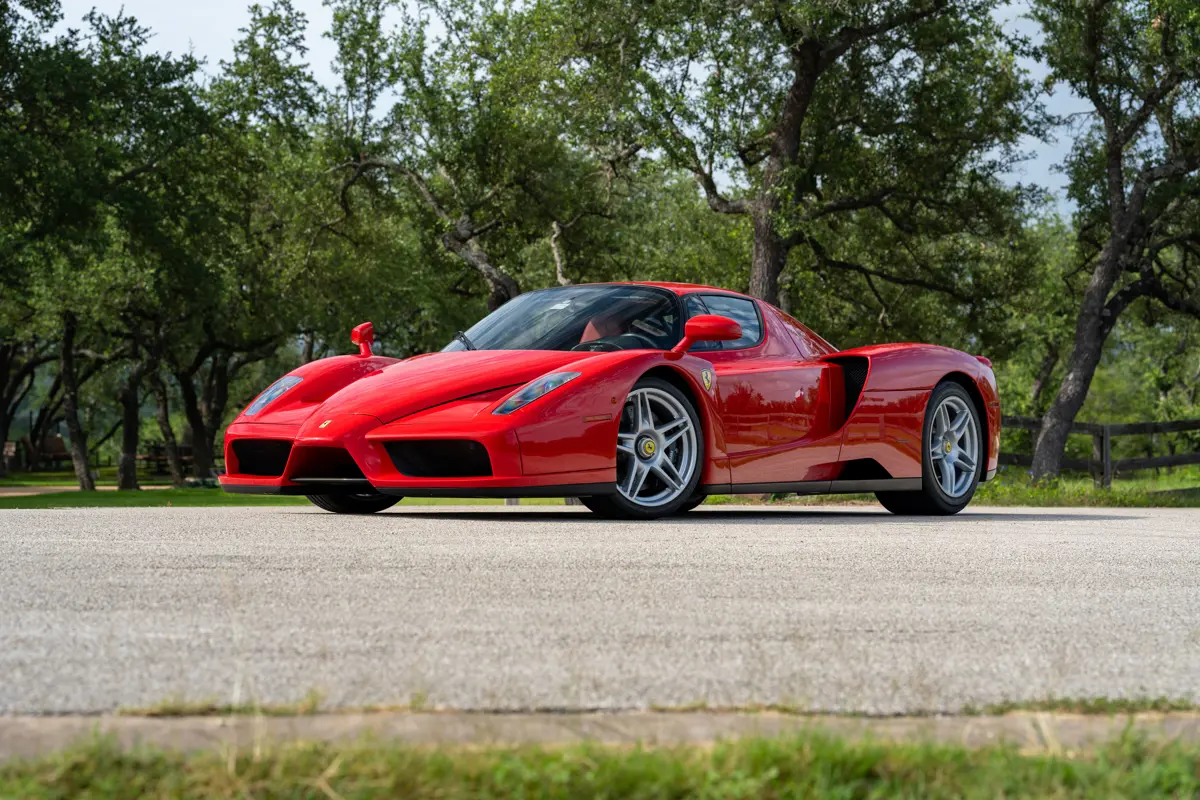
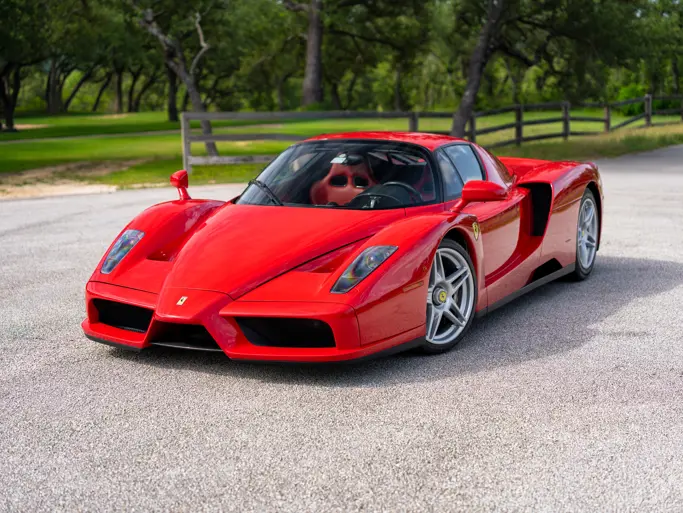
2003 Ferrari Enzo
The eponymously named Enzo debuted at the 2002 Paris Motor Show with a carbon fibre chassis, aluminium subframes, and dramatic Pininfarina-designed bodywork featuring signature dihedral doors.
Mounted behind the cockpit is a 6.0-litre naturally aspirated V-12, the largest production Ferrari engine since the 712 Can-Am racers of the 1970s.
Featuring Nikasil-lined cylinder walls, titanium connecting rods, and a variable-length intake manifold, the engine produced 651 horsepower and 485 lb-ft of torque. The Enzo sprinted from zero to 60 mph in just 3.3 seconds before reaching a top speed of 218 mph, cementing its place as one of the defining naturally aspirated—and non-hybridised—supercars of the 21st century.
This example was built in July 2003 and finished in Rosso Corsa with Rosso seats and a Nero dashboard. A two-owner car, it has remained with the same collector for the past two decades and has been awarded both a Ferrari Certificate of Authenticity and Ferrari Classiche Red Book certification.
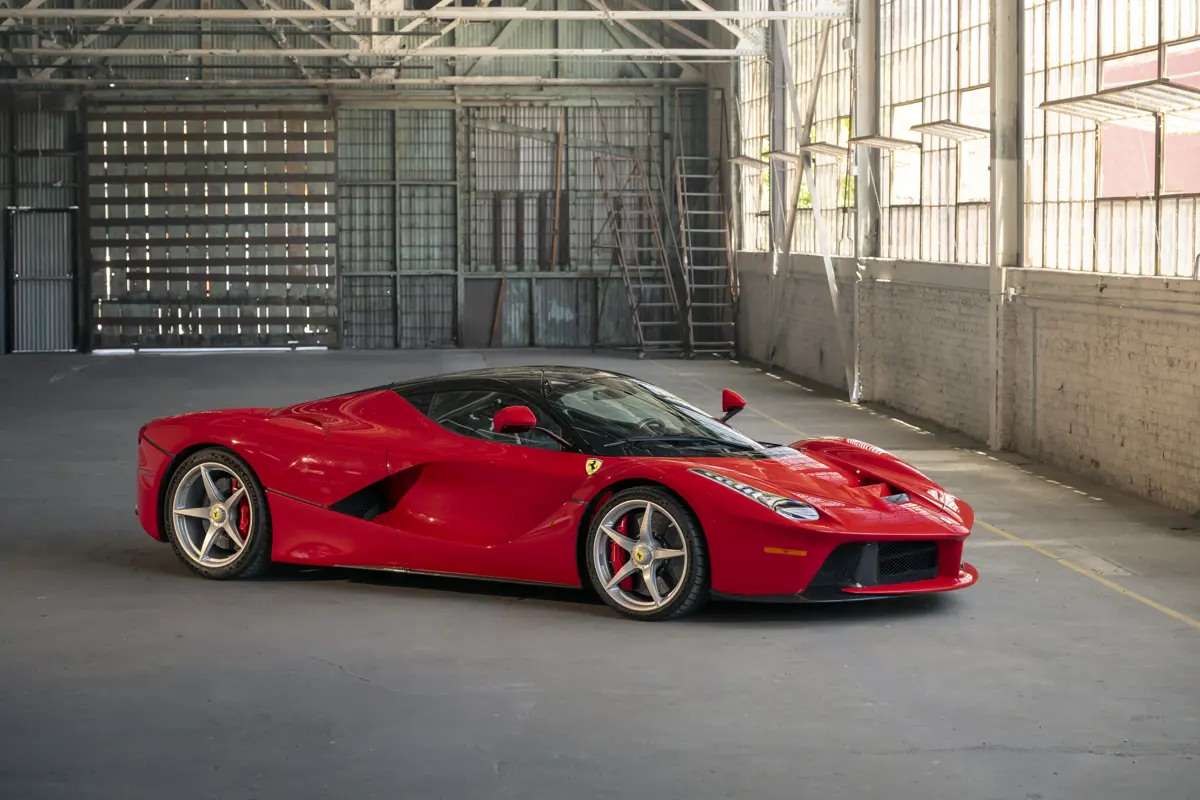
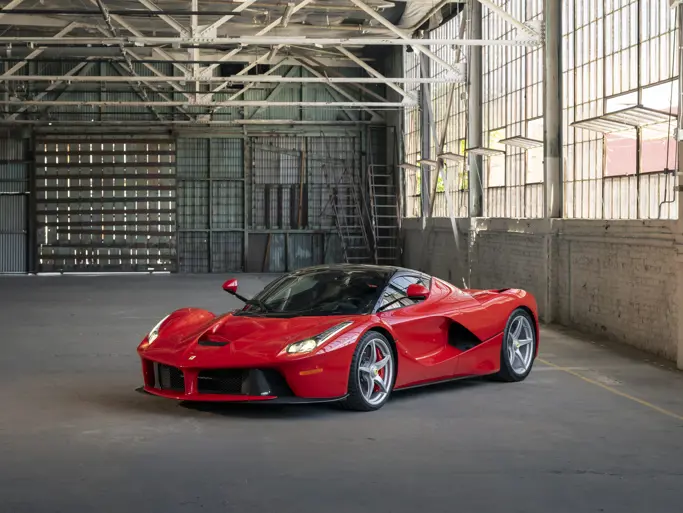
2015 Ferrari LaFerrari
By the early 2010s, hybrid technology had transformed the supercar landscape. Ferrari answered rivals from Porsche and McLaren with the LaFerrari, a technological tour de force that redefined what a flagship Ferrari could be.
At its heart sat a Formula 1-derived KERS electric motor paired with a naturally aspirated 6.3-litre V-12. The electric motor contributed 161 horsepower, sharpening throttle response and low-speed acceleration, while the combined system delivered 949 horsepower and 663 lb-ft of torque.
Its dramatic bodywork was designed in-house under Flavio Manzoni and incorporates sophisticated active aerodynamics, including movable underbody flaps and an active rear spoiler capable of generating enormous levels of downforce.
Finished in Rosso Corsa with a contrasting Nero roof and Nero leather interior, this single-owner example has covered just 711 miles. It has been awarded Ferrari Classiche certification and is accompanied by its corresponding Red Book.